
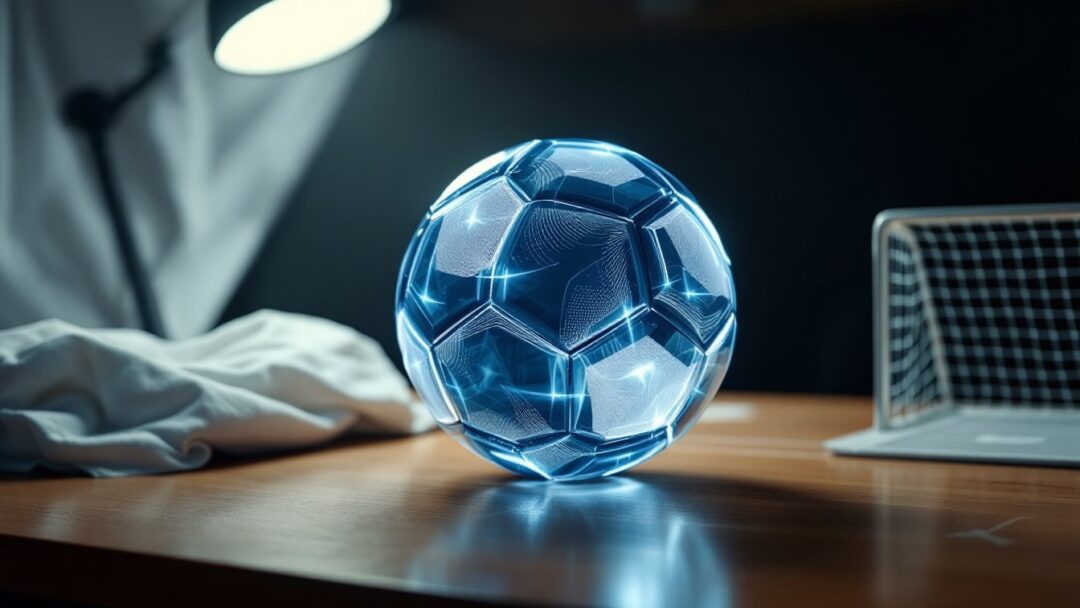
The 2026 FIFA World Cup in the United States, Canada, and Mexico has introduced a new star: the Trionda ball. Designed by Adidas, this ball features four panels with deep grooves and vibrant colors representing the host countries. But beyond its aesthetic appeal, the Trionda ball has sparked discussions among players, particularly goalkeepers, about its flight characteristics and performance.
Researchers have been studying the physics of World Cup balls for two decades, and the Trionda is no exception. The University of Tsukuba in Japan conducted wind tunnel tests to understand its aerodynamic properties. John Eric Goff, a sports physics expert, analyzed the data to predict how the ball would perform compared to its predecessors.
The Aerodynamics of Trionda
The key to understanding the Trionda ball lies in its airflow dynamics. The ball’s surface texture and panel design significantly influence how it moves through the air. The Jabulani ball from the 2010 World Cup, for instance, had a smooth surface that caused unpredictable flight paths due to a phenomenon called the drag crisis.
Trionda, on the other hand, has a rougher surface with deep grooves. This design pushes the drag crisis to lower speeds, making the ball’s flight more predictable. However, the increased roughness also means that the ball experiences more air resistance at high speeds, potentially causing long-range kicks to fall short by a few meters.
Real-World Performance
The real-world performance of the Trionda ball has been a topic of debate. During the England vs. Mexico game at Estadio Azteca in Mexico City, players noticed that the ball tended to go longer than expected. The high elevation of Mexico City reduces air drag, allowing the ball to travel farther but curve less.
Goalkeepers like Joe Hart have expressed concerns about the ball’s performance. Hart, a former England goalkeeper and current BBC pundit, noted that the ball feels faster when it comes off the foot. However, experts like John Eric Goff argue that the ball’s flight is consistent with predictions and similar to other recent World Cup balls.
The Impact on Gameplay
There has been speculation that the Trionda ball is contributing to an increase in long-range goals. While this could be due to the ball’s design, experts caution that the sample size is too small to draw definitive conclusions. The ball’s performance is also influenced by player familiarity, as many have had access to the Trionda or similar balls like Nike’s Flight for months.
However, goalkeepers may need time to adjust to its unique characteristics. As the World Cup progresses, players and experts alike will continue to analyze the ball’s impact on the game.


