
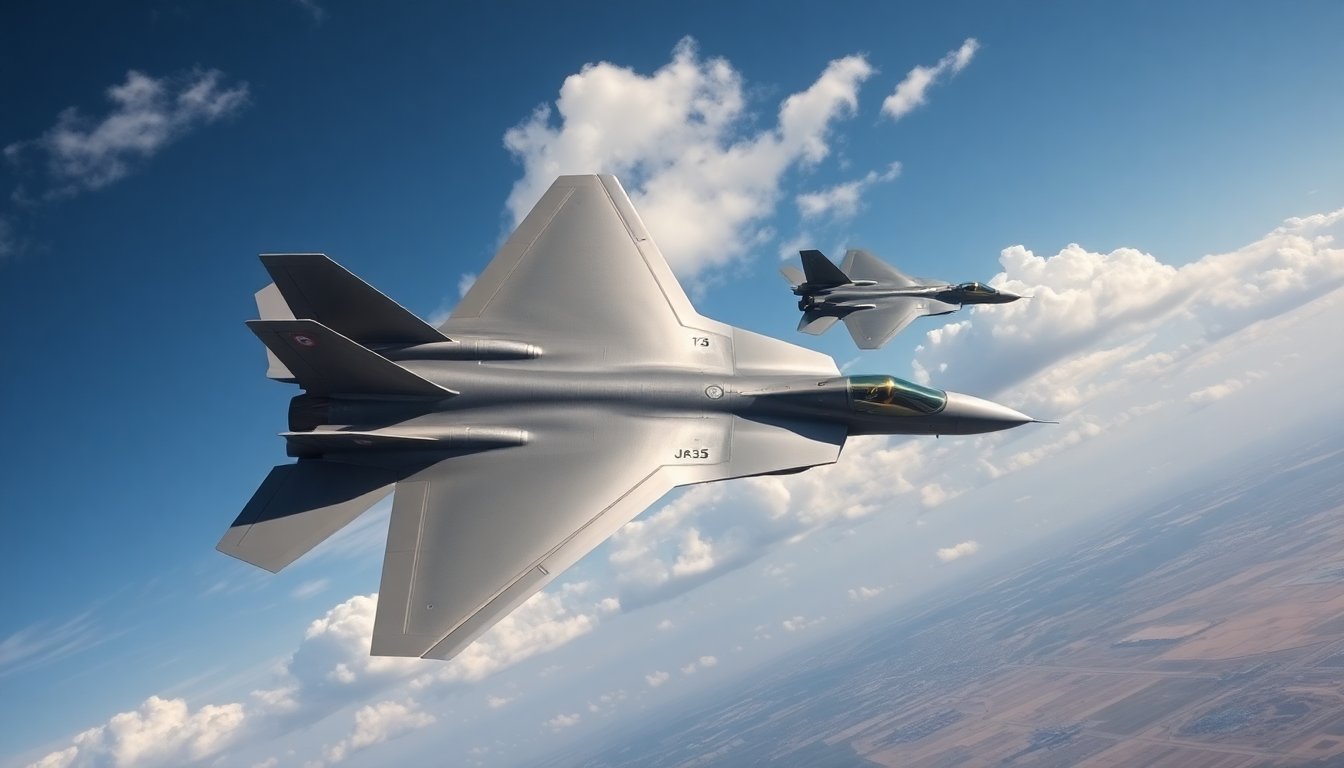
The unveiling of the J-35 and J-35A fighter jets marks a significant milestone in contemporary military aviation. Recent discussions among fighter designers, highlighted in a televised program, shed light on the intricate design connections between these two models. Both jets not only participated in the recent parade celebrating the 80th anniversary of the conclusion of World War II but also showcased the evolution of technology in aerial combat. This article explores the unique design features, operational capabilities, and strategic importance of these advanced aircraft.
Design Innovations of the J-35 and J-35A
The J-35 and J-35A are engineered with a focus on interoperability and efficiency. The design teams emphasized the reuse of common components, facilitating rapid integration across various air and naval platforms. A close examination during the program highlighted the J-35 model’s innovative features, such as its folding wings, internal weapons bay, and tailhook. The internal weapons bay, capable of housing six air-to-air missiles, mirrors the loadout of the United States’ F-22, indicating a leap in combat capabilities.
One standout feature is the foldable fins, which allow for a more compact launcher concept. This design enhances the aircraft’s stealth profile and maximizes payload efficiency, crucial factors in modern warfare. Military analysts are closely monitoring the integration of the PL-15 beyond-visual-range air-to-air missiles into both the J-20 and J-35, although formal announcements regarding these capabilities are still pending.
Strategic Military Implications
The introduction of the J-35 and J-35A signifies a strategic enhancement in aerial combat capabilities. Military observers note that the design and technological advancements reflect a broader trend toward modernizing air forces worldwide. The ability to carry advanced missiles within internal bays offers a tactical advantage, allowing these jets to engage adversaries while maintaining a lower radar profile.
During the parade in Beijing, additional missile systems from the PL family were also showcased, further underscoring the emphasis on enhancing air combat readiness. The visibility of these advanced systems during such public displays sends a clear message regarding military preparedness and the ongoing evolution of aerial warfare strategies.
Future Prospects and Developments
As military analysts continue to evaluate the J-35 and J-35A, expectations are high for their integration into active service. Ongoing discussions among designers and military strategists indicate a commitment to refining these aircraft, ensuring they meet the demands of future combat scenarios. The adaptability of these jets, along with their advanced features, positions them as pivotal assets in any modern air force.
Looking ahead, it will be crucial to monitor how these developments influence air combat dynamics globally. The interplay between technology and strategy will undoubtedly shape the future of military aviation, making the J-35 and J-35A models critical components in this evolving landscape.


