
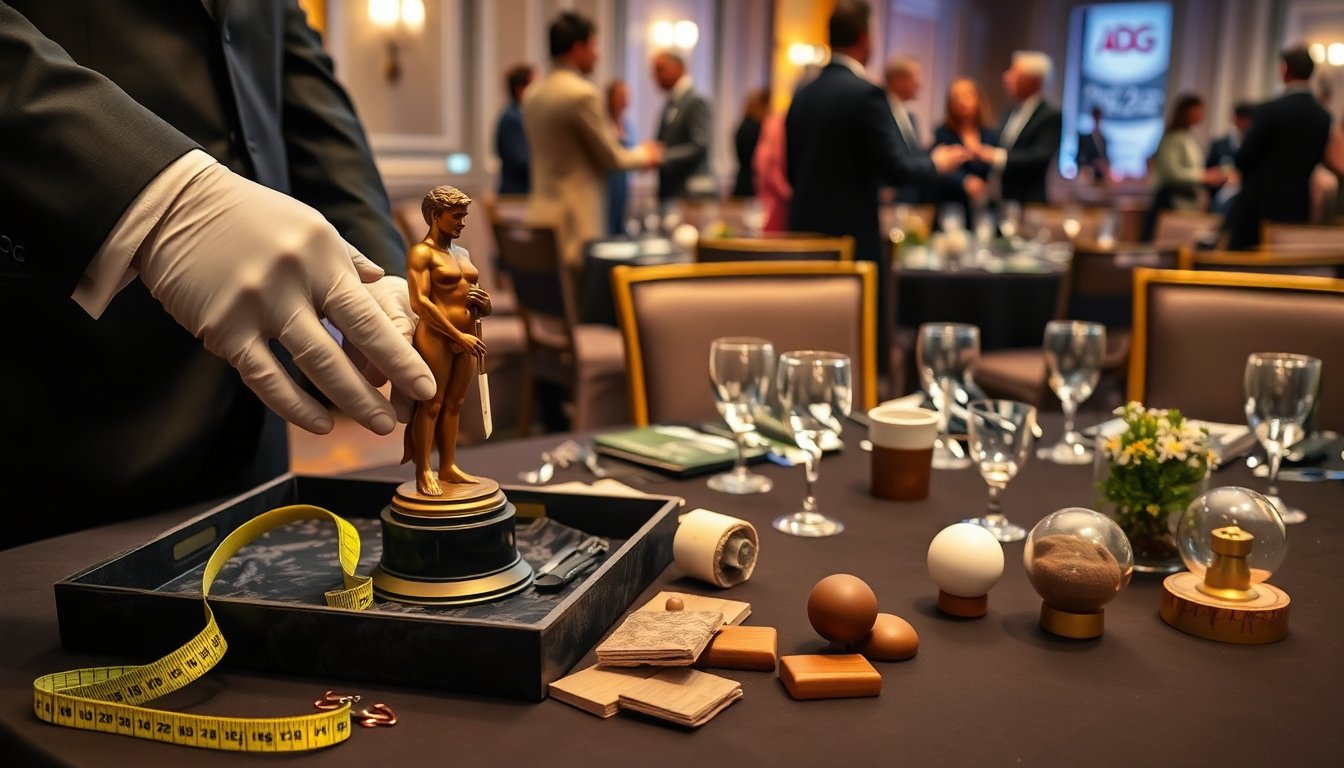
Lights, texture and a few well-timed laughs: the Art Directors Guild’s 30th Excellence in Production Design Awards felt like a backstage tour of modern storytelling — equal parts craft demonstration, celebration and political rally for the crews who build the worlds we watch.
A packed ballroom at the InterContinental Los Angeles Downtown drew production designers, set decorators and industry figures who swapped industry gossip and handshake congratulations between trophies. The evening honored everything from intimate, lived-in apartments to sprawling fantasy realms, and it repeatedly made the same point: great design still moves audiences — and the markets that follow them.
What the winners reveal
Three films stood out across distinct aesthetic directions, underscoring how different kinds of visual ambition are rewarded. Tamara Deverell won for period production design on Frankenstein, a win that highlights meticulous historical texture. Florencia Martin took the contemporary prize for One Battle After Another, celebrated for turning present-day settings into emotionally resonant places. And Kasra Farahani’s work on The Fantastic Four: First Steps earned the fantasy feature honor, a reminder that immersive worldbuilding continues to be a prized skill.
Those wins had an immediate ripple: media mentions and conversations about the designers rose after the ceremony, and industry watchers say guild recognition often fuels awards-season momentum. For projects and talent already on voters’ radars, a trophy or even a nomination can tighten the spotlight — sometimes affecting festival play, distribution interest and how studios allocate marketing dollars.
Television’s stylistic breadth
Television categories mirrored film’s diversity. Luke Hull won for Andor (one‑hour fantasy single-camera), Jeremy Hindle for Severance (contemporary single-camera), Jon Carlos for Palm Royale (period single-camera) and Julie Berghoff for The Studio in the half‑hour single‑camera field. These victories reflect an industry still willing to invest in production values across genres — from prestige streaming dramas to sharp half‑hour pieces.
Variety, specials and live-TV formats also received attention. Designers who tackle the fast turnarounds and theatrical demands of live shows were celebrated: Akira Yoshimura, Keith Ian Raywood, N. Joseph De Tullio and Andrea Purcigliotti were recognized for a Lady Gaga–hosted episode and SNL 50, while Glenda Rovello won for Hulu’s Mid‑Century Modern. The underlying message: technical versatility is increasingly prized across platforms.
Short-form and crossover talent
Animated features and commercials continue to be creative proving grounds. KPop Demon Hunters topped animated entries, with Mingjue Helen Chen and Dave Bleich collecting an ADG award after a run of industry wins. Florencia Martin — already prominent for One Battle After Another — also earned honors for Prada’s “Galleria Bag” commercial, illustrating how designers move fluidly between long-form and short-form work. That cross-pollination helps brands and studios showcase a distinct visual identity and gives designers broader career options.
Memorable moments and advocacy
Beyond the trophies, the night included a few human moments that stuck. Jon M. Chu, accepting the cinematic imagery award, described production designers as “explorers” — collaborators who map the visual terrain for storytellers. Several winners dedicated their speeches to family and colleagues. Host Ron Funches kept the tone warm and grateful, repeatedly calling attention to the behind‑the‑scenes teams whose work underpins what audiences see.
The ceremony also took on public policy. Rep. Laura Friedman (D‑CA) received the inaugural president’s award for sustained advocacy on tax incentives and union jobs. She used her remarks to pledge ongoing support for a national film tax credit and to stress protections for creative workers, warning against offshoring, consolidation and the careless use of artificial intelligence. The presence of lawmakers on this stage underscored that awards season now coexists with a policy debate over where — and under what conditions — productions get made.
What this means for the industry
The ADG’s choices highlight two related truths. First, design credentials still carry negotiating weight: designers attached to award-winning projects can command higher fees and greater creative control, and studios may channel more resources into art departments when a title is being positioned for awards. Second, recognition can influence where projects shoot. Jurisdictions that offer competitive tax incentives and stable labor frameworks consistently attract high-budget productions — a pattern reinforced in the guild’s conversations about workforce protections and incentives.
A packed ballroom at the InterContinental Los Angeles Downtown drew production designers, set decorators and industry figures who swapped industry gossip and handshake congratulations between trophies. The evening honored everything from intimate, lived-in apartments to sprawling fantasy realms, and it repeatedly made the same point: great design still moves audiences — and the markets that follow them.0
A packed ballroom at the InterContinental Los Angeles Downtown drew production designers, set decorators and industry figures who swapped industry gossip and handshake congratulations between trophies. The evening honored everything from intimate, lived-in apartments to sprawling fantasy realms, and it repeatedly made the same point: great design still moves audiences — and the markets that follow them.1