
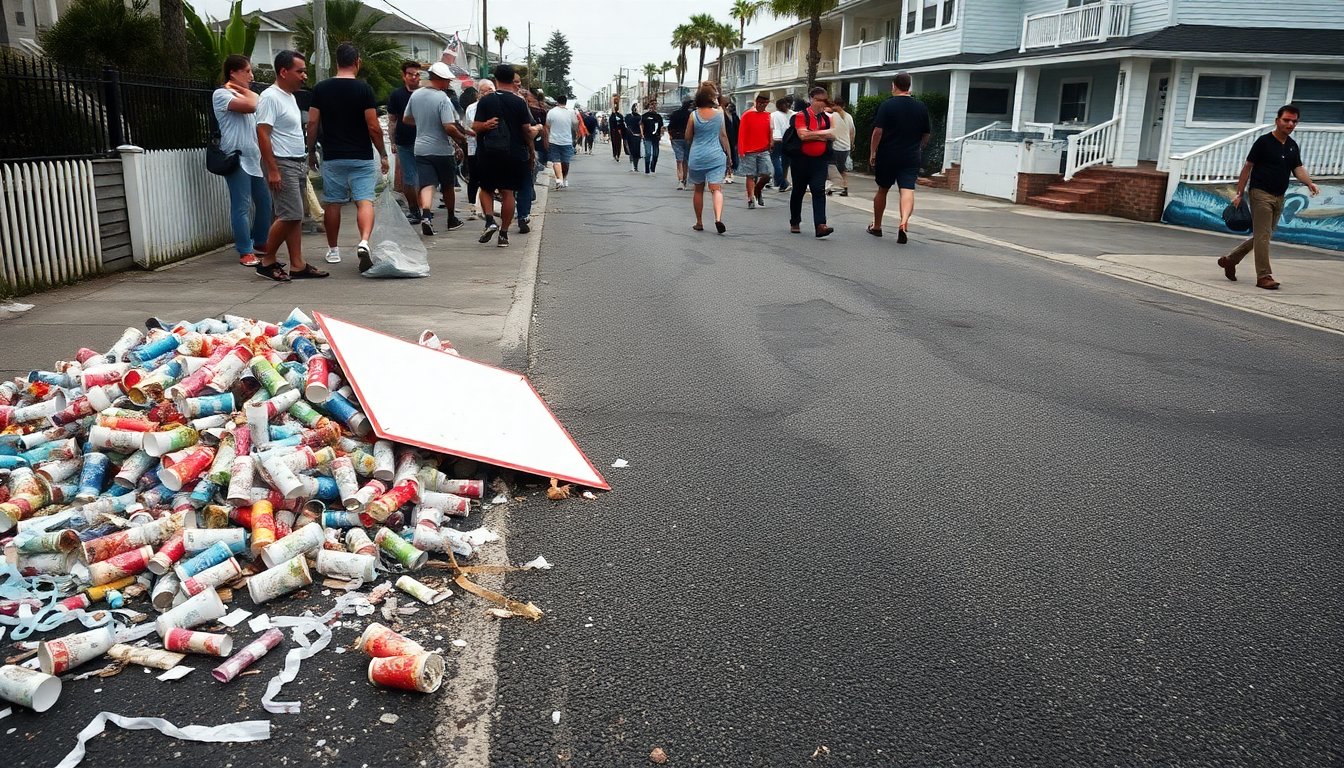
A motorsport demonstration down Marina Boulevard in San Francisco left neighborhood streets strewn with debris and several residents reporting property damage. Organizers estimate roughly 40,000 people showed up for the Red Bull Showrun, but many neighbors say the chaos afterward revealed major gaps in planning and crowd control.
A cramped viewing experience
Sidewalks and narrow frontages filled fast, with little to separate spectators from the demonstration route. Rather than tiered viewing areas or managed sightlines, people pressed up against homes, garages and parked cars to get a look. The result: broken garden pots, snapped tree limbs, dented garage doors and a spattering of damaged windows. Shared scooters were tossed and abandoned by the dozens — perhaps hundreds — leaving walkways blocked and creating fresh hazards for pedestrians.
Climbing for a better view
Videos and social posts circulating after the event show people hoisting themselves onto traffic signs, lamp posts and low walls to gain height. That improvisation turned some pedestrian paths into impassable bottlenecks and pushed others into the street, adding to safety risks.
Bottlenecks and narrow escapes
Marina Green, a favorite vantage point, had only two formal entrances and exits. Observers described long, slow-moving crowds colliding in both directions. Witnesses said the crush became so intense that people shouted for others to turn back to relieve pressure. Some attendees tried to escape the jam by scrambling down onto the marina rocks — a risky move that made rescue access more complicated.
Predictable dynamics, preventable problems
Local planners and neighbors stressed that this type of congestion isn’t unforeseeable: when large numbers arrive through limited openings, bidirectional flows quickly create choke points. They say simple measures — temporary one-way pedestrian routes, more staffed entrances, clearer signage — would have blunted much of the pressure.
Questions about security and oversight
Critics contend the turnout was underestimated and that there weren’t enough trained personnel — off‑duty officers or equivalent — to direct crowds and safeguard private property. Several residents reported sparse visible policing at key chokepoints and instances of the crowd encroaching on residential frontages. One commenter alleged organizers declined to pay for additional police overtime; that claim hasn’t been confirmed by the police department or event operator. The mayor, who attended in racing gear, did not respond to requests for comment passed through official channels. City officials referred questions to Red Bull, which did not reply to multiple requests.
Strain on the neighborhood and city services
Beyond physical damage, neighbors reported noise, blocked driveways, missed deliveries and even public urination. Local businesses struggled to keep customers. Volunteers from neighborhood groups found themselves directing traffic where trained officers were not present. City staff say events like this stretch emergency access, sanitation and traffic resources and often require costly, last-minute responses. When several large events happen close together, that cumulative load can quickly overwhelm municipal capacity.
What residents and planners want to see
Neighbors are asking for clear accountability and concrete safeguards before another big spectacle hits the Marina. Their recommendations include:
- – Requiring detailed, permit-linked crowd-management plans that spell out entry points, maximum spectator densities and who is responsible for marshaling.
- Confirmed contracts with off‑duty sworn officers (not just private security), with payment and deployment documented ahead of the event.
- Published wayfinding and timed-entry guidance to prevent spontaneous surges and reduce peak congestion.
- Designated overflow parking and temporary restroom facilities so residential blocks don’t bear the brunt.
- Contractual obligations for promoters to pay for cleanup and repairs, supported by financial guarantees.
- Independent post-event audits and transparent after-action reports shared with affected block associations.
Neighbors want more than apologies: they want rules that make events predictable, safe and respectful of daily life on the blocks where they happen. If organizers and city agencies adopt common-sense crowd management and clearer accountability, the next big draw can be memorable for excitement — not for the cleanup.