
Table of Contents
Agnes Moody: from the Underground Railroad to an international stage
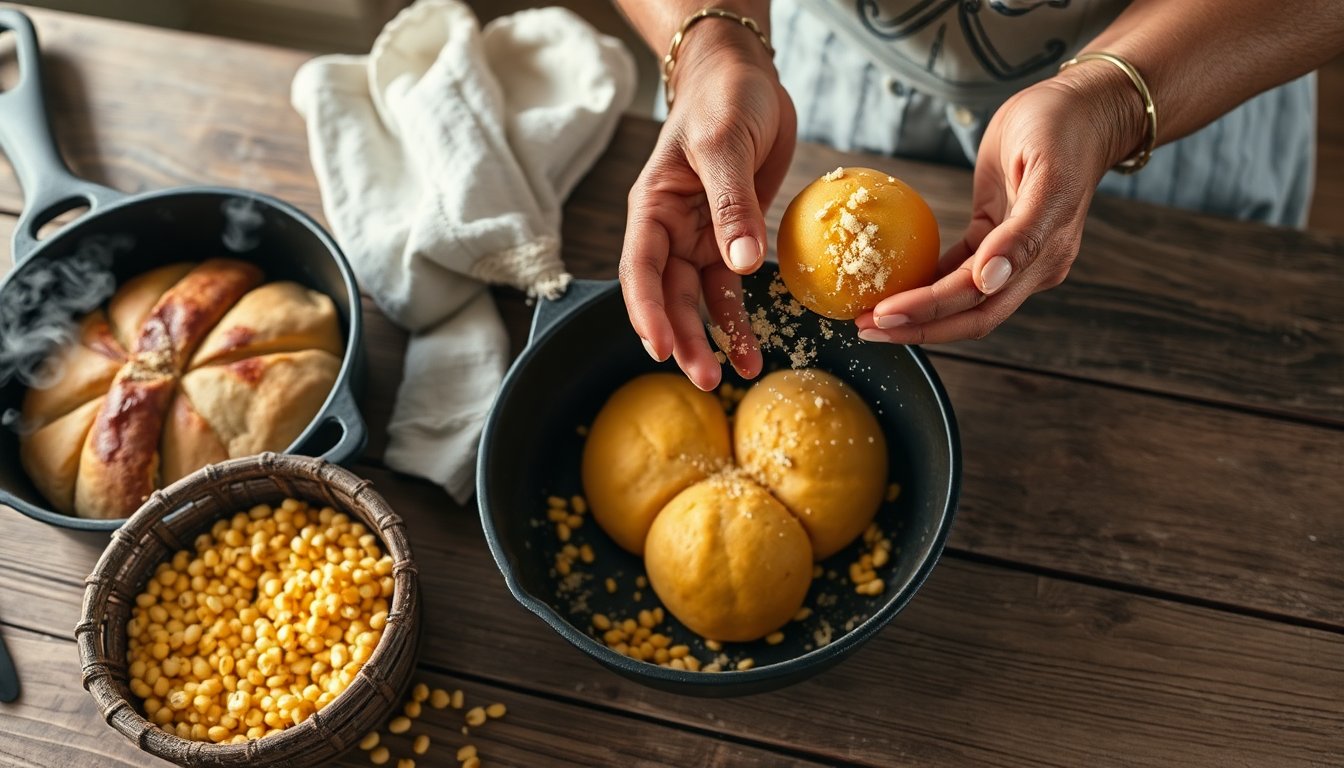
Agnes Moody’s life reads like a passage through American history. Born into slavery, she escaped via the Underground Railroad, settled in Chicago after her family reached safety in Canada, and transformed domestic skill into public achievement. Over decades she built a reputation as a caterer and community leader, best known for her mastery of cornmeal dishes—corn soup, corn muffins, cornbread and the humble corn dodger among them.
A corn kitchen in Paris
In 1900 Moody was chosen to run a “corn kitchen” for the United States at the Exposition Universelle in Paris. There she demonstrated American cornmeal cooking to an international audience, drawing crowds and press attention. Organizers and journalists framed her work not only as culinary showmanship but as cultural ambassadorship: her demonstrations were treated as a way of teaching the world about American foodways. The U.S. commissioner of agriculture cited her contributions, and she received a medal for promoting American agriculture and food culture abroad—official recognition that linked her everyday expertise to national promotion.
Civic life and entrepreneurship
Moody’s food did more than satisfy appetites. In a city and era where opportunities for Black women were severely limited, her catering business offered economic independence and social standing. She parlayed culinary skill into a sustained enterprise and used that platform to take on civic roles—joining fraternal groups, the local Masonic order, and the National Association of Colored Women. These affiliations broadened her networks and anchored her presence in Chicago’s public life.
Separating people from personas
Moody’s public visibility sometimes became entangled with commercial imagery. The Aunt Jemima brand (created in 1889) and the performer Nancy Green—who portrayed that character at the 1893 Columbian Exposition—were separate phenomena, yet popular memory often blurred these lines. Both Nancy Green and Agnes Moody were formerly enslaved Chicago residents who cooked in public settings, but they were distinct individuals. That confusion grew out of period stereotypes and marketing that favored one simplified, marketable image over messy, real lives.
Impact on trade and reputation
Contemporary newspapers credited Moody’s Paris demonstrations with boosting interest in American corn products overseas; some accounts even linked her appearances to measurable increases in cornmeal exports. Trade figures cited in the press showed upticks after the fair, though historians and economists caution that attributing export growth to a single exhibitor is complicated. Still, the symbolic effect was clear: Moody’s presence at a major world fair put a Black woman’s culinary expertise on an international stage and altered how American foodways were seen abroad.
Remembering and correcting the record
In recent years there has been renewed attention to the real people behind commercial personas and neglected memorials. Efforts in Chicago—including marking Nancy Green’s previously overlooked grave at Oak Woods Cemetery and highlighting Agnes Moody’s civic contributions—have pushed back against flattened, commercialized narratives. Contemporary obituaries and archival records from Moody’s lifetime emphasize her public service and leadership in community organizations; recovering those sources helps restore the individuality that marketing and stereotype erased.
Why Moody matters
Agnes Moody’s story complicates neat versions of post‑emancipation life. She shows how domestic labor could become entrepreneurial capital, how culinary skill could serve as cultural diplomacy, and how a Black woman navigated commercial and institutional structures to win recognition. Restoring her biography matters not only for justice to her memory but also because it reframes how we understand the global spread of American foodways—one recipe, one kitchen, one public demonstration at a time.
Paths for further research
Moody’s archival traces—business records, press accounts, organizational memberships, and fair documentation—offer concrete leads for scholars interested in food networks, migration of culinary knowledge, and the economic ties between domestic production and export demand. Filling out those threads will deepen our picture of how ordinary expertise became international influence in the turn‑of‑the‑century United States.