
Table of Contents
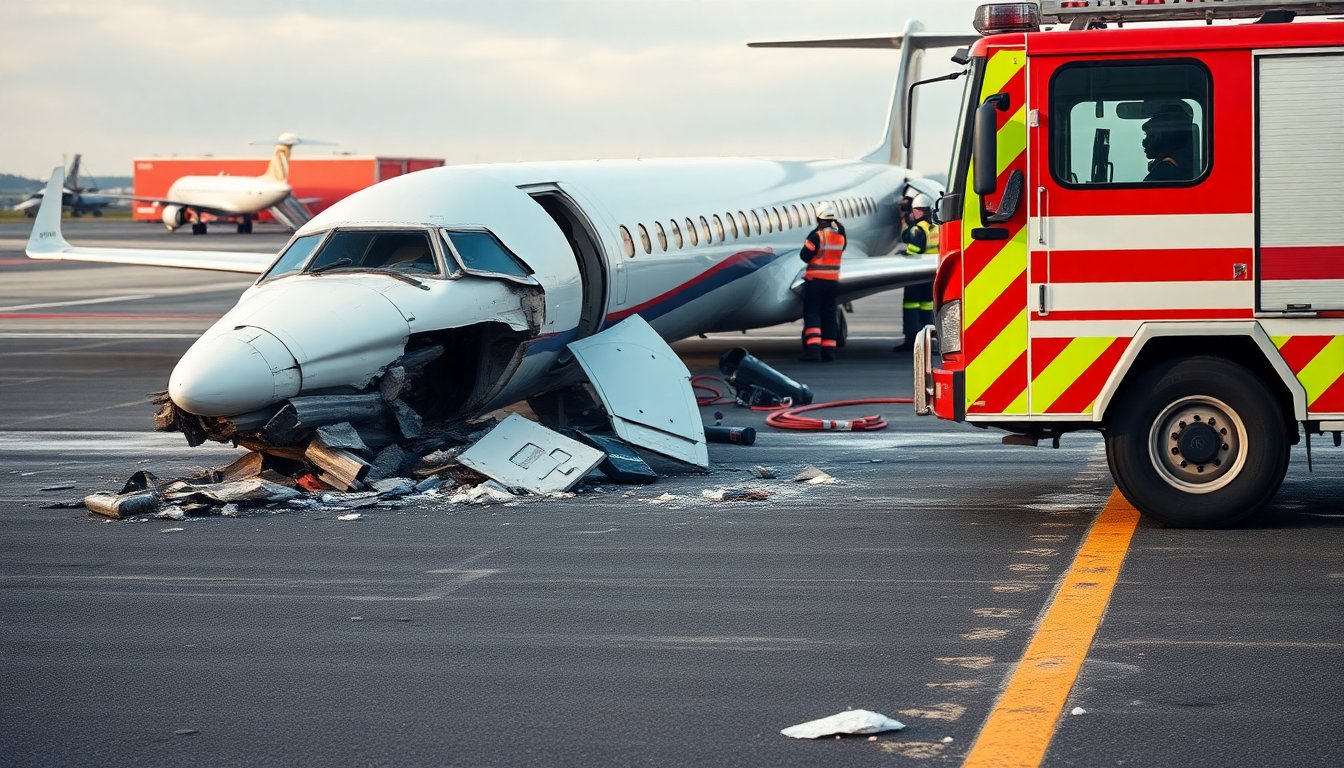
The collision between an Air Canada aircraft and a Port Authority firefighting vehicle at LaGuardia has prompted a complex, multiagency response. Eyewitnesses aboard Air Canada Express Flight 8646 described sudden chaos as the CRJ-900 came in from Montreal carrying 72 passengers and four crew. Two pilots were killed in the accident, and dozens of people were treated for injuries. The early public timeline and comments from officials were reported on March 23, and investigators have since been working to secure physical evidence, digital recordings and surveillance feeds that will form the backbone of a technical review.
Key technical evidence being collected
Investigators are concentrating on several technical sources that could explain how the event occurred. The NTSB has requested a replay of the airport surface detection display from the FAA so analysts can see what controllers would have viewed in the moments before impact. That replay will be examined alongside recorded radio transmissions and multiple surveillance videos to determine whether alerts were present and what the tower’s situational picture looked like. At the same time, teams documented debris across the runway and began cataloguing material that will be examined in laboratories in Washington, D.C.
What the surface radar replay could reveal
The airport surveillance tool at the center of the review is known as ASDE, short for an airport surface detection display. This ground radar provides controllers with positions of aircraft and vehicles on the tarmac and can generate alarms for potential incursions. The NTSB will request a technical analysis from the FAA tech center to learn whether the system produced alerts, how far the landing aircraft was from the vehicle at key times and whether the firefighting truck was visible on the display. Those data points will be critical to reconstructing the sequence of movements and any possible timing or communication gaps.
Recorders and wreckage recovery
Teams removed both the cockpit voice recorder and the flight data recorder from the fuselage after cutting an access point into the roof. Officials transported the devices to NTSB labs in Washington, D.C., where experts confirmed the cockpit voice recorder remained intact and readable. Work to extract and analyze flight-data information is scheduled to begin promptly. Investigators are also continuing to gather CCTV from multiple vantage points and to map the debris field, since physical fragments and marks on the surface can corroborate electronic traces.
Operational factors and human elements under review
Aside from mechanical and electronic evidence, the probe will study operational decisions and staffing. The NTSB has indicated it will verify details about air traffic control tower staffing—checking sign-in sheets, time cards and interview statements—before releasing any conclusions. Officials emphasized a methodical approach: the agency will not speculate and will only present verified facts. Meanwhile, public officials from Canada and the U.S. noted broader workforce and funding questions that intersect with safety oversight, prompting discussions about recruitment and modernization.
Comments from government and airport authorities
Canada’s transport minister has acknowledged a shortage of air traffic controllers domestically and said his office is coordinating with partners, including Nav Canada, on recruitment strategies. U.S. Transportation Secretary Sean Duffy spoke publicly about seeking congressional funding to modernize systems, while Port Authority leaders confirmed the two occupants of the rescue vehicle—identified as Sgt. Michael Orsillo and Officer Adrian Baez—were hospitalized and expected to be released soon. Media reports identified the two fallen pilots as Antoine Forest and MacKenzie Gunther, and the flight attendant Solange Tremblay was reported to have serious leg injuries requiring surgery.
Immediate impacts and next procedural steps
LaGuardia’s principal runway was closed while officials processed the scene, citing the extensive debris that needed documentation and removal before reopening. The NTSB said the full investigative team had not yet reached the site in some cases because of travel disruptions affecting federal staff, and that roughly 25 specialists were being assembled to inspect equipment, interview witnesses and analyze records. A formal news conference by the NTSB and continuing releases from local authorities are planned to share validated findings as they become available. Officials stressed that the body of evidence—digital, physical and testimonial—will guide final conclusions, not early speculation.
What to expect in coming days
The investigation will comprehensively examine the aircraft systems, air traffic control operations and airport procedures. The recovery of both recorders and the FAA’s surface-radar replay are likely to be the most informative items in the near term, while staffing records, radio calls and surveillance footage will help reconstruct the human and procedural context. Authorities have asked the public and media to await verified information from the NTSB, which has reiterated its commitment to provide findings based on evidence rather than conjecture.