
Table of Contents
The United States’ airport security system is under intense strain as frontline screening staff at the TSA have gone unpaid since funding lapsed on Feb 14. Travelers and airport officials have documented long queues and delayed flights while federal leaders remain locked in a funding dispute over the Department of Homeland Security. At stake are basic payrolls for thousands of officers, the steady operation of security checkpoints, and public confidence in a system once considered the model of aviation safety.
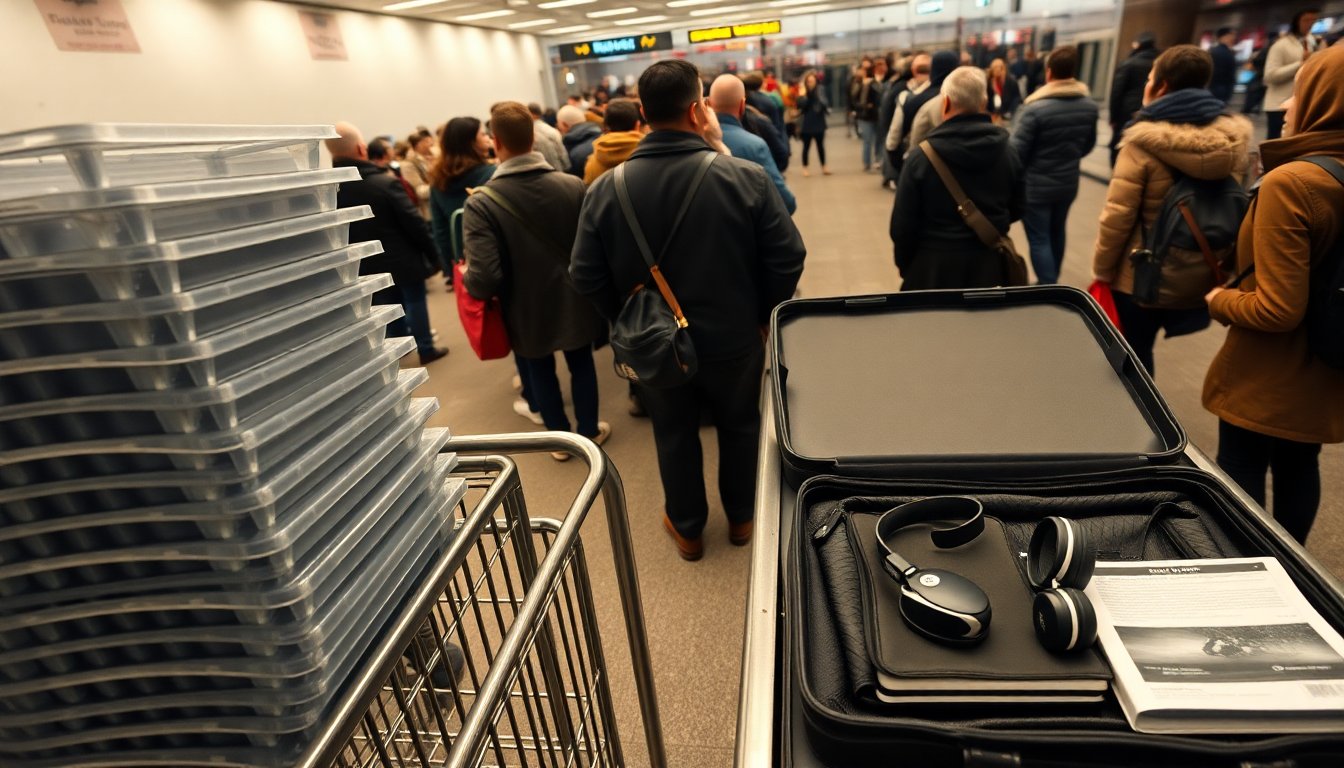
Operational effects have been uneven across the country: some terminals are functioning close to normal, while others face near-chaotic bottlenecks. Reports show that more than 450 TSA employees have left since the shutdown began, and average call-out rates that once hovered near 2 percent have climbed to roughly 10 percent in recent weeks, with certain hubs in New York, Atlanta, and Houston seeing far higher absences. The resulting lines have been widely shared on social media and have forced many travelers to arrive much earlier than usual to avoid missing flights.
How the staffing gap is affecting airport operations
The staffing shortfall has translated into longer waits, unpredictable checkpoint coverage, and stressed supervisors trying to reshuffle personnel. Union leaders point out that many officers are exhausted not only by the loss of pay but also by the memory of previous lapses in compensation during past funding fights. The AFGE argues that asking officers to work without pay undermines morale and financial stability, as many employees still face mortgages and other bills. Local authorities managing airports emphasize that while port operations may not be federally funded, federal personnel who run key security functions are directly affected by the funding lapse.
ICE deployment: intended roles and expert reservations
The administration has directed agents from ICE to assist at airports, a move described by officials as a way to plug staffing gaps and speed passenger flow. Senior figures claim ICE officers can perform tasks like monitoring exits, checking identification, and handling nontechnical screening duties as a force multiplier for the TSA. However, aviation experts and former agency officials warn that airport screening requires specific training: operating X-ray systems, identifying concealed threats, and following aviation security protocols are distinct skills that take extensive hands-on instruction and periodic recertification.
What ICE agents are likely to do
According to administration statements, ICE personnel will be deployed to nontechnical posts such as perimeter exits and ID verification points to free up certified TSA officers for checkpoints. Supporters say this approach could relieve pressure and reduce wait times in the short term. Critics counter that even seemingly minor tasks at checkpoints intersect with complex security routines, and any shift in duties carries the risk of operational mistakes. Observers also caution that the presence of immigration agents in passenger flow areas could change how travelers behave and raise concerns about civil liberties.
Potential risks and public concerns
Civil liberties groups and many Democratic lawmakers have voiced alarm that using ICE at airports could lead to immigration enforcement actions in travel spaces, increasing anxiety and deterring passengers. Former ICE leadership and independent analysts have pointed out the danger of blending immigration policing with aviation security: if ICE appears to be conducting immigration checks or arrests near screening areas, it could cause confusion, escalate confrontations, and further disrupt airport operations. The controversy has sharpened calls for a narrowly focused, interim funding fix for TSA.
Political impasse and possible paths forward
The immediate cause is a negotiation impasse over broader DHS funding that was deferred when lawmakers agreed to postpone discussions on immigration enforcement reforms earlier in the budget process. Some Democrats have pushed standalone measures to fully fund TSA payrolls, while Republicans and the White House have tied broader DHS funding to other legislative priorities, including election law changes promoted in the so-called SAVE America Act. Media reports indicate the Senate may advance a measure to restore much of DHS funding while leaving contentious ICE reforms for later talks, but the details remain fluid.
For now, public officials and advocacy groups urge travelers to factor in extra time for security screening and to monitor airport advisories. Industry observers warn that continued uncertainty will further erode confidence in a system already coping with international flight disruptions and heightened security demands. Restoring pay and stabilizing staffing levels is widely seen as the quickest way to ease lines and repair the perception of a reliable aviation security system.