
Table of Contents
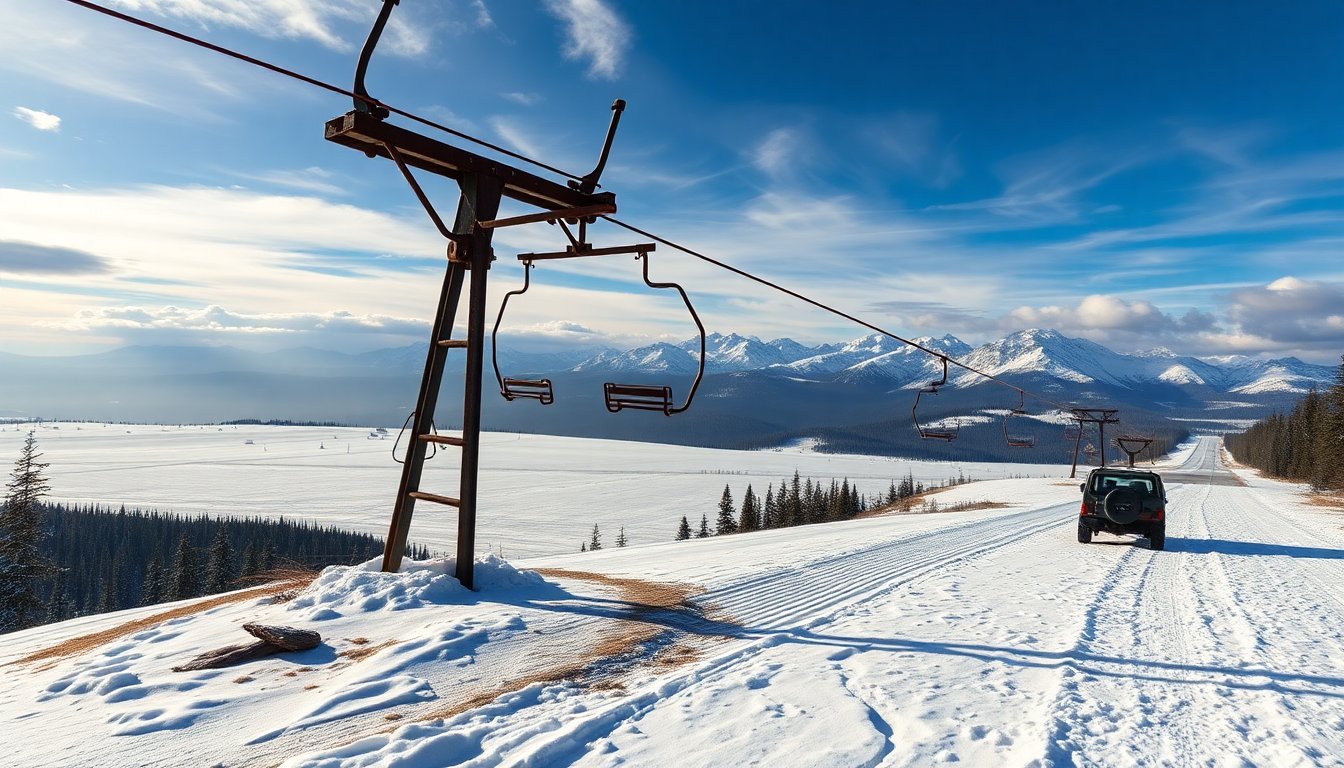
The Alberta government has opened public consultations after announcing plans in December to designate several provincial sites as all-season resorts. One primary focus is Fortress Mountain in Kananaskis Country, about 125 kilometres west of Calgary. The site operated a ski lift until it closed in 2004 and currently offers only cat skiing.
Provincial officials and developers argue the conversion to an all-season tourism hub will create local jobs and broader regional economic activity. Conservation groups and local residents have called for rigorous assessment of ecological and recreational impacts. A recent open house at Mount Royal University in Calgary provided an early forum for public input and highlighted competing priorities.
Project scope and proposed amenities
The proposal aims to repurpose existing infrastructure and add new facilities to support year-round tourism. Planned elements under discussion include upgraded lifts, expanded winter runs, hiking and mountain-bike trails, lodging, and conference spaces. Planners describe integrated services for summer and winter visitors to extend seasonality and revenue streams.
From a strategic perspective, proponents emphasize economic resilience and diversification for nearby communities. Conservation advocates stress habitat protection, watershed integrity, and preserving access for backcountry recreation. The data shows a clear trend: tourism projects in mountain regions increasingly face simultaneous economic and environmental scrutiny.
The operational framework being discussed balances development and conservation through phased construction, monitoring, and adaptive management. Early milestones proposed by stakeholders include baseline ecological surveys, a traffic and access study, and a public benefits assessment.
Details remain subject to further consultation and regulatory review. The province has invited written submissions and scheduled additional public sessions to refine project parameters and mitigation measures.
Developers propose hotels, gondolas and expanded trails
Following the public consultation process, developers working with Western Securities and Ridge North America presented conceptual plans for the area. The proposals include hotels, gondolas, expanded trail networks and opportunities for private real estate sales.
Project partners estimate the initiative could draw thousands of visitors and say the development would create more than 1,000 jobs during construction and operation. The statement did not include a detailed economic model in the materials provided to the province.
The provincial designation of the sites as all-season resort zones and related adjustments to some provincial park boundaries enabled the developers to present these proposals as feasible within the new planning framework. Supporters argued the projects would diversify tourism and expand year-round economic activity in the region.
Public engagement and consultation process
Officials said the consultations aim to identify public priorities and areas of concern. David McKenna of Ridge North America told organizers the team is mapping which features residents and stakeholders want included or excluded. He said the project team is actively soliciting detailed input. The next scheduled public consultation is set for Feb. 23 in Edmonton.
From a strategic perspective, the data shows a clear trend: early stakeholder input narrows contested issues and accelerates permitting. Organizers asked participants to flag specific transport and access constraints so planners can model impacts on service levels and emergency response times.
At the recent Mount Royal University open house, attendees reviewed maps and renderings and asked questions about infrastructure, access and timelines. Organizers encouraged questions on transportation, parking capacity and weekend traffic patterns. They noted Kananaskis Country already receives a high volume of visitors and that seasonal peaks will be a primary modelling parameter.
Community concerns and traffic implications
Residents raised concerns about increased vehicle volumes and pressure on local roads. Several submissions referenced weekend congestion, parking overflow and longer emergency vehicle travel times. Planners acknowledged the concerns and said traffic modelling is underway.
The operational framework consists of staged traffic assessments linked to project milestones. Phase 1 will produce baseline traffic counts and origin-destination surveys. Phase 2 will test mitigation measures such as shuttle services, timed-entry systems and expanded parking management. Milestone: deliver initial modelling results before the next funding decision.
From a strategic perspective, stakeholders emphasised the need for real data and transparent trade-offs. Concrete actionable steps include deploying automated counters at key junctions, publishing modelling assumptions and scheduling targeted workshops with affected communities.
Building on the planned deployment of automated counters and public workshops, stakeholders warned the proposed resort could intensify existing pressure on infrastructure and ecosystems.
Congestion and local infrastructure strain
Residents and local advocates say Kananaskis already receives about 5 million visitors per year, roughly one million more than Banff National Park according to some advocates. They warned a new resort would increase peak weekend vehicle volumes and extend queueing on local roads.
The data shows a clear trend: visitor concentration on holiday weekends creates recurring bottlenecks. From a strategic perspective, officials will need targeted traffic modelling and staged mitigation to avoid service failures.
Concrete actionable steps suggested by participants included expanded shuttle services, time-windowed access permits and enforcement of parking limits. Milestones cited were completion of traffic modelling and public release of assumptions used in projections.
Environmental questions and habitat overlap
Conservation groups said the environmental assessment did not fully address ecological impacts. The Biosphere Institute of the Bow Valley described the assessment as incomplete and said key questions remain unanswered.
The concerns focus on habitat overlap between proposed development zones and sensitive species corridors. The operational framework consists of enhanced baseline studies, independent peer review and transparent disclosure of modelling inputs.
From a strategic perspective, groups requested a formal adaptive management plan and legally binding offsets before any approval. They also asked for independent monitoring with publicly accessible results as a precondition for further permitting.
They also asked for independent monitoring with publicly accessible results as a precondition for further permitting. The request underscores broader scientific and procedural concerns raised by conservation groups.
The Canadian Parks and Wilderness Society said the Fortress Mountain area overlaps with key habitat for grizzly bears and wolverine. The organization added the landscape contains critical aquatic habitat for threatened bull trout. These biological factors form the core of formal objections.
Environmental assessment and data gaps
Critics contend the existing environmental assessment lacks necessary seasonal and cumulative data. They say it does not adequately document wildlife migrations, peak visitor pressures, or long-term impacts of proposed infrastructure.
From a strategic perspective, stakeholders demand transparent baseline studies, clear mitigation commitments and independent oversight before approvals proceed. The data shows a clear trend: conservation groups prioritize rigorous, publicly available evidence over expedited permitting.
Observers called for specific improvements to the assessment. They want targeted studies on seasonal wildlife movements, aquatic habitat surveys for bull trout, and a cumulative-effects analysis that includes projected visitor growth. They also requested legally binding mitigation measures and a publicly accessible monitoring protocol tied to permit conditions.
What to watch next
Stakeholders will continue to press for legally binding mitigation and a publicly accessible monitoring protocol tied to permit conditions. The data shows a clear trend: demands for enforceable oversight are now central to negotiations.
Proponents argue modern resort design can include wildlife corridors, low-impact construction techniques and operational restrictions to limit harm. Critics counter that mitigation plans must be robust and that monitoring must be independently verifiable and enforceable.
From a strategic perspective, expect three near-term developments. First, more detailed technical studies addressing ecological impacts and mitigation efficacy. Second, follow-up public meetings where community priorities and alternative proposals will be aired. Third, potential revisions to proposal elements in response to new evidence and regulatory scrutiny.
The operational framework for judging mitigation will likely emphasize clear metrics, independent audits and transparent reporting. Observers should watch for statements specifying who conducts monitoring, how results are published and what penalties attach to noncompliance.
The outcome will hinge on balancing economic development goals with commitments to preserve conservation values and public access. Concrete actionable steps for stakeholders include submitting technical evidence, requesting specific permit conditions and seeking third-party monitoring arrangements.
Next steps for stakeholders
The data shows a clear trend: stakeholders must move from comment to documented action. Track consultation schedules and submit technical evidence during open comment periods. The next public event on Feb. 23 in Edmonton provides a direct opportunity to register positions and influence permit conditions.
Concrete actionable steps
From a strategic perspective, stakeholders should follow a four-point approach aligned with the article’s framework.
- Prepare submissions. Gather technical reports, dates of observation and clear requests for permit conditions. Keep each submission under 1,000 words and include source citations.
- Attend the Feb. 23 public event. Register in advance where required. Deliver concise spoken comments and submit the written version to the record.
- Request independent monitoring. File formal requests for third-party monitoring arrangements tied to permit milestones.
- Document outreach. Save confirmations, screenshots and reference numbers for all filings and public comments.
Operational checklist
- Confirm consultation calendar and open comment deadlines.
- Create a one-page summary for each submission with key evidence and recommended permit language.
- Prepare a three-sentence summary for oral comments at public events.
- Ensure accessibility of materials for regulators and the public (PDF/A, clear headings).
- Flag any data gaps and propose specific monitoring metrics.
- Coordinate with allied organisations to avoid duplications in submissions.
- Record attendance and submit written comments immediately after public meetings.
- Set monthly review milestones to assess citation and response from decision-makers.
From a technical standpoint, ensure submitted evidence references peer-reviewed sources or verified surveys. Use clear metrics and timelines when proposing monitoring conditions. The operational framework consists of immediate submission, engagement at public events, and sustained follow-up through documented requests.
The next public event on Feb. 23 in Edmonton is an actionable moment for those seeking influence over permit outcomes. Prepare focused materials and register participation to ensure contributions are part of the official record.