
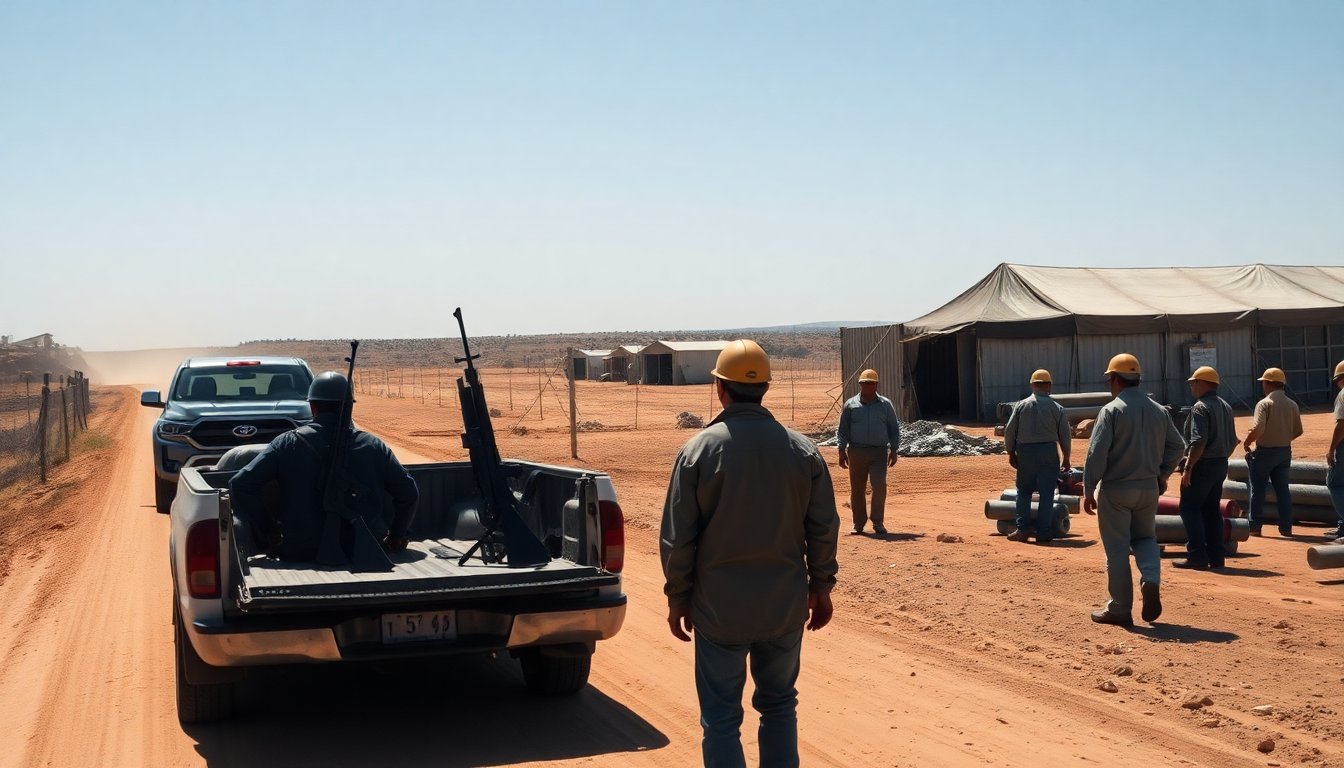
Three former workers who left Vizsla Silver’s Pánuco project in 2026 — all speaking on the condition of anonymity for their safety — describe a workplace that felt less like a remote exploration camp and more like a territory tightly controlled by armed groups.
What they witnessed
The site, about 25 kilometres east of Concordia and covering roughly 35,000 hectares, was frequently crossed by armed men in pickup trucks during daylight, the witnesses said. At night, they reported seeing large, armored “monster” vehicles rolling along the roads while drones hovered overhead. These security elements, according to the former employees, were conspicuous and overt rather than covert.
Management’s account and worker experiences diverge
Company spokespeople have denied any links to criminal groups, saying Vizsla Silver is cooperating with Mexican authorities and “prioritizes the safety and security of its people,” relying on industry best practices and expert planning. They also say the company has not received threats, ransom demands, or paid extortion.
The employees paint a different picture. They say supervisors repeatedly downplayed or dismissed reports of gunfire and other violent incidents. Several staff members told investigators that formal complaints were ignored or even mocked, rather than investigated. To minimize friction with patrols, workers say they were instructed to swap orange safety vests for yellow ones and to always carry company ID — the implicit rule being: show your badge and you’ll be allowed to pass.
Incidents cited by former staff
– In June 2026, witnesses say two Vizsla Silver pickup trucks fitted with company GPS trackers were seized. Security personnel later saw those vehicles being driven south of the mine, the witnesses reported. – The former employees also allege abductions. They claim some workers were taken from a gated compound in the Celmentina residential area; that compound was later sealed by Sinaloa’s Attorney General’s Office. Photographs circulated to investigators show security forces posted near El Verde and other access points around the project.
Taken together, these accounts underscore a stark contrast: a company narrative of standard security practices versus workers’ memories of a worksite where armed control and uneasy compromises shaped daily life.