
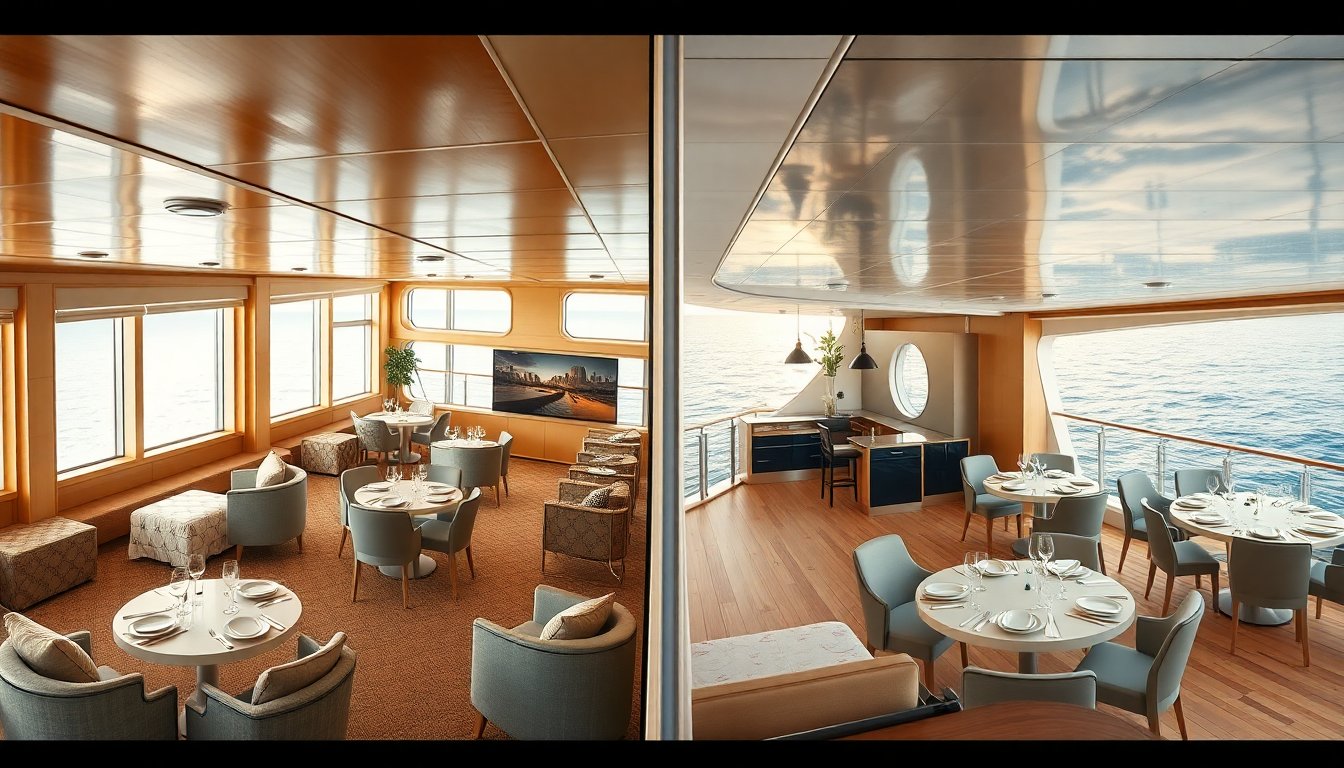
Market signals make one thing clear: small-ship cruising is splitting into two distinct experiences. At one end are comfort-focused vessels that prioritize roomy public spaces, dining and relaxed social life. At the other are true expedition ships built around shore access, specialist equipment and intensive naturalist programming. Comparing American Cruise Lines’ American Heritage with Celebrity Cruises’ Celebrity Xpedition highlights how design choices and staffing models translate into very different vacations—and different financial dynamics for operators.
The basics
– American Heritage: 295 ft long, 53 ft beam, gross tonnage ~2,700, five decks, 150 passengers, crew 50 (guest-to-crew ≈ 3.00). Emphasis: comfortable public areas, dining capacity and adult-oriented onboard programming.
– Celebrity Xpedition: 296 ft long, 49 ft beam, gross tonnage ~2,842, six decks, 48 passengers (guest-to-crew ≈ 1.41). Emphasis: expedition-led itineraries, naturalist staff and shore excursions.
What the specs mean for travelers
Passenger count, gross tonnage, deck layout and guest-to-crew ratios aren’t just numbers—they shape your day-to-day experience. A higher guest-to-crew ratio (as on American Heritage) typically means steadier economies of scale—more dining options, fuller public rooms and a social atmosphere. A lower ratio (as on Celebrity Xpedition) buys you more attentive service, smaller groups ashore and a stronger focus on guided natural history and wildlife viewing.
Operational and financial trade-offs
Smaller gross tonnage relative to capacity improves maneuverability and access to shallow anchorages—critical for expedition routes. Conversely, larger public-space-to-guest ratios reduce crowding and ease service strain on comfort-led ships. From an operator’s standpoint, these design choices affect fuel consumption, port fees, staffing costs and ancillary revenue mixes. Expedition cruises often generate higher per-guest excursion spend and can command premiums on remote routes; comfort-led ships tend to deliver steadier onboard spend on dining and bars.
Market context and demand
Traveler preferences have shifted toward experiences—many guests now prioritize destination engagement and knowledgeable crews over mere ship size. That has encouraged investors and operators to diversify: some target adults seeking culinary and social programming, others court nature-oriented guests wanting immersive shore time. Seasonality, fuel price swings and income volatility still influence bookings, but the appetite for curated, small-group experiences remains robust.
Key variables to weigh
– Cabin size and public-space allocation: influence comfort and perceived value.
– Expedition equipment and specialist staff: necessary for wildlife and scientific programming.
– Crew composition and service model: determine how personalized the experience feels.
– Itinerary complexity and port access: affect operating cost and what destinations are possible.
– Regulatory and environmental compliance: shape refit needs and route choices.
Ratings and guest feedback
Review platforms show a clear differentiation in guest sentiment rather than technical flaws. American Heritage scores well for dining and social programming but earns more modest Celebrity Xpedition consistently rates higher for expedition leadership, shore excursions and nature-focused experiences. In short: travelers who prize guided wildlife encounters and cultural immersion tend to favor Xpedition; those seeking comfortable, food-forward cruising often lean toward American Heritage.
Sector impacts
The rise of these two profiles changes local tourism patterns: smaller ships can call niche ports that larger liners cannot, bringing different types of visitors to shore-side suppliers. Fleet planners must balance retrofit costs against expected yields—adding expedition gear and naturalists raises operating expenses but can unlock premium routes and ancillary income. Meanwhile, comfort-led ships can scale in-ship revenue through dining and entertainment investments.
Outlook
Expect the small-ship market to remain segmented. Operators who clearly align vessel features with a defined guest profile—whether culinary comfort or expedition immersion—will be better placed to manage revenue volatility and optimize per-guest returns. For travelers, the choice comes down to priorities: seek American Heritage for roomy public areas and a social dining focus; choose Celebrity Xpedition for intimate groups, high crew attention and rich shore programs.