
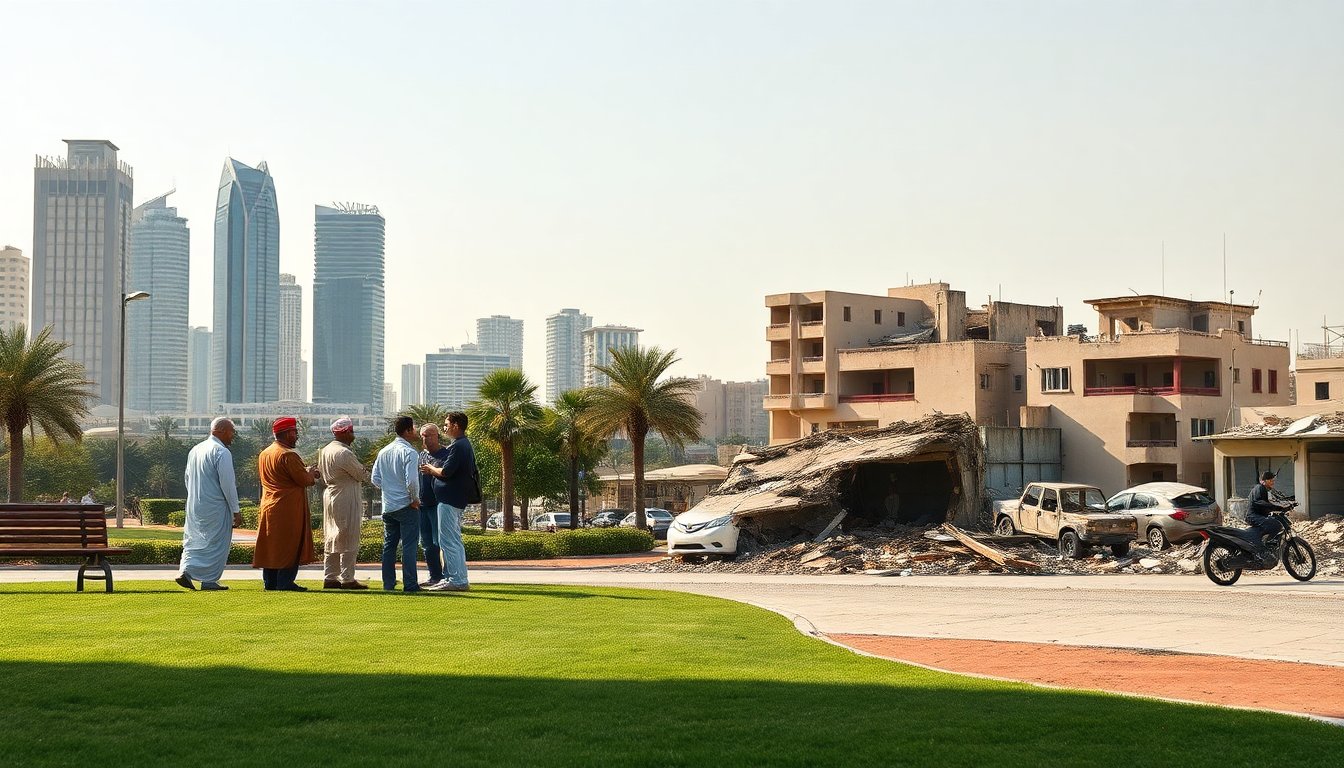
The ongoing conflict in the Middle East has recently seen a significant escalation, particularly with the Israeli military’s targeted strikes on Hamas leaders in Doha, Qatar. This article aims to dissect the implications of these attacks, the survival of key Hamas figures, and the evolving dynamics within the organization. Understanding these elements is crucial for grasping the broader narrative of the conflict and the geopolitical landscape in the region.
Overview of the Israeli Attack
On Tuesday, Israel’s military characterized its operation in Doha as a “precise” attack on a residential complex housing senior Hamas leaders. This assault resulted in the deaths of six individuals, including five Hamas members and a Qatari officer. Despite these casualties, critical figures within Hamas’s leadership, including Khalil al-Hayya, reportedly survived.
This attack has highlighted the precarious nature of Hamas’s leadership amidst ongoing military pressure. Al-Hayya, a prominent figure within the organization, has gained prominence following the deaths of other key leaders. His role has become increasingly vital as he navigates the complexities of negotiation and leadership in a conflict-ridden environment.
Born in 1960 in the Gaza Strip, al-Hayya has been a staunch supporter of Hamas since its inception in 1987. His diplomatic efforts, primarily based in Qatar, have positioned him as a key negotiator with various countries, including Israel and Egypt. Operating outside the Gaza Strip allows him greater freedom to engage in discussions without the constraints imposed by the Israeli blockade.
Impact on Hamas Leadership Structure
The recent attacks have significantly weakened Hamas’s leadership, prompting the formation of a new five-member ruling council. This council is tasked with guiding the organization through these turbulent times. The death of several leaders has left al-Hayya and others, such as Zaher Jabarin, to manage the group’s operations and strategic direction.
Jabarin, currently serving as Hamas’s chief financial administrator, has demonstrated remarkable resilience. After nearly two decades of imprisonment by Israel, he emerged to assume a pivotal role within Hamas’s financial structure. His management of an extensive investment and funding network is crucial as the organization seeks to sustain its operations amidst ongoing conflict.
Moreover, the recent casualties have elevated the stakes for the remaining leadership. Figures like Izz al-Din al-Haddad and Khaled Meshaal now find themselves at the forefront of Hamas’s military and political strategies. Al-Haddad, recognized for his military expertise, has become a primary target for Israeli forces, while Meshaal continues to articulate Hamas’s political stance from his base in Qatar.
Looking Ahead: The Future of Hamas Leadership
The survival of Hamas leaders in the face of adversity speaks volumes about the organization’s resilience. As we analyze the trajectory of Hamas’s leadership, it is essential to consider the implications of these recent events on future negotiations and the potential for conflict resolution.
The establishment of a leadership council indicates a strategic shift within Hamas, aiming to consolidate power and ensure continuity in its operations. However, the loss of experienced leaders poses challenges regarding organizational cohesion and strategic direction. The remaining leaders must navigate a complex web of internal and external pressures while maintaining their influence over the group.
As the geopolitical landscape evolves, the role of external actors, including regional powers and international stakeholders, will be pivotal in shaping the future of Hamas and its leadership. The ability of these leaders to adapt and respond to the changing dynamics will be crucial in determining the organization’s long-term viability and its approach to negotiations with Israel and other entities.


