
Table of Contents
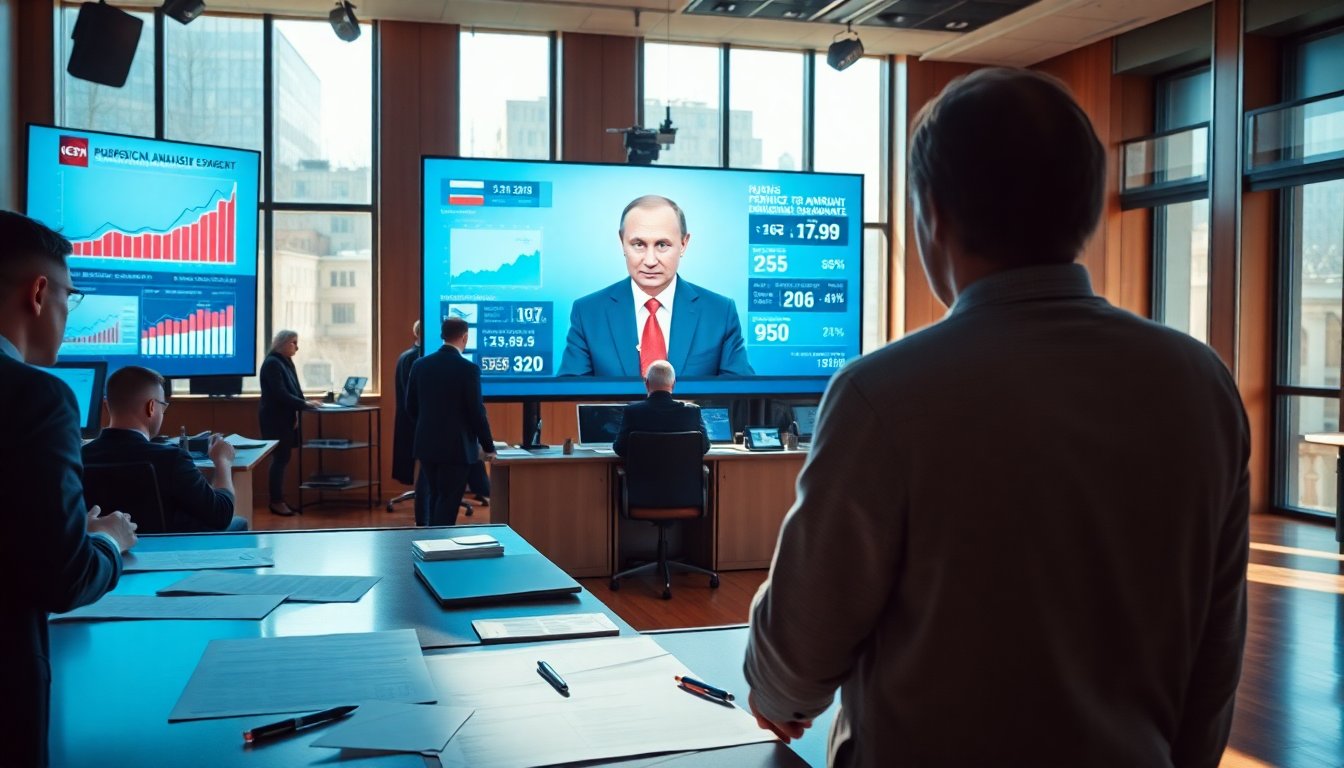
In a lengthy televised session, President Vladimir Putin addressed various issues during his annual Direct Line call-in show. Over four hours, he tackled topics ranging from the ongoing war in Ukraine to the state of the Russian economy. However, many of his statements raised eyebrows due to their questionable accuracy. This article aims to unpack some of Putin’s most notable assertions and provide a fact-check to clarify the reality behind his claims.
Budget claims and realities
One of the points Putin emphasized was the federal budget. He claimed, “The federal budget deficit is 2.6 percent of GDP, but next year we expect it to be 1.6 percent,” asserting that the government had successfully balanced the budget. While these figures are based on official predictions, they omit critical context, particularly regarding war expenditures.
The reality is that Russia’s wartime spending has escalated dramatically, exceeding $137 billion in 2025 alone. Consequently, the government is resorting to tax hikes to maintain this apparent balance. Starting in 2026, the general value-added tax (VAT) will increase from 20 to 22 percent, a measure justified by the Finance Ministry as necessary for funding defense and security initiatives, which includes the conflict in Ukraine. Despite Putin labeling this tax increase as “temporary,” its long-term implications remain uncertain.
Discussions on peace
When addressing the topic of peace talks, Putin described claims that Russia rejected a peace plan as “absolutely incorrect.” He articulated that the onus lies on Western leaders and the Ukrainian government for any diplomatic resolution. Although Russia has not ruled out the potential for negotiations and is in discussions with the United States, there has been a notable absence of willingness to make concessions.
Putin reiterated his demands from last summer, which included the transfer of territories such as Donetsk, Luhansk, Kherson, and Zaporizhzhia to Russian control, coupled with international recognition of these areas as Russian territory. Given these stringent conditions, it seems unlikely that Ukraine would agree, especially while under military pressure.
NATO expansion grievances
Another recurring theme in Putin’s rhetoric is the alleged betrayal regarding NATO’s expansion. He stated, “The promises made to us regarding the non-expansion of NATO are being ignored. We have been deceived once again.” This narrative suggests a breach of trust, yet it is essential to clarify that no formal commitments were made by Western leaders concerning NATO’s growth.
While discussions surrounding German reunification did touch on NATO’s potential eastward movement, no legal guarantees were provided. Thus, Putin’s assertion of betrayal lacks a solid foundation in documented commitments.
Foreign agent laws and repression
Putin also defended Russia’s controversial foreign agents law, claiming it requires transparency in political activity funding without imposing repressive measures. However, this perspective is misleading. Violating the stipulations of this law can lead to severe penalties, including imprisonment for up to two years. Recently, a court sentenced opposition politician Ilya Yashin to 22 months for this very reason, contradicting Putin’s assertion that the law is not punitive.
Furthermore, during the Direct Line, Putin suggested that military operations could cease if Western nations would treat Russia with respect. This notion of respect as a precursor to military action marks a notable shift in justification for the invasion of Ukraine, yet it raises questions about the sincerity of such claims.
War consequences and accountability
As the conversation shifted to the humanitarian impact of the war, Putin distanced Russia from responsibility for the casualties, stating, “We don’t consider ourselves responsible for people’s deaths because we didn’t start this war.” This statement reflects a broader narrative that attempts to deflect blame onto Ukraine for the conflict’s origins.
One of the points Putin emphasized was the federal budget. He claimed, “The federal budget deficit is 2.6 percent of GDP, but next year we expect it to be 1.6 percent,” asserting that the government had successfully balanced the budget. While these figures are based on official predictions, they omit critical context, particularly regarding war expenditures.0