
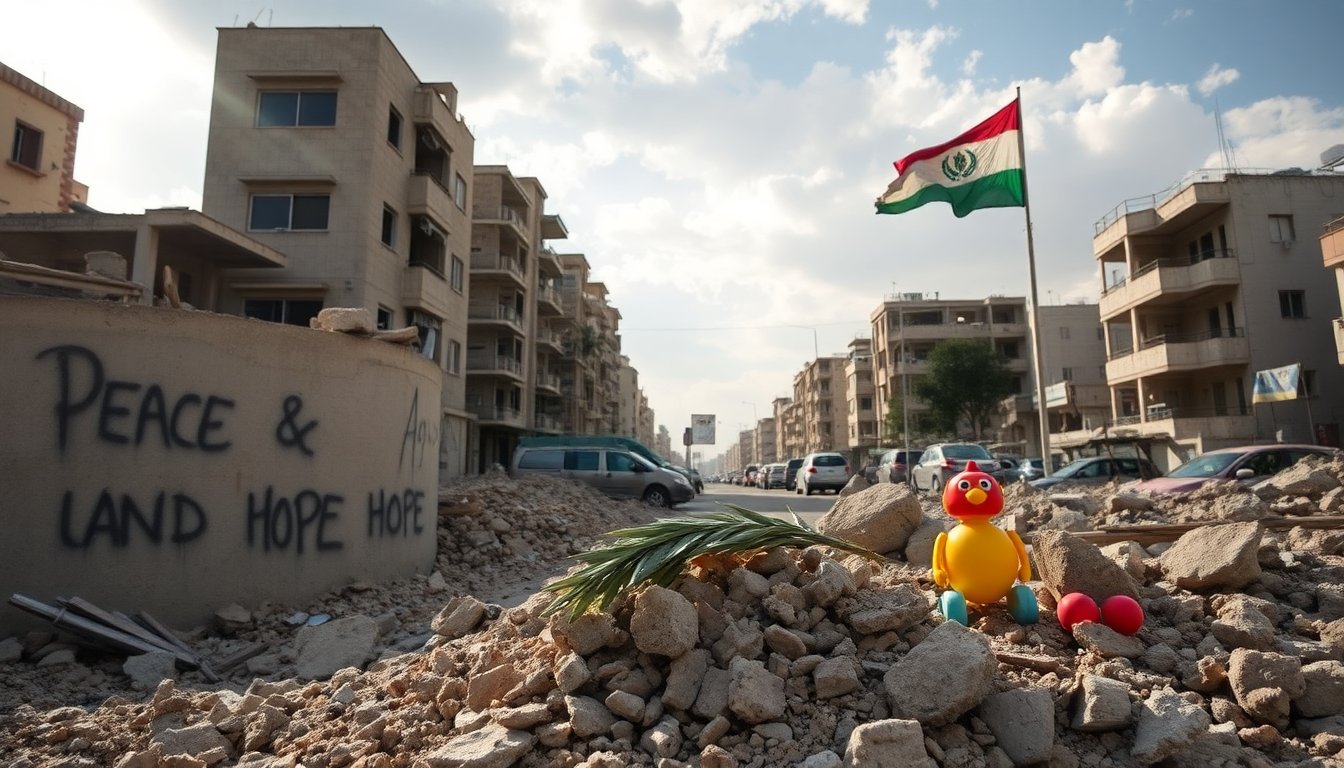
The recent cessation of airstrikes represents a pivotal moment in the ongoing conflicts of the Middle East. Following the release of some Israeli hostages and numerous Palestinians from Israeli detention, a fragile peace has emerged. However, as the situation stabilizes, uncertainties persist regarding the future of Donald Trump’s contentious peace initiative and its potential longevity.
While the halt in hostilities is a positive development in a region long plagued by violence, Trump’s characterization of this moment as the “historic dawn of a new Middle East” overlooks the complex issues that continue to exist. Although fighting has paused, the fundamental conflicts that have driven decades of discord remain largely unaddressed.
The nature of the ceasefire and its implications
The current peace can be classified as “negative peace”, indicating an absence of conflict without tackling the root causes of the tensions. Trump’s recent comments acknowledged the persistent divisions in the region, yet his vision lacks a thorough strategy to promote lasting peace.
Trump’s perspective on Middle East relations
In his statements, Trump emphasized Israel’s military actions against groups like Hezbollah and Iran, viewing these as steps toward disarming Hamas and fostering peaceful coexistence. He also pointed to the Abraham Accords, which led to normalization agreements between Israel and several Arab nations in 2020, as a sign of progress.
Nevertheless, Trump’s plan, despite its ambitious scope, conspicuously sidesteps the critical issue of a two-state solution, a framework historically central to U.S. policy in the region. When asked for clarification on this matter, Trump provided an ambiguous response, suggesting that both one-state and two-state solutions have their supporters, leaving many uncertain about the actual way forward.
Challenges in achieving lasting peace
The lack of a definitive framework for resolving the Israeli-Palestinian conflict raises doubts about the effectiveness of Trump’s approach. Nader Hashemi, a scholar of Middle East politics, contends that the peace plan is disproportionately favorable to Israeli interests and was formulated without meaningful input from Palestinian representatives. He argues that this imbalance impedes the prospect of achieving comprehensive regional peace.
The role of international diplomacy
Historically, the pursuit of lasting peace in the Middle East has encountered numerous obstacles. Even prior to the escalation of hostilities on October 7, the region was characterized by a cycle of failed negotiations and persistent violence. For any substantial peace to materialize, a trustworthy mediator must emerge to facilitate dialogue and promote compromise among the conflicting parties.
Successful peace initiatives, such as the Good Friday Agreement in Northern Ireland, demonstrate that transformative peace processes often necessitate years of negotiation and trust-building. Unfortunately, the current circumstances in the Middle East suggest that aspirations for “positive peace”—which includes not only the absence of conflict but also the presence of justice and equality—are increasingly elusive.
Reflections on the road ahead
In the wake of recent diplomatic efforts, Canadian Prime Minister Mark Carney offered a sobering perspective on Trump’s optimistic portrayal. He noted that while halting violence is an essential first step, the journey toward stability and enduring peace is intricate and protracted. This indicates that despite the ongoing ceasefire, the road to reconciliation is laden with challenges.
As the region navigates this uncertain landscape, it is crucial to understand that superficial agreements will not suffice. Genuine commitment from all parties, coupled with strong international support, is vital to establish a sustainable peace framework. Only then can the Middle East aspire to overcome its historical tensions and transition toward a future characterized by collaboration rather than conflict.


