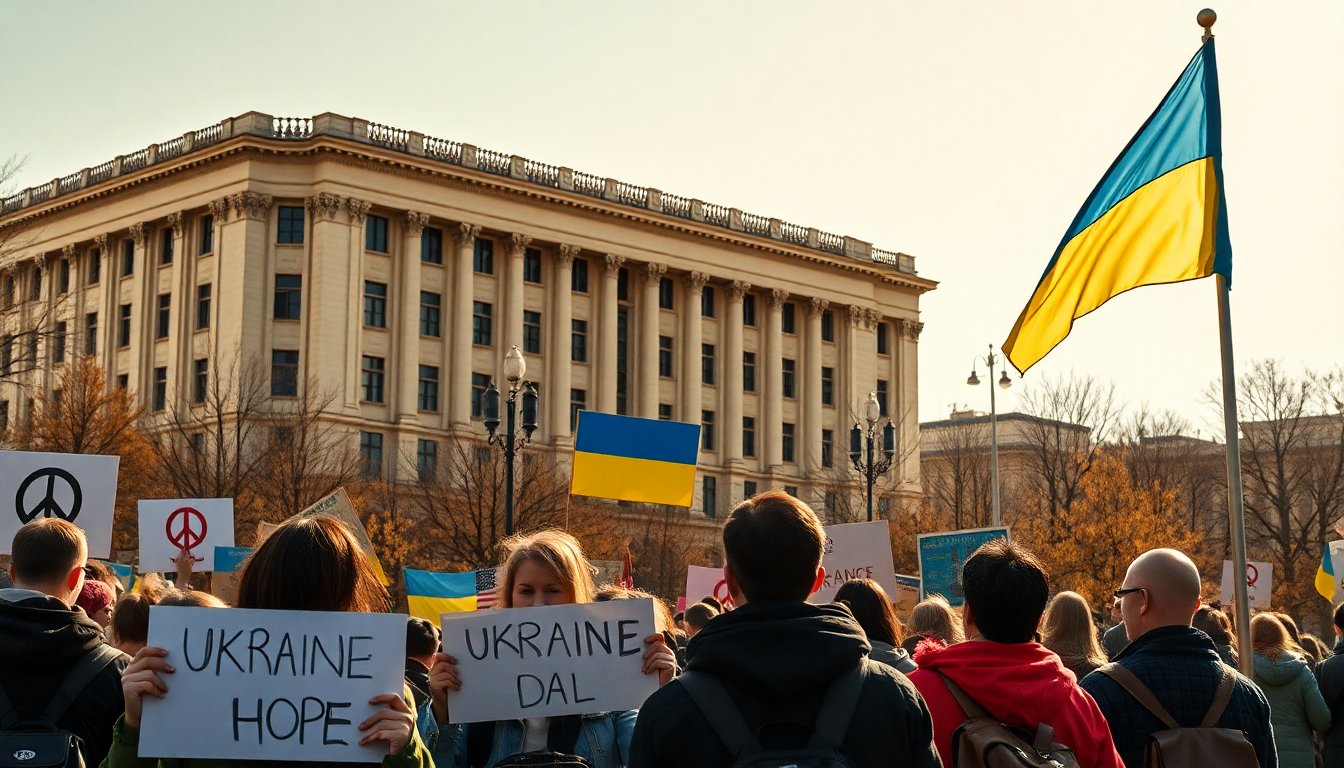
The dynamics of U.S. support for Ukraine have changed considerably, particularly under the Trump administration. A growing consensus among European political circles suggests that U.S. policy is primarily driven by national interests. As the peace process stagnates, observers are questioning the authenticity of President Trump’s recent endorsement of Ukraine.
Some analysts interpret Trump’s pivot as a tactical move to enhance his public image, while others fear it indicates a broader withdrawal from U.S. involvement in the conflict. This shift raises important questions regarding the future of the peace process and its implications for Ukraine and its allies.
The nature of Trump’s support for Ukraine
President Trump recently expressed optimism about Ukraine’s ability to reclaim territory lost to Russia, contingent upon European assistance. This statement received bipartisan praise, suggesting a potential turning point in U.S.-Ukraine relations. Ukrainian President Volodymyr Zelenskyy acknowledged Trump’s insights, noting that the president is well-informed about the evolving battlefield situation.
These remarks contrast sharply with Trump’s earlier statements, where he dismissed Ukraine’s negotiating power, suggesting they lacked leverage and should concede. Notably, Trump had previously claimed he could resolve the conflict within a day and hosted Russian President Vladimir Putin for a notable meeting in Alaska, yet substantial progress toward peace remains elusive.
European leaders respond
Following Trump’s comments, several European officials voiced their support. However, Polish Prime Minister Donald Tusk cautioned against misinterpreting Trump’s renewed enthusiasm. In a social media post, Tusk argued that the president’s statement might conceal a potential decrease in U.S. commitment, effectively shifting the responsibility of conflict resolution onto European nations. He stressed the importance of clarity, asserting that understanding the truth is vital.
Economic interests and military collaboration
Beyond political optics, speculation exists that U.S. economic interests are influencing its stance on Ukraine. The potential for lucrative opportunities in Ukraine’s critical minerals sector and ongoing negotiations for a drone deal worth up to $30 billion could be significant factors in this shift. Such collaborations aim to strengthen U.S. military capabilities while enhancing Ukraine’s defense systems.
During his address at the United Nations, President Zelenskyy expressed Ukraine’s readiness to share expertise in drone technology with Western nations. Although the U.S. has remained relatively silent on these negotiations, Zelenskyy mentioned a proposed draft agreement that includes investments in drone production and cooperative defense initiatives.
Ukraine’s self-sufficiency
Contrary to views suggesting that Ukraine’s fate rests solely with Europe, experts like Matthew Schmidt argue that Ukraine has demonstrated substantial self-reliance. Schmidt contends that Ukraine has made significant progress in producing its own weapons and training personnel, reflecting a level of competence that should not be underestimated. He emphasizes the nation’s strategic command and operational capabilities.
Since late August, Ukraine has effectively targeted Russian oil refineries, employing drone strikes that reportedly reduced Russia’s oil refining capacity by approximately 17%. This strategy has significantly impacted major refineries, disrupting both domestic supply chains and exports, thereby exerting economic pressure on Russia.
A complex landscape
The evolving U.S. policy toward Ukraine reflects a complex interplay of political motivations, economic interests, and military strategies. While President Trump’s recent statements may indicate a shift in support, the underlying motivations remain a topic of debate among experts. As Ukraine continues to assert its independence and capabilities on the world stage, the international community observes closely, recognizing that the future of the region hangs in the balance.