
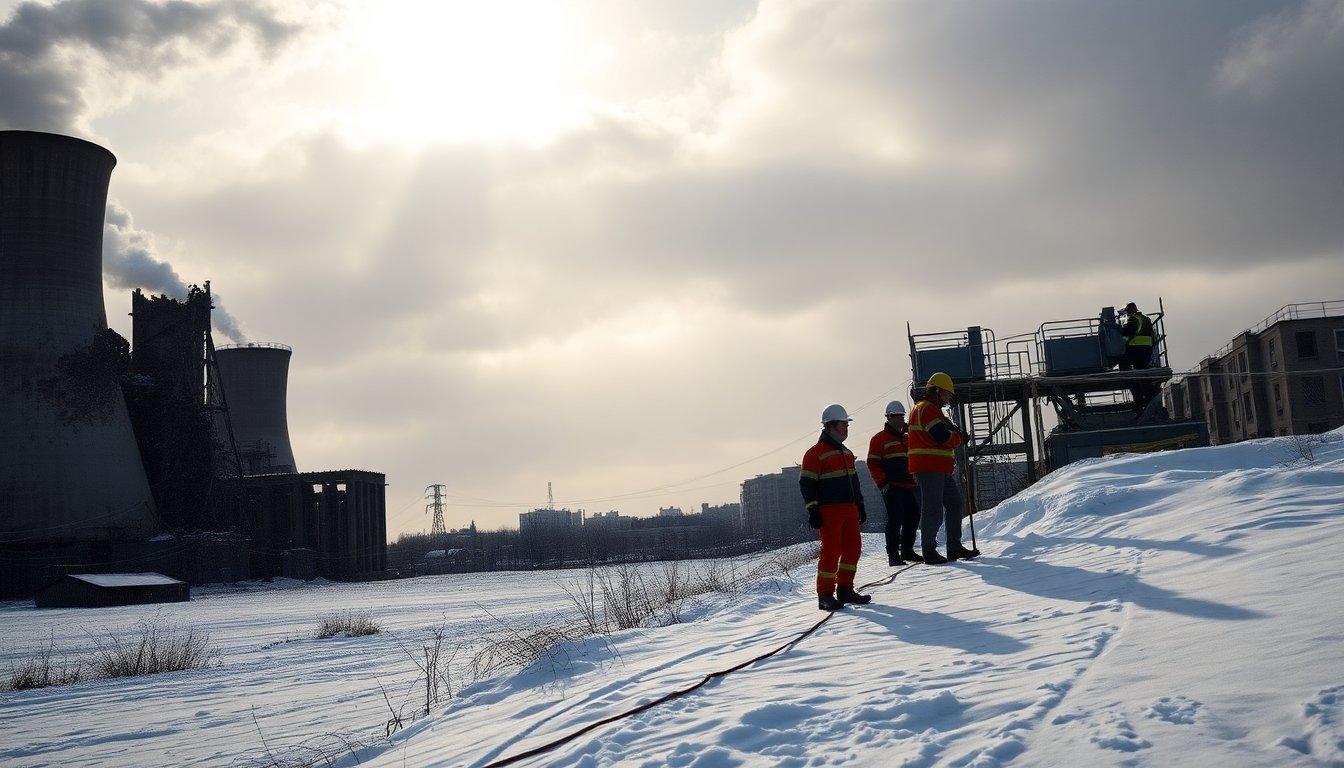
As winter approaches, tensions between Russia and Ukraine are escalating. Both nations are intensifying military efforts to disrupt each other’s energy infrastructure. In recent weeks, aggressive strikes on power grids and energy facilities have further fueled an already volatile situation. Moscow has long sought to undermine Ukraine’s ability to endure the cold and maintain its defense by targeting its power grid.
In a notable development, Ukraine has begun to retaliate against Russian energy assets, particularly in Crimea. Local officials have implemented price caps on fuel and introduced gasoline rationing due to dwindling supplies, a situation worsened by Ukrainian drone attacks on Russian oil refineries. Military analyst Dmitry Kuznets shared insights on this escalating energy conflict during a recent episode of Meduza’s daily podcast, discussing the implications of drone warfare and the potential use of tactical nuclear weapons.
Adapting strategies in energy warfare
Both Russia and Ukraine are continuously adapting their strategies to outmaneuver each other’s defenses. This includes countering electronic warfare systems and enhancing air defense capabilities. As military tactics evolve, both nations are carefully organizing their strikes to maximize damage, which can influence political decisions, public sentiment, and economic stability.
The effectiveness of countermeasures
Despite ongoing challenges, both sides have demonstrated a notable ability to evade countermeasures. Air defense systems have proven less effective against the barrage of strikes, while electronic warfare technology has not fully neutralized attacks. Nonetheless, strategic deployment remains a critical area for improvement. Sergey Vakulenko from the Carnegie Russia Eurasia Center emphasizes the need to avoid overestimating Ukraine’s ability to impact the Russian economy through targeted strikes on oil-refining facilities.
Historically, Russian military operations have aimed to cripple Ukraine’s energy sector, yet they have not succeeded in causing a total blackout that would paralyze the economy or diminish public resolve to continue fighting. This suggests that even with intensified strikes, dismantling a country’s power grid entirely is a formidable challenge.
Ukraine’s preparations for winter attacks
In anticipation of expected winter assaults, Ukraine has strengthened its defenses by stockpiling generators and batteries, with significant support from Western nations. Drawing lessons from previous conflicts, Ukraine has also improved its repair capabilities to quickly address damage caused by Russian strikes. The nation is poised to implement a strategy that prioritizes active deterrence over passive defense.
Deterrence through counter-strikes
President Zelensky has asserted that if Russia attempts to cut off power to Kyiv, Ukraine will retaliate by targeting Moscow’s power supply. However, this objective necessitates enhancing Ukraine’s arsenal of long-range drones and acquiring missiles capable of delivering substantial payloads. While drones can effectively strike distribution networks, their limited capacities make them less effective against generation facilities. The successful execution of counter-strikes requires a combination of drones and missiles, although questions persist regarding Ukraine’s capacity to deploy sufficient missiles this winter.
The nuclear dilemma and military strategy
Concerns about the potential use of tactical nuclear weapons persist, yet it appears that Russia’s leadership has not seriously considered this option during the conflict. The decision involves weighing possible benefits against the severe political consequences that would follow such an escalation. In the fall of 2022, as Russia faced significant setbacks in Ukraine, discussions within the Kremlin regarding tactical nuclear arms focused more on exerting pressure on the West than on achieving direct military gains.
Speculative scenarios have included detonating a nuclear warhead in unpopulated areas, potentially in the Arctic or sparsely populated regions of Ukraine. However, there is no solid evidence that Russian leaders are actively preparing for widespread tactical nuclear strikes. Historical military planning during the Cold War examined the implications of tactical nuclear deployments, but such strategies were based on large-scale use, which would inherently lead to rapid escalation and potential global conflict.
While the risk of nuclear engagement may seem reduced for now, it is essential to recognize that the situation could shift dramatically if Russia were to face a severe defeat. Presently, with the Kremlin not nearing such a scenario, the immediate threat appears to have lessened.


