
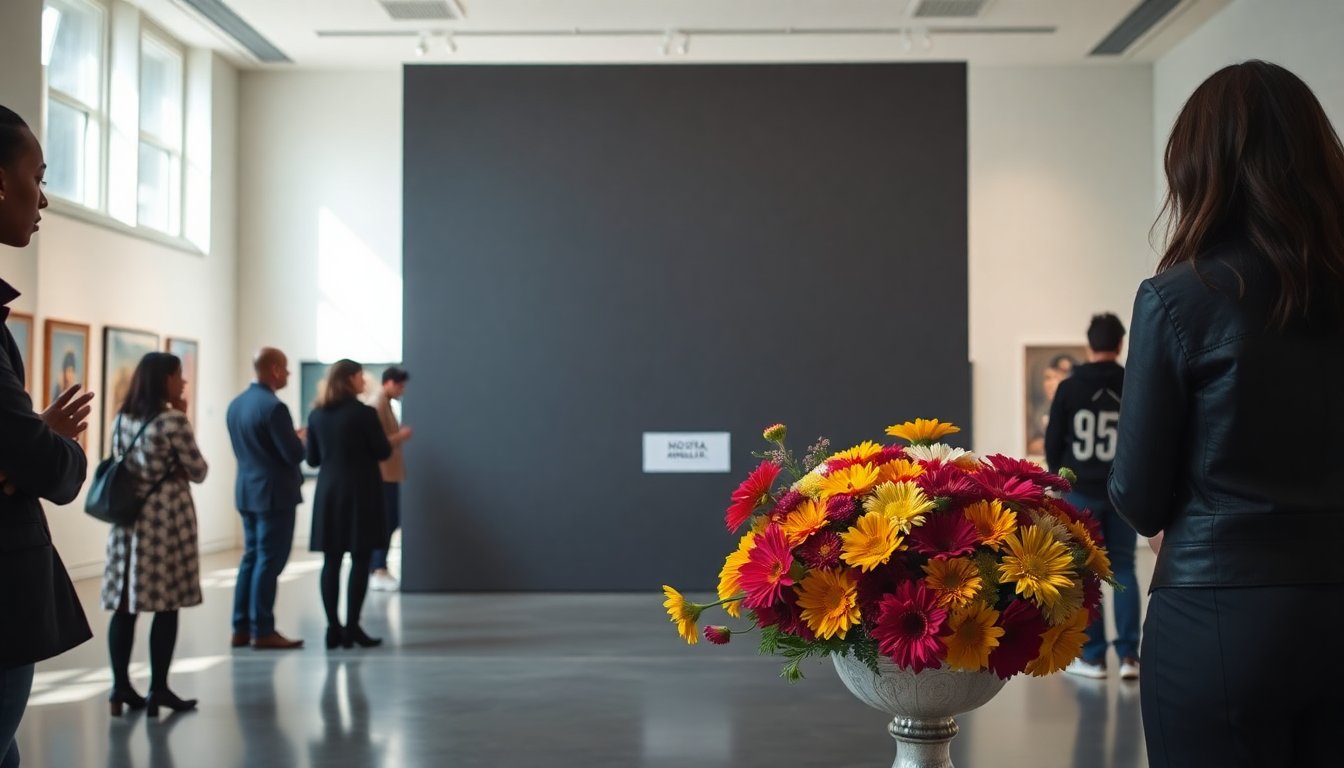
The influence of the Trump administration on cultural institutions is increasingly evident, particularly in museums that depend on federal funding. The cancellation of Amy Sherald’s exhibit at the Smithsonian serves as a critical example of how political pressure is reshaping the landscape of American art and cultural expression.
Sherald’s artwork, titled Trans Forming Liberty, portrays a Black, transgender woman emulating the Statue of Liberty, with her torch filled with vibrant flowers. The Smithsonian proposed to showcase her painting alongside a video featuring diverse public reactions. However, Sherald withdrew her exhibit, expressing concerns that such a presentation would dilute the critical message of trans visibility and compromise the integrity of her work.
The implications of Trump’s executive orders
In March, Trump issued an executive order titled Restoring Truth and Sanity to American History, aimed at combating what he termed a divisive ideology within institutions like the Smithsonian. He criticized a previous exhibition that examined the role of race in shaping American power structures, suggesting that such narratives were detrimental to national identity.
This order mandated officials to ensure that exhibits conformed to a sanitized version of American history, focusing on achievements rather than the complex truths of systemic oppression. This directive has raised concerns regarding the potential erasure of significant historical events, including the brutal legacy of slavery, from public discourse.
Resistance to cultural authoritarianism
In light of these pressures, cultural leaders are grappling with the implications of compliance versus resistance. The Trump administration has clearly indicated that it expects institutions to reflect a vision of American exceptionalism, which often conflicts with the realities faced by marginalized communities. The Smithsonian’s decision to include an interpretive video alongside Sherald’s painting was perceived as an attempt to appease this new political climate.
In August, the White House initiated a review of all Smithsonian exhibitions to ensure alignment with Trump’s vision, further tightening political oversight on cultural institutions. This scrutiny extends even to the nation’s 250th anniversary celebrations, reflecting a desire to control the narrative surrounding American history.
Impact on leadership and staffing in cultural institutions
The Trump administration’s influence on leadership within these institutions is also noteworthy. In May, Kim Sajet, the director of the National Portrait Gallery, was dismissed due to perceived partisanship, specifically regarding her support for diversity and inclusion initiatives. This reshuffling of leadership illustrates a broader strategy to remove any perceived ideological bias from museums.
The White House’s reaction following Sajet’s resignation underscores the administration’s commitment to reshaping cultural narratives. Trump’s spokesperson stated that there is no room for anti-American ideology in government institutions, reinforcing a narrative that prioritizes a specific version of history that aligns with conservative values.
The broader cultural stakes
As museums contend with these changes, the stakes for cultural expression and historical representation are considerable. The fear of financial repercussions for failing to adhere to the administration’s directives looms large over institutions reliant on federal funding. Reports indicate that the Smithsonian has already begun modifying its displays to mitigate potential backlash from the administration.
Conversely, Sherald’s decision to withdraw her exhibit has ignited a broader conversation about the role of artists in challenging political narratives. While she chose to remove her work from the gallery, the ongoing discussion about Trans Forming Liberty continues to resonate, emphasizing the importance of art as a form of resistance against authoritarianism.
Sherald’s artwork, titled Trans Forming Liberty, portrays a Black, transgender woman emulating the Statue of Liberty, with her torch filled with vibrant flowers. The Smithsonian proposed to showcase her painting alongside a video featuring diverse public reactions. However, Sherald withdrew her exhibit, expressing concerns that such a presentation would dilute the critical message of trans visibility and compromise the integrity of her work.0


