
Table of Contents
The recent declarations and actions by former President Donald Trump concerning Venezuela have ignited significant controversy. As the United States navigates its foreign policy in Latin America, Trump’s administration has intensified military presence and engagement, especially in the Caribbean region. This situation raises critical questions about legality, morality, and broader implications for international relations.
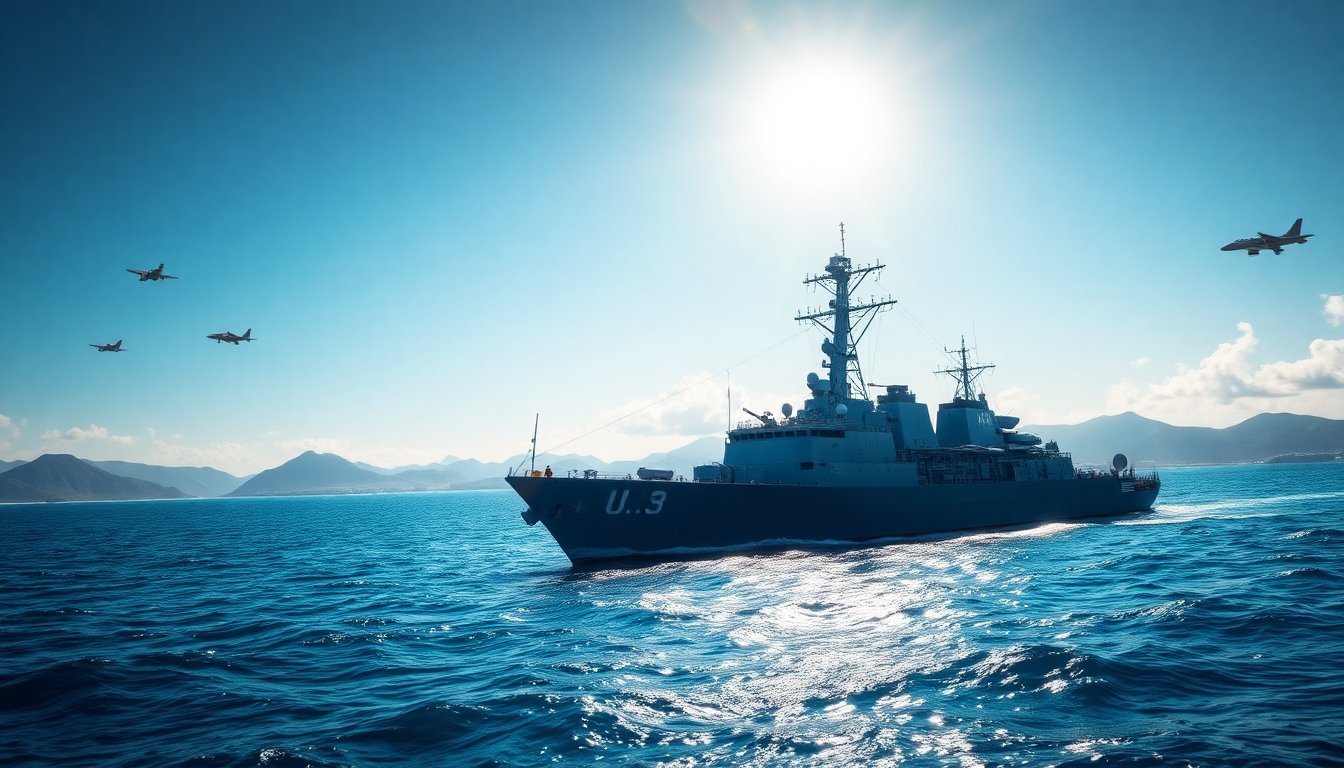
In November, Trump announced that Venezuelan airspace would be deemed ‘closed’, prompting strong opposition from Caracas. The Venezuelan government perceives this as a direct act of aggression, claiming it undermines their sovereignty. Amidst rising tensions, the Trump administration has conducted military actions against vessels allegedly linked to drug trafficking, resulting in numerous casualties.
Military actions and their justification
Since early September, U.S. forces have executed a series of strikes against boats suspected of drug trafficking. These operations raise questions about the legitimacy of the targets and the orders behind these strikes. Reports indicate that Defense Secretary Pete Hegseth was involved in decisions leading to lethal actions against these vessels, allegedly resulting in the deaths of at least 83 individuals.
Legal and ethical implications
The legality of these military strikes has sparked considerable debate. Critics contend that such actions constitute extrajudicial killings, violating both U.S. constitutional law and international statutes. Legal scholars, including Bruce Fein, assert that only Congress has the authority to authorize military actions of this nature, highlighting the need for adherence to established legal frameworks.
During these discussions, Trump maintains that his administration is implementing necessary measures to combat drug trafficking and protect national security. However, the portrayal of Venezuela as a ‘narco-terrorist’ state has faced scrutiny from experts, who point out that most illicit drug trafficking routes originate from other countries, primarily Colombia and Mexico, complicating the justification for direct military intervention.
A geopolitical chess game
Trump’s assertive approach toward Venezuela can be understood within the broader context of U.S. foreign policy in Latin America. With the largest proven oil reserves globally, Venezuela has become a focal point in the contest for influence between the U.S. and nations such as China and Russia. Analysts suggest that Trump’s administration aims to reestablish U.S. dominance by undermining the Maduro regime and aligning Venezuela with U.S. interests.
International reactions and regional implications
The international community has reacted with concern to Trump’s military operations. Countries in the region, including Colombia and Brazil, have expressed apprehension over the potential consequences of U.S. military actions. Colombian President Gustavo Petro has criticized Trump’s approach, labeling it an aggressive maneuver that could further destabilize the region.
Furthermore, the Russian and Chinese governments have strongly opposed U.S. interventions, characterizing them as unlawful intrusions into Venezuela’s internal affairs. Russian Foreign Minister Sergey Lavrov deemed the strikes ‘unacceptable’, reinforcing the perspective that the U.S. is operating outside the bounds of international law.
As tensions continue to escalate, the Venezuelan government, led by President Nicolás Maduro, has vowed to defend its territory against what it perceives as imperialist threats. Maduro’s administration has emphasized dialogue and peace, countering the dominant media narrative of war and conflict.
A precarious balance
The current situation in Venezuela exemplifies the precarious balance of power in international relations, particularly between the U.S. and Latin America. Trump’s military strategy, while presented as a necessary response to drug trafficking, raises significant legal and ethical questions. As global observers watch closely, the future of U.S.-Venezuelan relations remains uncertain, with potential repercussions that could affect both regional stability and global geopolitical dynamics.