
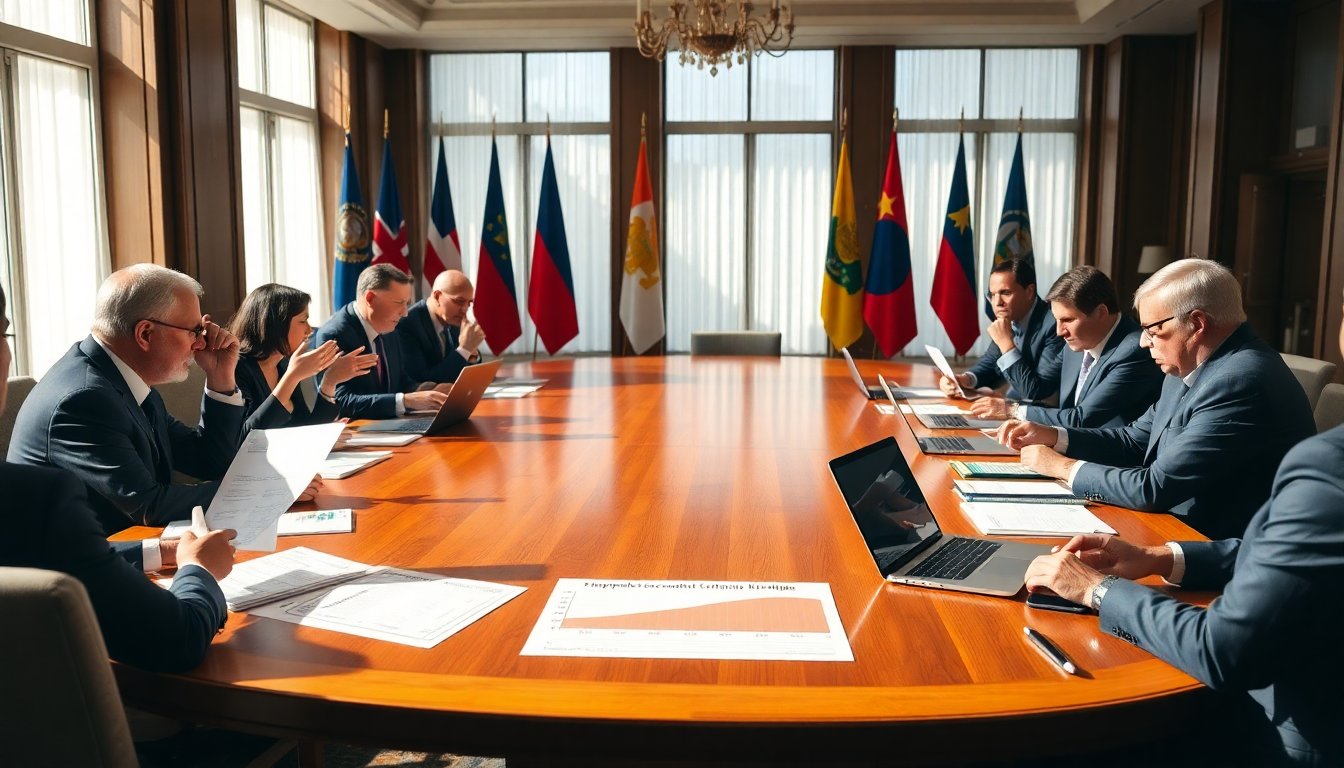
Trump’s unconventional approach to the Ukraine conflict
The conflict in Ukraine has seen traditional diplomatic efforts often fall short, resulting in a prolonged stalemate. In this context, former President Donald Trump has introduced a controversial strategy. He advocates for resolving the conflict through business negotiations instead of the usual calls for a ceasefire. This approach has sparked considerable debate among political analysts and international leaders, particularly in Europe.
Trump’s pivot towards practical peace
At a recent summit in Alaska, Donald Trump garnered attention by shifting away from his earlier demand for an immediate and unconditional ceasefire as a prerequisite for peace negotiations. While critics suggest that this change aligns him with Russian interests, a thorough analysis indicates that Trump is adapting to the evolving geopolitical landscape. By prioritizing a direct peace agreement, he seeks to lay the groundwork for a more sustainable resolution rather than settling for a temporary ceasefire that may falter at any moment.
Understanding the realities of negotiation
The Russian government has maintained a firm position: it will not agree to a ceasefire without first securing its interests at the negotiating table. This approach reflects the significant leverage that military actions provide Russia in discussions. In particular, Western nations, especially those in Europe, have been slow to acknowledge this reality, often holding onto the hope that a ceasefire might pave the way for a more favorable outcome for Ukraine. However, such expectations are increasingly unrealistic given the prevailing military dynamics.
A ceasefire without a comprehensive peace agreement risks evolving into a semi-frozen conflict, characterized by persistent tensions and the potential for sporadic violence. This situation would hinder Ukraine’s capacity to concentrate on essential reforms and economic development, which are vital for future integration with the European Union.
Implications for Europe and NATO
The skepticism displayed by NATO members regarding Russia’s motives is understandable. However, it is important to recognize that Russia also harbors distrust towards Western intentions. An effective approach to peace negotiations must take into account this mutual wariness. There are no guarantees of security in international relations, despite the calls for absolute assurances from European governments.
A cautious path forward
As military engagements evolve, establishing a framework of deterrents and incentives is critical to prevent further conflict. A prolonged stalemate not only harms Ukraine but also threatens broader security across Europe. Continued instability in Ukraine could lead to deeper U.S. involvement, increasing European reliance on American military support, which remains uncertain.
The idea of a coalition of the willing, a European military force deployed to Ukraine, raises significant questions about its practicality. Many European leaders have expressed reluctance to engage in direct conflict, casting doubt on the viability of such a coalition. With public opinion split on military involvement, the risk of escalation remains a pressing concern.
Potential pathways to peace
Despite the challenges posed by certain Russian demands, opportunities for compromise exist. Reports have emerged suggesting that Donald Trump is advising the Ukrainian government to consider concessions that could facilitate a stable peace. This strategy may appear counterintuitive given the significant emotional and political stakes, but pursuing a sustainable resolution warrants consideration.
The forthcoming meeting between Trump and Ukrainian President Volodymyr Zelensky is poised to offer crucial insights into the evolving dynamics of negotiations. Trump’s readiness to engage directly with both parties reflects a distinctive approach to diplomacy that may produce unforeseen advantages. Should this effort effectively lessen Russian demands while safeguarding Ukraine’s sovereignty, it could mark a pivotal transformation in international relations.
The ongoing situation in Ukraine highlights that Donald Trump’s approach to peace extends beyond simply halting hostilities. It aims to reshape diplomatic relations fundamentally. By emphasizing business negotiations instead of conventional military tactics, there is potential to establish a more enduring peace that serves the interests of all involved parties.


