
Table of Contents
U.S. military operations in Venezuela raise concerns
The situation in Venezuela has escalated significantly as the United States intensifies its military operations in the region, citing a war on drugs. Reports indicate that the U.S. is preparing to launch a new series of actions targeting the government of President Nicolás Maduro. This development raises important questions about the true motivations behind these interventions and their potential impact on Venezuela and its citizens.
U.S. military buildup and its implications
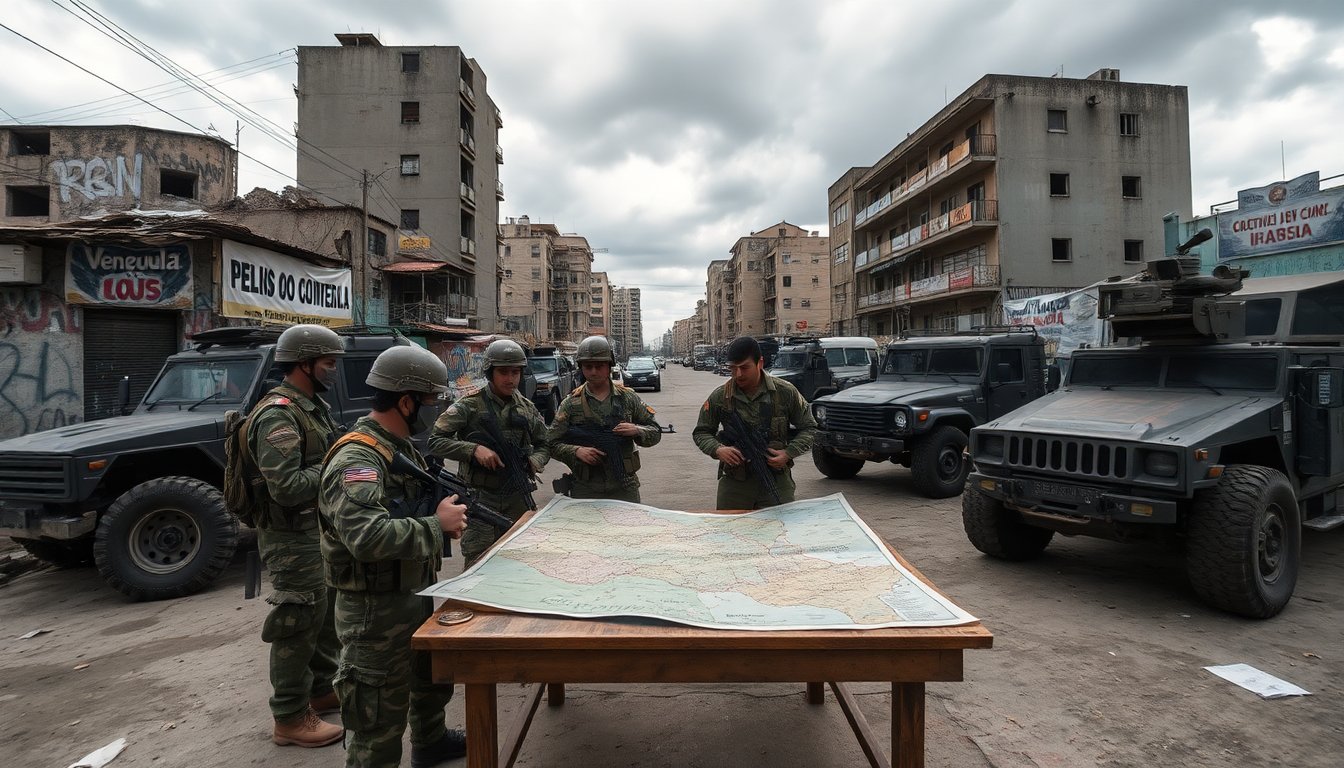
Recent reports indicate that the United States is preparing to increase its military presence in Venezuela, with around 15,000 troops currently deployed in the area. These operations are officially presented as initiatives to combat narcoterrorism, but they suggest a broader agenda aimed at regime change. President Trump has reportedly authorized the CIA to undertake covert operations against the Venezuelan government, a move that raises questions about the transparency of such actions, which are traditionally conducted discreetly.
The facade of drug enforcement
The U.S. administration has sought to associate President Maduro with the opioid crisis affecting the United States, particularly regarding the synthetic opioid fentanyl. However, evidence suggests this connection is weak. Studies show that Venezuela does not produce fentanyl; its drug trade is primarily focused on cocaine, which is mainly trafficked to European markets. Despite these facts, U.S. officials persist in framing Maduro as a key figure in the surge of opioids in America.
The historical context of U.S. intervention
The U.S. intervention in Venezuela has deep roots, reflecting a long-standing pattern of American involvement in Latin America. Over the years, the U.S. has undertaken various military and political actions under the guise of fighting drugs or promoting democracy. This current situation mirrors earlier interventions where the U.S. aimed to sway political outcomes in nations that posed challenges to its interests. The focus on drug-related issues often acts as a convenient facade for broader geopolitical goals.
Local consequences and international perceptions
The recent U.S. military actions have sparked concern not only within Venezuela but also among its neighboring countries. There is growing apprehension that these interventions could worsen existing crises and lead to unforeseen repercussions. Local fishermen and communities have reported significant disruptions to their livelihoods due to U.S. bombings and surveillance, which have not effectively addressed the issue of drug trafficking.
The rhetoric of the Trump administration regarding its mission to protect the homeland appears contradictory when compared to its domestic policies. For instance, the administration has threatened to reduce essential food assistance for struggling Americans while simultaneously endorsing military initiatives abroad. This inconsistency underscores a selective approach to tackling the root causes of societal challenges.
The role of the cartel of the suns
The cartel of the suns refers to alleged networks of high-ranking Venezuelan military officials involved in drug trafficking. These groups reportedly emerged in the early 1990s and have connections to political figures such as Hugo Chávez and Nicolás Maduro. U.S. officials accuse Maduro and his associates of running a centralized drug trafficking organization. However, experts suggest that this view oversimplifies the situation. They argue that the reality involves a decentralized system of corruption, rather than a strictly hierarchical cartel.
Corruption and complicity in the military
Corruption within the Venezuelan military has become a significant issue, with reports indicating that lower-ranking officials are vying for profitable roles at border checkpoints to facilitate drug smuggling operations. This widespread culture of corruption not only involves military personnel but also high-ranking officials accused of exploiting their positions for personal benefit. The ramifications of this corruption reach beyond Venezuela, impacting international drug trade routes and inciting concerns from various countries regarding drug trafficking.
In recent years, the United States has imposed sanctions on several Venezuelan officials, including notable figures such as Diosdado Cabello, who are linked to drug trafficking activities. These sanctions form part of a larger strategy aimed at undermining Maduro’s government and reducing the influence of the Cartel of the Suns.
Navigating a complex crisis in Venezuela
The crisis in Venezuela continues to escalate amid military intervention and serious allegations of drug-related corruption. The United States seeks to position itself as a defender against narcoterrorism, but the situation is far more complex. Motivations behind these interventions raise ethical questions regarding the true intentions of U.S. foreign policy and its consequences for the Venezuelan people. As the situation evolves, it is essential to critically evaluate the narratives being presented and consider their impact on the ground.