
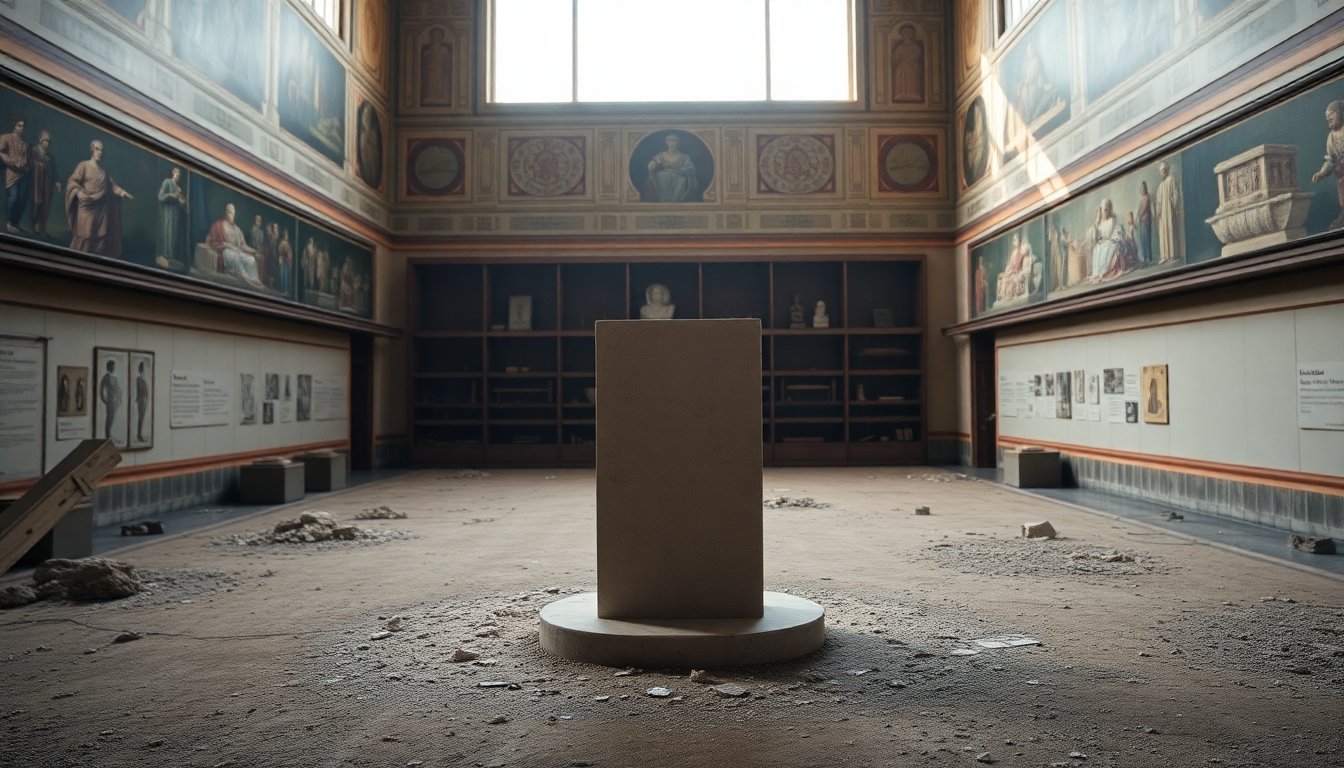
The tranquility of the National Museum of Damascus was disrupted when thieves infiltrated its premises, stealing six invaluable statues from the Roman era. This incident underscores the ongoing struggles for cultural preservation in a nation still recovering from the aftermath of a devastating civil war.
Following an extended closure, the museum had recently reopened its doors in January. However, the discovery of the theft on Monday prompted officials to temporarily shut down the museum again. With a history marked by turmoil, Syria’s cultural treasures remain at risk.
The theft and its implications
The heist occurred late on Sunday night, as confirmed by officials from the Directorate-General for Antiquities and Museums. Authorities reported that the theft was discovered early the following morning when a doorway leading to the classical section was found broken, indicating a clear breach of security.
According to sources within the Directorate, an investigation into the incident has been initiated. The police chief of Damascus, Brig. Gen. Osama Atkeh, confirmed to state media that not only the statues but also various rare collectibles were taken. Security personnel on site, along with other individuals, are currently under scrutiny as part of the ongoing inquiry.
The museum’s historical significance
The National Museum of Damascus is recognized as Syria’s largest repository of antiquities, housing artifacts that span thousands of years. The section from which the statues were stolen is particularly noted for its rich collection from the Hellenistic, Roman, and Byzantine periods. Maamoun Abdulkarim, a former head of the antiquities department, described this area as “a beautiful and historically rich department” that significantly contributes to understanding Syria’s ancient heritage.
The backdrop of conflict and recovery
The civil war that erupted in March 2011 has profoundly impacted Syria’s cultural landscape. In response to escalating violence, museum officials implemented enhanced security measures, including the installation of metal gates and advanced surveillance systems to protect invaluable artifacts. During this period, many items were relocated to the capital, Damascus, to safeguard them from ongoing conflict.
The museum had just reopened on January 8, following a significant political shift in the country after the ousting of President Bashar Assad. This change was marked by a sense of cautious optimism regarding the preservation of Syria’s rich history. However, the recent theft casts a shadow over these hopes, reminding all of the fragility of cultural heritage in times of unrest.
Impact of previous conflicts on cultural sites
Beyond this recent incident, Syria’s cultural heritage has faced numerous challenges during the ongoing civil war. Notably, the historical town of Palmyra, a UNESCO World Heritage site, was severely affected when it fell under the control of the Islamic State group. In 2015, militants destroyed several mausoleums and ancient structures, including the iconic Roman colonnades that once stood as a testament to the grandeur of this ancient city.
The tragic events at Palmyra serve as a stark reminder of the risks faced by cultural sites in conflict zones. As Syria navigates its recovery from years of violence, the importance of protecting its historical treasures becomes increasingly critical.
The theft of the six ancient Roman statues from the National Museum of Damascus highlights the ongoing vulnerabilities of Syria’s rich history amidst civil strife. As investigations unfold, there remains hope that authorities can recover the stolen artifacts and ensure the preservation of the nation’s invaluable cultural heritage for future generations.


