
Table of Contents
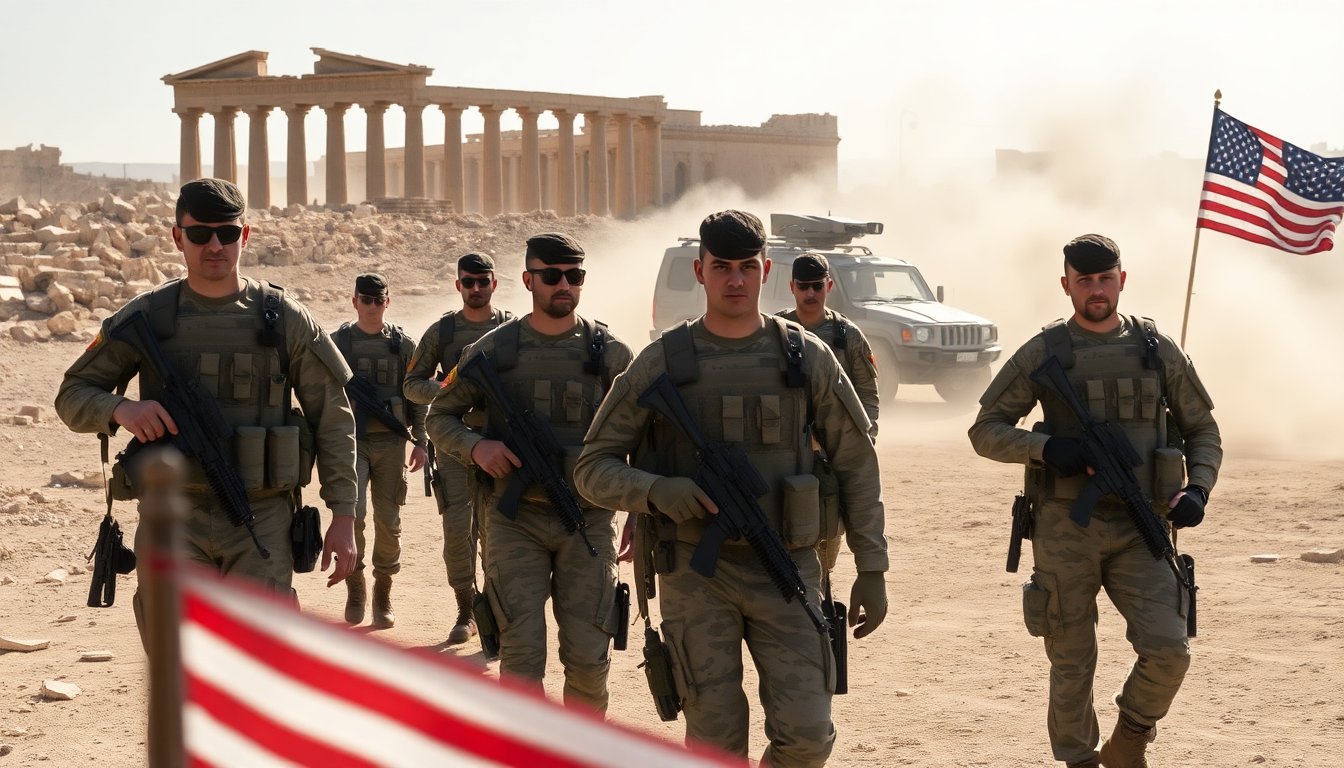
Two U.S. Army soldiers and a civilian interpreter were killed during an ambush in Palmyra, Syria. U.S. officials characterized this attack as an act of terrorism by ISIS. The incident not only resulted in fatalities but also prompted immediate retaliation promises from President Donald Trump. The ambush occurred during a joint security patrol aimed at countering ISIS threats, underscoring the persistent dangers faced by U.S. forces in the region.
Details of the attack
The ambush took place while U.S. troops were conducting a critical operation known as a key leader engagement. This mission was part of ongoing efforts to combat ISIS’s influence in the area, which remains partially under the militant group’s control. Pentagon spokesperson Sean Parnell reported that three additional U.S. personnel were injured during the ambush, highlighting the gravity of the situation.
U.S. and Syrian forces under fire
In response to a recent attack, President Trump expressed his outrage, labeling it an ISIS assault targeting both American forces and the Syrian government. He noted that Syrian President Ahmed al-Sharaa shares concerns over the escalating violence. Trump assured the public that the U.S. would implement serious retaliation against those responsible for the attack.
Defense Secretary Pete Hegseth, in a follow-up statement, supported the president’s views. He emphasized that any aggression towards American personnel would prompt swift retribution. Hegseth warned that those who target U.S. citizens should fear being tracked down and confronted decisively.
Context of the ongoing conflict
The recent incident highlights a disturbing increase in violence following the fall of Bashar al-Assad’s regime. After Assad’s ousting, U.S. military forces have sustained a presence in northeastern Syria, with about 2,000 troops collaborating with local security forces to combat the resurgence of ISIS. Although the group has lost considerable territory, it still conducts sporadic attacks, revealing the fragile security landscape in the region.
Responses and investigations
U.S. Central Command (CENTCOM) confirmed that a lone gunman affiliated with ISIS executed the ambush, which ended with the assailant being killed by partner forces. The attacker’s identity and the details surrounding the incident are currently under investigation. Reports from Syrian sources suggest that the assailant had ties to the Syrian security forces but did not hold a significant leadership role.
Following the attack, the Syrian Interior Ministry disclosed that security officials had alerted U.S. and coalition forces about potential threats from ISIS in the Badia region. Despite these warnings, the attack proceeded, prompting concerns regarding the coalition’s intelligence capabilities and readiness.
International implications and future actions
The repercussions of this attack reach beyond immediate responses. As the U.S. evaluates its strategy in Syria, officials have reaffirmed their dedication to dismantling ISIS. Ambassador Tom Barrack stated that the U.S. will pursue all individuals involved in this attack, aiming for swift accountability.
U.S. faces challenges in Syria following recent attack
The U.S. must prioritize its counterterrorism efforts while addressing the complex dynamics of Syrian politics. A recent ambush underscores the region’s volatility and the challenges international forces encounter in their quest for stability.
The attack on U.S. troops in Syria emphasizes the ongoing threat posed by ISIS. It raises important questions regarding the U.S.’s role in the region. President Trump and Defense Secretary Hegseth have pledged a decisive response. The global community is closely monitoring the situation, aware that the consequences of this incident will extend beyond the immediate conflict.