
Table of Contents
“`html
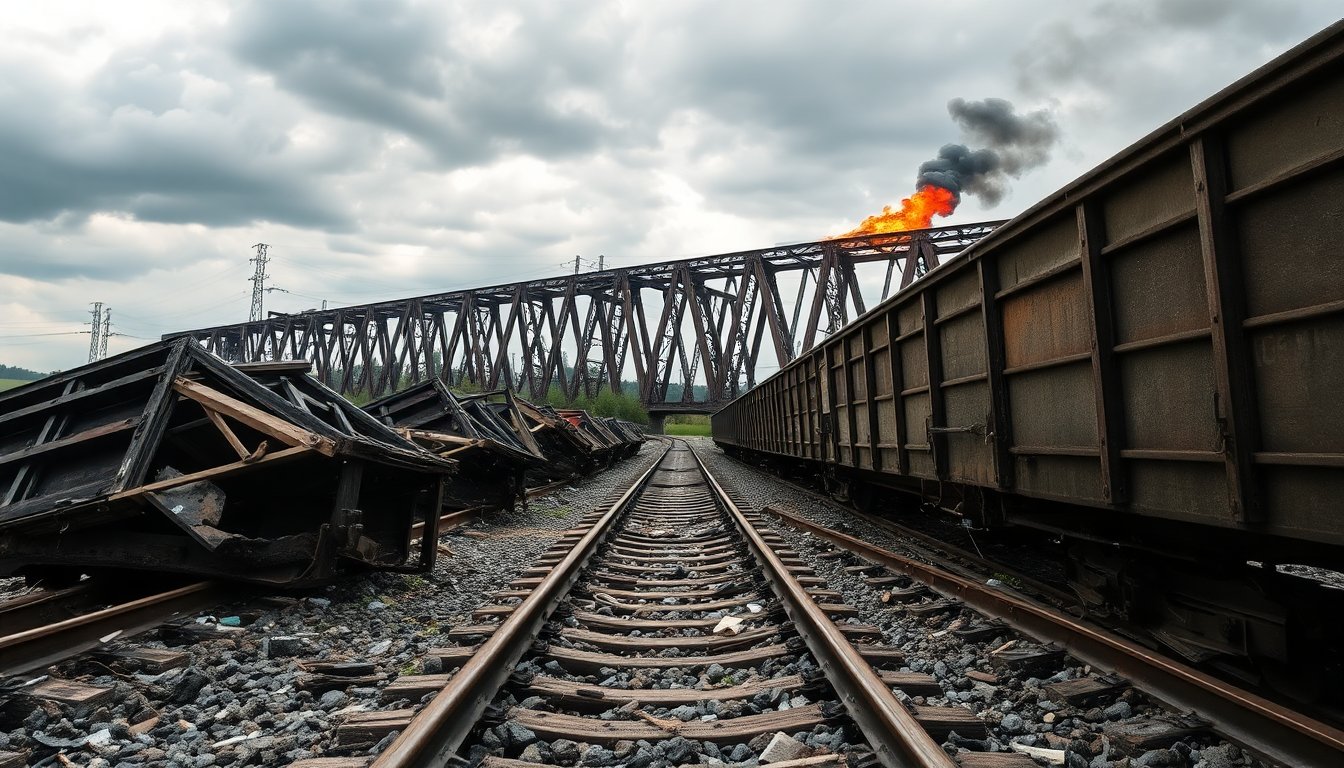
As the conflict continues, Ukraine’s rail network has become a critical vulnerability, despite its role as a symbol of industrial strength and connectivity. This extensive system, stretching over thousands of kilometers, faces increasing attacks aimed at undermining the nation’s logistics and transport capabilities. Reports indicate that more than 1,100 attacks have targeted vital infrastructures such as control towers, bridges, and substations.
The strategic significance of Ukraine’s rail network
Ukraine’s rail system serves as more than just a transportation method; it is essential for both civilians and military operations. Rail transport is crucial for the efficient movement of goods and people throughout the nation, supporting the economy and reinforcing national security. The capacity to quickly deliver military supplies and personnel can significantly impact the outcome during conflicts.
Critical infrastructure under attack
The recent increase in assaults on Ukraine’s rail infrastructure underscores the strategic significance of these targets. Attackers have utilized various methods, including aerial bombardments and sabotage, to disrupt operations. This has led to extensive damage to essential installations, such as substations that power trains and bridges that facilitate their movement. Each strike not only undermines immediate transport capabilities but also conveys a broader message regarding the ongoing conflict’s intensity.
Impact on civilians and commerce
The escalating conflict is severely affecting the civilian population. The rail network, previously a dependable mode of transport for Ukrainians, now experiences significant disruptions. This situation limits access to essential services and job opportunities. Many stations are non-operational due to damage, forcing civilians to rely on alternative, often less reliable, transportation methods.
The economic toll of disrupted transport
The ongoing attacks have a profound economic impact. The rail network plays a vital role in distributing goods, including agricultural products and industrial supplies. As logistics deteriorate, prices rise and the availability of goods decreases, further straining an already struggling economy. This instability also undermines investor confidence, deterring potential business opportunities in the region.
Resilience and future prospects
The resilience of the Ukrainian people remains evident amid ongoing challenges. Efforts to repair and strengthen the rail infrastructure are in progress, emphasizing enhanced security measures to guard against further attacks. The government, alongside various organizations, is exploring innovative solutions, including the use of drone technology for surveillance and rapid response.
Community support and adaptation
Local communities have come together to support each other in the face of adversity. Initiatives providing alternative transport solutions, such as bus services and carpooling, highlight the unwavering spirit of the Ukrainian populace. There is also an increasing recognition of the need to adapt to this changing landscape, with discussions centered on leveraging technology to enhance resilience and efficiency in response to ongoing threats.
The future of Ukraine’s rail network is currently uncertain. Yet, the lessons learned from the ongoing crisis may lead to a stronger infrastructure capable of enduring external challenges. A steadfast commitment to rebuilding and enhancing this crucial asset will significantly contribute to the nation’s recovery and long-term prosperity.
“`