
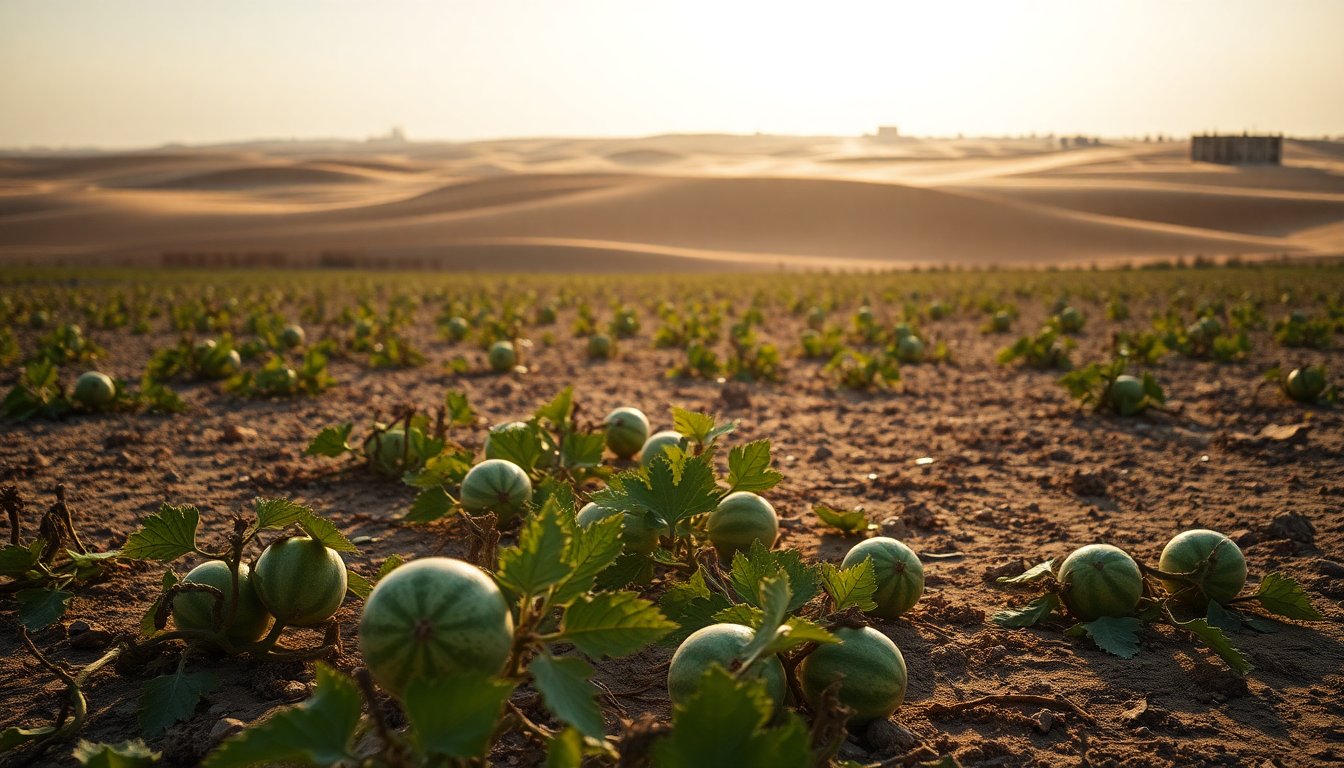
Astrakhan, a region once renowned for its abundant watermelons and rich agricultural output, now faces a severe environmental crisis. As the sands advance, the area risks becoming an uninhabitable desert. This troubling transformation is not solely a climate-related issue; local human activities have exacerbated the situation. Journalists from the independent media outlet Kedr recently visited towns in Astrakhan to document these alarming changes and to gather insights from residents about their struggles amid this ecological catastrophe.
Among the most striking experiences in Astrakhan are the dust storms, characterized by towering clouds of dust that can stretch hundreds of yards. Once considered exceptional, these storms have become a regular occurrence, enveloping homes and obstructing visibility. The region’s rich ecosystem faces a grave threat as desertification continues to encroach, with dire implications for its inhabitants.
The extent of desertification in Astrakhan
According to the United Nations, desertification poses one of the most significant environmental threats globally. With nearly 2 billion people living in arid regions, land degradation rates are alarmingly high, currently estimated to be 30 to 35 times greater than in past centuries. In Astrakhan, approximately 1.3 million hectares (over 5,000 square miles)—about a quarter of the region—are already affected by desertification, with an additional 2 million hectares (7,720 square miles) at risk. Residents are increasingly abandoning their gardens and fishing activities due to dwindling water sources.
Residents’ perspectives on the crisis
Traveling westward from Astrakhan highlights the stark transition from lush fields to desolate sand dunes. In Barkhany, a once-thriving community, the remnants of a vibrant past are starkly visible. Formerly home to a bustling store and community center, Barkhany is now largely deserted. Albina, a local resident, recalls the area’s flourishing agricultural activities, supported by irrigation from the Volga River. Following the dissolution of collective farms, the arrival of sand has led to the community’s decline. “It was good here,” she reflects, lamenting the loss of hope as dust storms continue to plague the town.
Shulpan, another resident, shares her story of resilience amid encroaching sands. Half of her home has succumbed to the shifting dunes, with a wooden barrier separating her living space from nature’s reclamation. “We’ve given up hoping for anything,” she confides, emphasizing the lack of local government support and the reality that rain is now their only lifeline.
Human activities and environmental impacts
The decline of the canal that once supplied water to Barkhany has left the community in despair. In an effort to combat desertification, local officials attempted to plant saxaul, a shrub that thrives in arid conditions, but these efforts failed due to livestock grazing. The collective farming practices of the past, which helped manage and sustain the land, have been replaced by modern practices that have intensified the degradation of the region.
Long-term consequences and future outlook
As the ecological balance shifts, the consequences for the local population are severe. Ecologist Stanislav Shinkarenko emphasizes that the dual threats of climate change and unsustainable grazing practices are leading to further desertification. With 80 percent of Astrakhan’s pastures depleted, the situation appears increasingly grim. The historical reliance on nomadic grazing has shifted to more sedentary practices, resulting in overgrazing and soil degradation.
In districts like Narimanov, where the steppe is dotted with homes, herders face a constant struggle to find sufficient grass for their livestock. A local shepherd reveals the dire state of pastures, stating, “There’s just not enough grass, and it keeps getting worse.” With predictions of continued moisture dwindling, the outlook for the Volga floodplain and its delta remains bleak.
Once teeming with seasonal lakes, the landscape now bears witness to their decline. As these lakes dry up, they are replaced by salt flats, creating a cycle of salinization and further ecological degradation. Local communities are left to contend with the consequences, leading to water shortages and diminished agricultural prospects.
In Nikolayevka, residents express frustrations over inadequate water supplies, relying on deliveries for drinking water while grappling with contaminated local sources. The community has appealed to higher authorities to address their plight, yet change remains elusive. The diminishing flow of the Volga River due to upstream hydroelectric projects casts doubt on the future of Astrakhan’s water supply.
Among the most striking experiences in Astrakhan are the dust storms, characterized by towering clouds of dust that can stretch hundreds of yards. Once considered exceptional, these storms have become a regular occurrence, enveloping homes and obstructing visibility. The region’s rich ecosystem faces a grave threat as desertification continues to encroach, with dire implications for its inhabitants.0


