
Table of Contents
The super bowl halftime show has evolved into a significant platform for cultural expression. This year, Bad Bunny, the Puerto Rican musician, showcased his commitment to his heritage and community. His performance transcended mere entertainment, delivering a powerful message intertwined with themes of identity and social justice that resonated with audiences both in the stadium and at home.
As the first Latin artist to perform a completely non-English halftime show, Bad Bunny’s choice to sing in Spanish carried profound significance. This decision highlights the increasing recognition of the Spanish-speaking community in the United States, where over 40 million individuals communicate in Spanish daily. Through this choice, Bad Bunny honors his roots and invites broader appreciation for Latin culture.
Highlighting Puerto Rico’s struggles
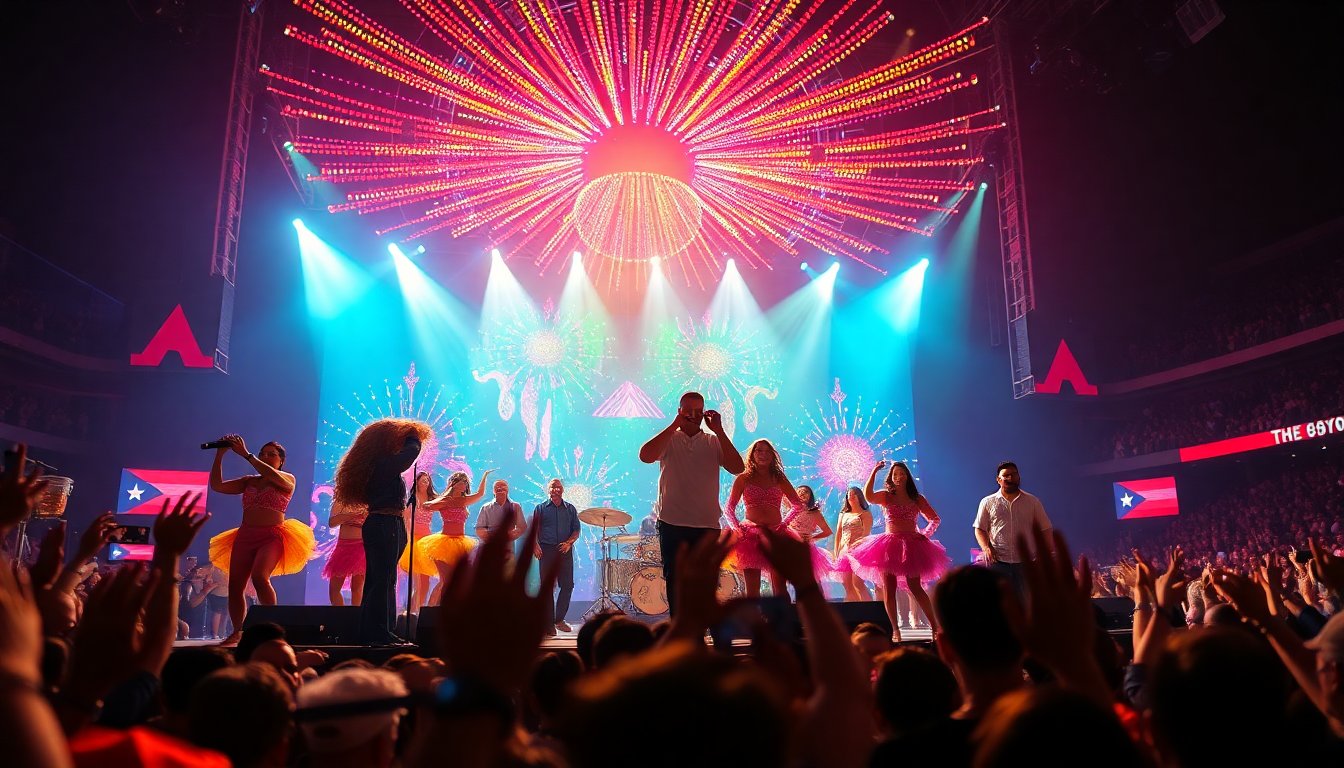
During his performance, Bad Bunny utilized a set design reminiscent of power lines, symbolizing ongoing challenges faced by Puerto Rico regarding its power infrastructure. In the aftermath of devastating hurricanes, the island has struggled with frequent blackouts and a deteriorating energy grid. By integrating visual elements that reflect these issues, Bad Bunny drew attention to the plight of the island and its residents, delivering a strong political message.
This performance coincided with a pivotal moment in Puerto Rico’s history, as the island continues to recover from natural disasters and political strife. By leveraging his platform to address these concerns, Bad Bunny encourages viewers to recognize the harsh realities faced by many Puerto Ricans, who have long been deprived of consistent electricity and basic services.
A celebration of cultural identity
Bad Bunny’s show was not only a call for awareness; it was a vibrant celebration of Puerto Rican culture. His music, infused with reggaeton and Latin trap influences, resonated with listeners, fostering a sense of unity among diverse audiences. The incorporation of traditional elements into his performance elevated the cultural narrative, emphasizing the importance of heritage in shaping identity.
By performing in Spanish, Bad Bunny conveys a clear message: language transcends mere communication; it is an essential aspect of identity. His commitment to using his native tongue cultivates pride among Spanish speakers and encourages others to engage with the cultural richness of his lyrics. This act of cultural affirmation is crucial in challenging the perception that only English-speaking performances deserve mainstream recognition.
Impact on the music landscape
The significance of Bad Bunny’s performance extends beyond his individual artistry; it represents a broader shift within the music industry. Traditionally dominated by English-language songs, the charts are now being reshaped by artists like Bad Bunny, Shakira, and Karol G, who demonstrate that Spanish-language music can achieve mainstream success. Bad Bunny’s Grammy win for Album of the Year further solidifies this trend, marking a historic milestone for Latin music.
In a world where language often creates barriers, Bad Bunny’s achievements illustrate the potential of music to bridge gaps and foster understanding. His artistry not only entertains but also educates, urging listeners to embrace linguistic diversity and the narratives that accompany it.
Encouraging societal change
Through his performance, Bad Bunny demonstrated that the arts can serve as a catalyst for change. By highlighting issues affecting Puerto Rico, he inspires a new generation to advocate for their communities and assert their rights. This aspect of his artistry is essential, as it promotes dialogue about significant social issues frequently overlooked in mainstream media.
Ultimately, Bad Bunny’s Super Bowl halftime show transcended mere entertainment. It served as a powerful reminder of the importance of cultural identity and the necessity for representation in the arts. As audiences reflect on his performance, they are encouraged to engage with the stories and struggles of others, fostering empathy and understanding in an increasingly divided world.