
Table of Contents
The arrival of spring in Washington, D.C., is synonymous with the spectacle of cherry blossoms around the Tidal Basin, and the city fills with festivals, races, galleries and weekend events. This practical guide gathers the most relevant details reported alongside the Washington Post roundup published on 19/03/2026 13:30 and the official festival calendar. If you are arranging travel or just planning a day trip, the combination of festival programming and the unpredictability of bloom timing means preparation is worthwhile: book hotels early, pick a few flexible dates, and follow authoritative forecasts as they are updated.
Two themes drive planning: knowing when the trees are likely to be at peak bloom and deciding which events to prioritize. The National Cherry Blossom Festival will run from March 20 to April 12, 2026, and several headline events already have fixed dates: the Pink Tie Party (Friday, March 13, 2026), the Opening Ceremony (Saturday, March 21, 2026), the Blossom Kite Festival (Saturday, March 28, 2026), Petalpalooza (Saturday, April 4, 2026) and the National Cherry Blossom Festival Parade (Saturday, April 11, 2026). Many events require tickets, so check the festival’s official site before you go.
Understanding peak bloom forecasts
Predicting peak bloom—defined as when about 70 percent of blossoms are open—relies on a blend of observation and modeling. Forecasters use both chill hours and growing degree days (GDD) to estimate timing: the trees must first accumulate winter chill to exit dormancy, then gather warmth to push toward flowering. Several organizations offered initial windows for 2026: the National Park Service (NPS) predicted March 29 to April 1; the Washington Post’s Capital Weather Gang suggested April 3 to 7; NBC StormTeam4 projected March 30 to April 5; and the prediction pool at George Mason University centered on April 2. Local teams and research groups often release forecasts beginning in early March, and those windows are routinely adjusted as weather evolves.
Why forecasts change
Weather is the single largest variable affecting timing. Sustained warm periods in late winter and early spring can accelerate bud development, while prolonged cold in February or March will delay it. In recent years there has been a trend toward earlier blooming, but every season can differ. Forecast models combine historical climate normals, recent temperature records and short-term weather predictions to produce a best estimate. Because those inputs can shift rapidly, expect multiple revisions; the best strategy is to monitor forecasts from the NPS and reputable outlets like the Capital Weather Gang in the weeks leading up to your trip.
Where to see blossoms and other spring highlights
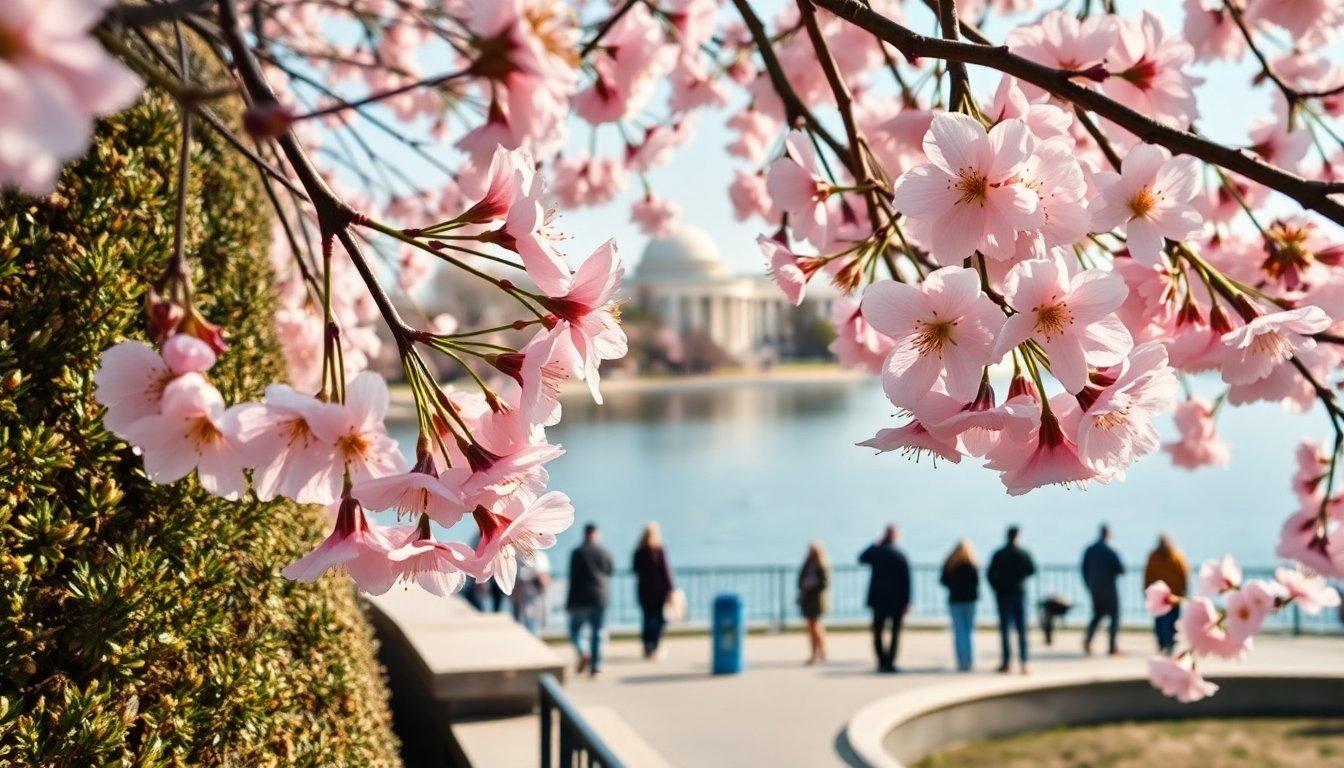
The classic vantage point remains the Tidal Basin, where the Yoshino cherries frame monuments and the Japanese Pagoda. If you need a place to stay within easy walking distance, consider hotels like Canopy by Hilton, Hyatt House, Courtyard by Marriott, InterContinental, State Plaza Hotel, Pendry, Salamander or the Waldorf Astoria. Beyond the trees, spring brings a wide variety of activities: paddleboat races across the basin, film festivals, March Madness watch parties and gallery shows in Georgetown. The Washington Post’s weekend guides frequently highlight a rotating list of the city’s best small events and exhibitions that pair well with cherry blossom viewing.
If you miss Yoshino peak bloom
Not all spring color disappears with the Yoshinos. If you arrive early, look for saucer magnolias—notably behind the Smithsonian Castle and near the George Mason Memorial. If you come a few weeks late, Kwanzan cherries and well-timed tulip plantings around the National Mall can still offer spectacular views. Parks such as Rawlins Park and other garden pockets around the Mall often display complementary spring blossoms, so a slightly off-peak trip can still be richly rewarding.
Practical tips for visitors
Plan for crowds and weather variability: bring layers, check transit advisories near the Mall, and consider visiting on weekday mornings for quieter conditions. Keep an eye on live updates from the NPS and trusted weather desks; forecasts change and the exact peak bloom date is best treated as a flexible target rather than an immutable deadline. For historical perspective, the blossoms reached peak bloom on March 28, 2026, and that season illustrated how a few warm days followed by heavy storms can compress and then abruptly end the viewing window. Advance booking for both accommodations and any ticketed festival events will make your visit smoother if you travel during the busy festival window from March 20 to April 12, 2026.