
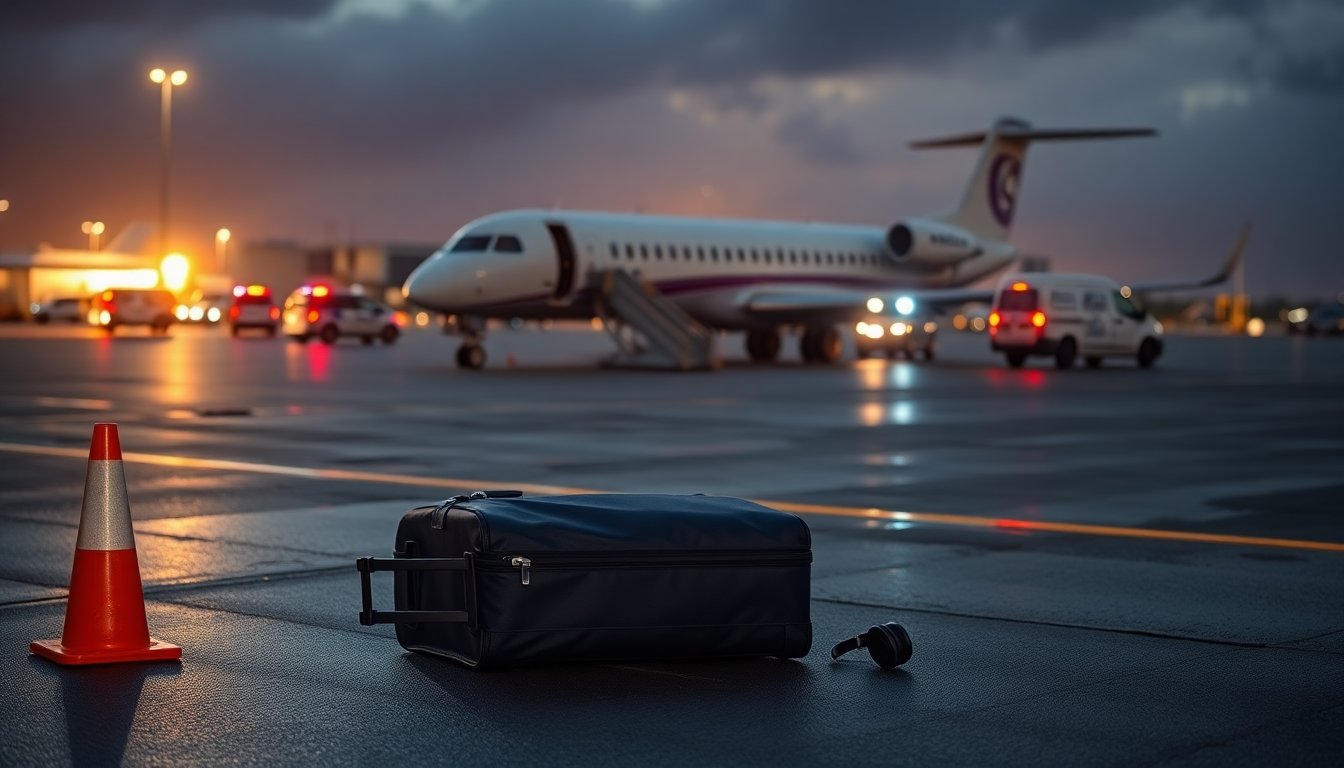
The overnight scene at Denver International Airport unfolded when a United Airlines jet carrying around 200 passengers was emptied and inspected after a reported bomb threat. Travelers bound for Washington Dulles were asked to leave the aircraft while authorities carried out a methodical security sweep. Video from the tarmac showed police vehicles clustered around the jet and emergency personnel on stairs at the doors as the plane was probed. Airport staff later provided food and shelter for the displaced passengers while the aircraft underwent checks; officials reported that no explosive device was located.
The aircraft involved was an Airbus A321neo twin-jet that departed Denver just after 11:30 p.m. local time — more than five and a half hours behind its planned schedule — and it ultimately arrived at Dulles at 4:28 a.m. Monday. The incident at Denver came a day after another United flight was forced off course to Pittsburgh amid concerns about a potential device. Both events prompted multi-agency responses and precautionary evacuations, and each concluded with teams declaring the aircraft safe.
Timeline and on-the-ground actions at Denver
When the threat was reported, crews followed established protocols: the cabin was cleared, authorities sealed off the area, and specialists examined the jet. Witnesses captured footage of emergency responders and law enforcement at the scene, underscoring how quickly airport and airline teams mobilize. During the disruption, passengers were directed into the terminal, where they received refreshments and updates from airline staff. The operation demonstrated the layered approach to aviation threats: immediate evacuation, containment, and a targeted security sweep designed to locate any ordinance or suspicious items.
Earlier diversion to Pittsburgh and evacuation details
A separate incident the previous day involved a United Boeing 737 bound for LaGuardia that was diverted to Pittsburgh after the crew reported an intermittent electronic alert. Audio posted online captured a crew member indicating the need to treat the situation as potentially serious and to initiate a diversion. The Boeing 737 carried 159 passengers and 6 crew members; everyone exited via emergency slides without injury. Local and federal responders converged on the aircraft to lead the investigation and the precautionary search.
Crew reports and investigative response
The diversion triggered a full response from the Pittsburgh field office of the FBI, municipal law enforcement and the Allegheny County units responsible for explosive investigations. Specialists from explosive disposal teams and certified K9s conducted a detailed sweep of the cabin, baggage and surrounding areas. The Allegheny County Bomb Squad reported that the Explosive Ordnance Disposal (EOD) team and the dogs performed a comprehensive check with negative results, confirming no explosive materials were present.
Security procedures, passenger impact and broader implications
Events like these highlight how airlines and airports implement layered safety measures when a threat is suspected. The term security sweep refers to the systematic inspection of an aircraft and its contents by trained personnel, often including specialized teams and detection canines. While such actions can result in lengthy delays — as in the Denver case, where departure was pushed back by several hours — they are intended to prioritize safety above schedule. For travelers, the visible presence of first responders and procedural slowdowns can be alarming, but authorities emphasize that treating every alert seriously helps reduce risk.
What passengers should know
For passengers, understanding routine practices can ease uncertainty: crews are trained to follow directives to disembark when necessary, and evacuations are designed to be rapid and orderly. Airlines typically coordinate with law enforcement and provide on-site assistance such as food and rebooking information while investigations proceed. The two recent United incidents ended without injuries or explosive findings, underscoring that precautionary measures often prevent escalation and help ensure that flights only resume once experts confirm the aircraft is safe.


