
Table of Contents
Protests in Bulgaria signal a shift in political engagement
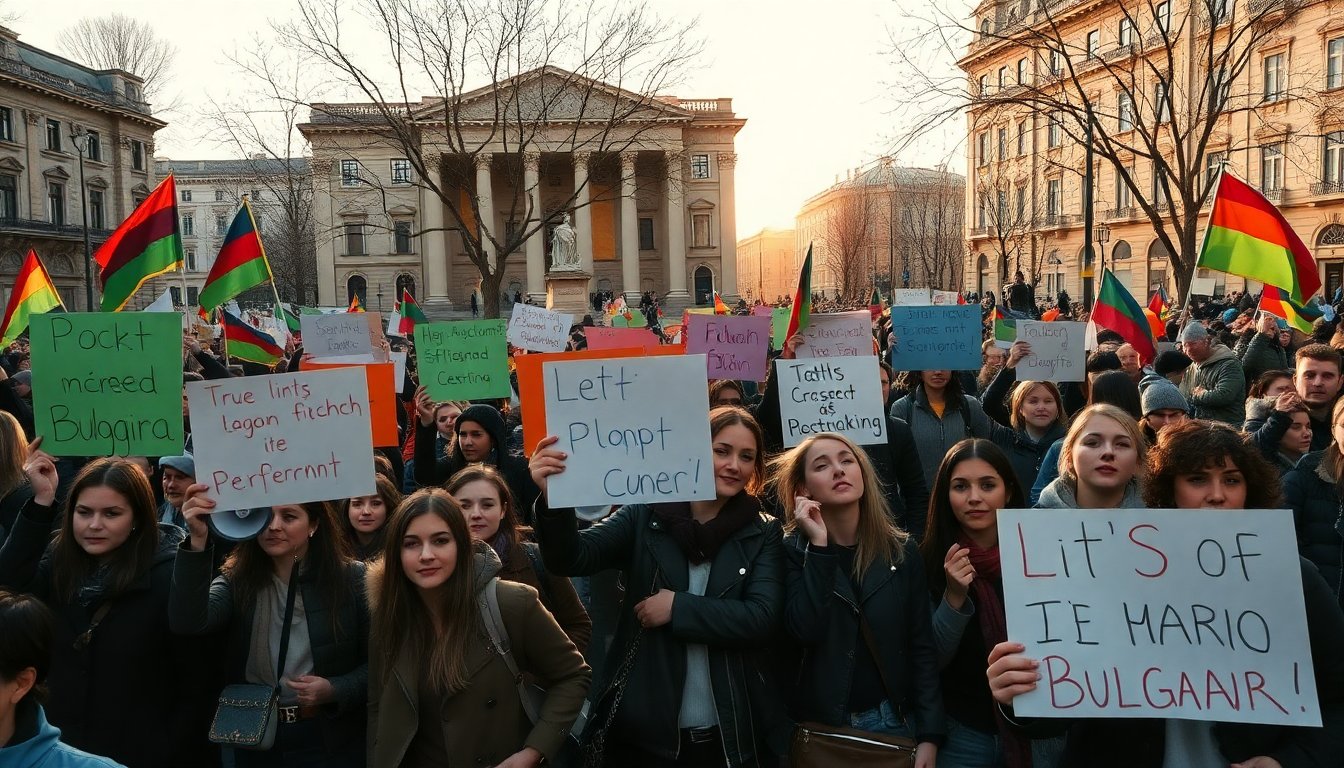
The recent protests in Bulgaria represent a notable transformation in the political landscape. The activism is largely fueled by the energy and discontent of the Gen Z generation. Since early December, thousands of young Bulgarians have mobilized to express their frustrations, culminating in the unprecedented collapse of the government. This surge of activism aligns with a global trend where youth increasingly engage in political discourse, confronting persistent issues such as corruption and inadequate governance.
The catalyst for change: Budget controversies
On December 1, protests erupted across Bulgaria in response to a controversial budget proposal. Many citizens perceived the proposal as a tactic to consolidate political power while ignoring public needs. Young protesters gathered in large numbers, demanding that the government retract the proposed budget and resign. The slogan that resonated throughout the crowd, “You angered the wrong generation,” captured the essence of their collective frustration.
Corruption and disillusionment
The ongoing protests in Bulgaria reflect a profound frustration with corruption, a problem that has long plagued the nation’s political landscape. In an effort to quell the unrest, the government proposed a revised budget that delayed tax increases. However, many activists argue that these measures fail to tackle the deeper issues at play. Young Bulgarians, such as 18-year-old Martin Atanassov, emphasize that the budget represents only a symptom of a larger crisis: the perceived lack of opportunities for their generation.
A new generation of political engagement
Young Bulgarians, known as Gen Z, are emerging as a politically active group, setting themselves apart from previous generations. Unlike older individuals who experienced the communist regime and the economic hardships of the late 1990s, today’s youth have a unique perspective. Their priorities extend beyond financial issues; they seek a transparent political system and improved job opportunities.
Social media as a tool for activism
Social media has become essential for mobilizing young protesters. Platforms such as TikTok have seen significant engagement related to protest content, particularly after the initial demonstrations. This digital environment enables young Bulgarians to share their experiences and organize effectively, amplifying their message and fostering a sense of community among protesters.
Key figures and their influence
Boyko Borissov, the former prime minister, and oligarch Delyan Peevski have become central figures in the public outcry against corruption. Both have faced accusations of fostering a culture that undermines democracy and hinders economic progress. Their prominence in the political landscape has galvanized protesters, who argue that their removal is critical for enacting meaningful change.
Activists, including Mimi Shishkova, stress that ousting these leaders alone will not suffice. Addressing the deeper systemic issues is essential for achieving lasting reform. This perspective resonates with many young protesters, who view the current situation as a pivotal moment to redefine their future.
The future of Bulgarian politics
The momentum of protests in Bulgaria has prompted the ruling coalition to face a no-confidence vote. Many observers believe that elections could soon follow. Political analysts, such as Daniel Smilov, indicate that this unrest represents a pivotal moment for Bulgaria. The demands for change from the youth may significantly alter the political landscape.
The effectiveness of the protests will hinge on the government’s response. Engaging with the aspirations of the younger generation is crucial. If the ruling parties neglect these concerns, Bulgaria may experience a surge in youth activism. This could lead to a governance structure that is more democratic and transparent.
Bulgaria’s youth have sparked a significant movement against corruption, showcasing their commitment to holding leaders accountable. Their ongoing mobilization indicates a potential shift in the political landscape.