
Table of Contents
In an audacious daylight heist, the Louvre museum was targeted in a jewel robbery valued at approximately $102 million. The incident occurred on a Sunday morning, drawing significant attention from the public and law enforcement. Authorities are particularly intrigued by the fact that the suspects are not experienced criminals but rather petty offenders from the underprivileged northern suburbs of Paris.
Details of the heist
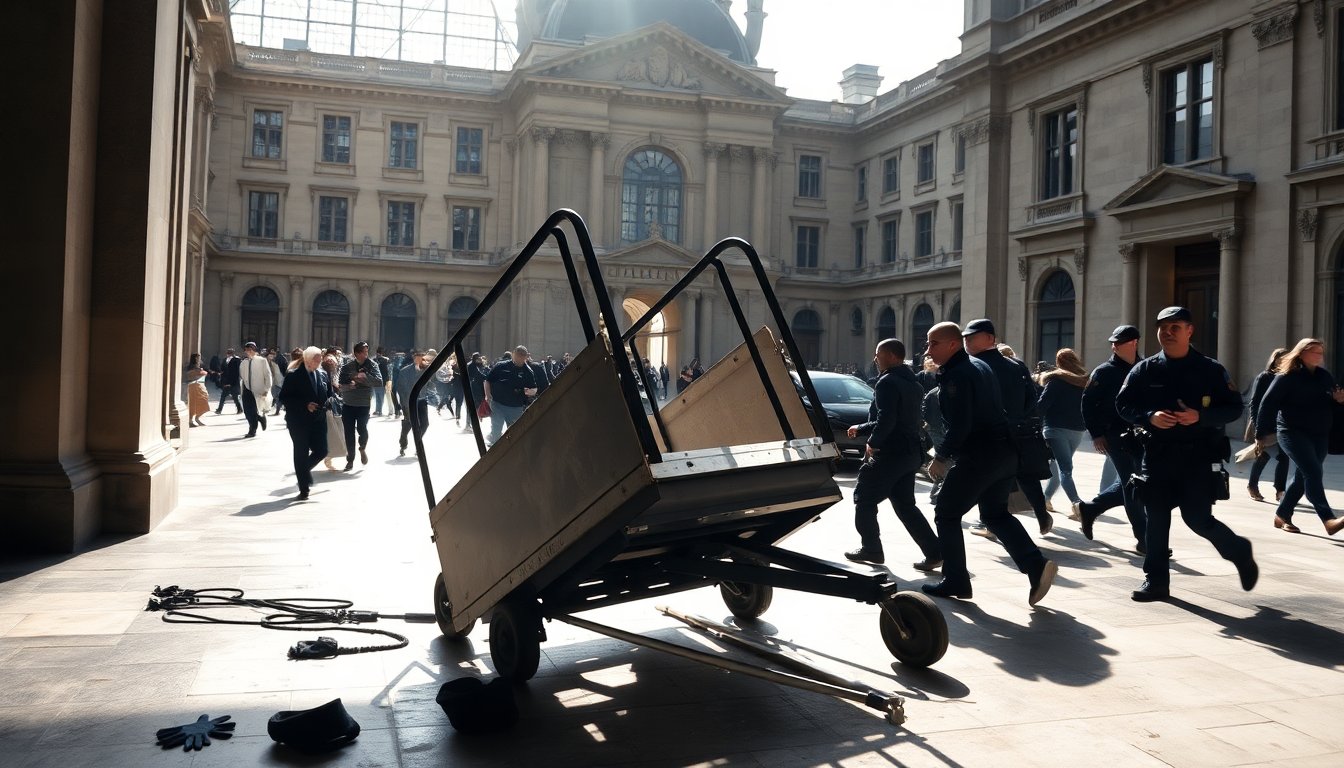
On the morning of the incident, two men used a movable lift to reach the museum’s second floor. They employed an angle grinder to break a window and swiftly accessed display cases within minutes. This rapid execution allowed them to escape on scooters with the help of two accomplices, finishing the entire operation in under seven minutes. Such remarkable efficiency raises significant questions about the planning and execution of the heist, particularly considering the high value of the stolen items.
Profile of the suspects
According to Paris prosecutor Laure Beccuau, the individuals involved in the heist do not fit the profile of sophisticated criminals typically linked to organized crime. They are primarily local residents from the Seine-Saint-Denis region, which faces significant socio-economic challenges. Beccuau noted that while the crime was audacious, it reflects a type of delinquency that differs from the complex operations usually carried out by professional gangs.
Recent developments in the investigation
Authorities have apprehended three of the four suspects linked to the robbery, marking a significant advancement in the investigation. Despite these arrests, the jewels remain missing, presenting a considerable challenge for law enforcement. The detained individuals, including the girlfriend of one of the main suspects, exhibit characteristics that do not align with those typically found in organized crime. Their backgrounds indicate a history of minor offenses, contrasting sharply with the extensive criminal records usually associated with professional thieves.
Further arrests and clues
In a recent development, authorities arrested five additional suspects during coordinated raids in the Paris area. These individuals are believed to be linked to the main group responsible for the museum theft. Beccuau reported that some suspects have partially admitted their involvement, which may provide crucial insights into the planning and execution of the heist. Furthermore, investigators have uncovered DNA evidence connecting one suspect to the crime scene, tightening the investigation around those involved.
Implications for museum security
The recent Louvre heist has sparked a critical reassessment of security protocols in cultural institutions throughout France. Following the incident, it became apparent that the museum’s surveillance systems inadequately monitored key areas, enabling the thieves to carry out their plan with relative ease. In a proactive move, the Louvre has relocated its most valuable items to the Bank of France, ensuring their secure storage.
In response to this security breach, French officials have recognized the urgent need to bolster existing security measures. The justice minister publicly criticized the Louvre’s former protocols, acknowledging their failure to prevent such a daring theft. This incident highlights the necessity for ongoing evaluation and enhancement of security systems in institutions that house priceless artifacts and cultural treasures.
Robbery at the Louvre reveals unexpected complexities
The recent robbery at the Louvre museum has uncovered a surprising narrative. Instead of professional thieves, the suspects appear to be petty criminals. Although the stolen jewels have not yet been recovered, the ongoing investigation underscores significant challenges for law enforcement.
This incident raises important questions about security measures in cultural institutions. As authorities work to solve the case, their efforts focus on apprehending all individuals involved. Additionally, enhancing protective measures is crucial to ensure the safety of the nation’s treasures in the future.