
Table of Contents
In late October of the previous year, an alarming call about distressing screams from a condo in Burnaby, British Columbia, prompted two officers from the RCMP to forcefully enter the premises, suspecting a possible emergency. However, upon entering, they stumbled upon an unexpected scene filled with unusual noise-generating devices strategically installed in three separate rooms.
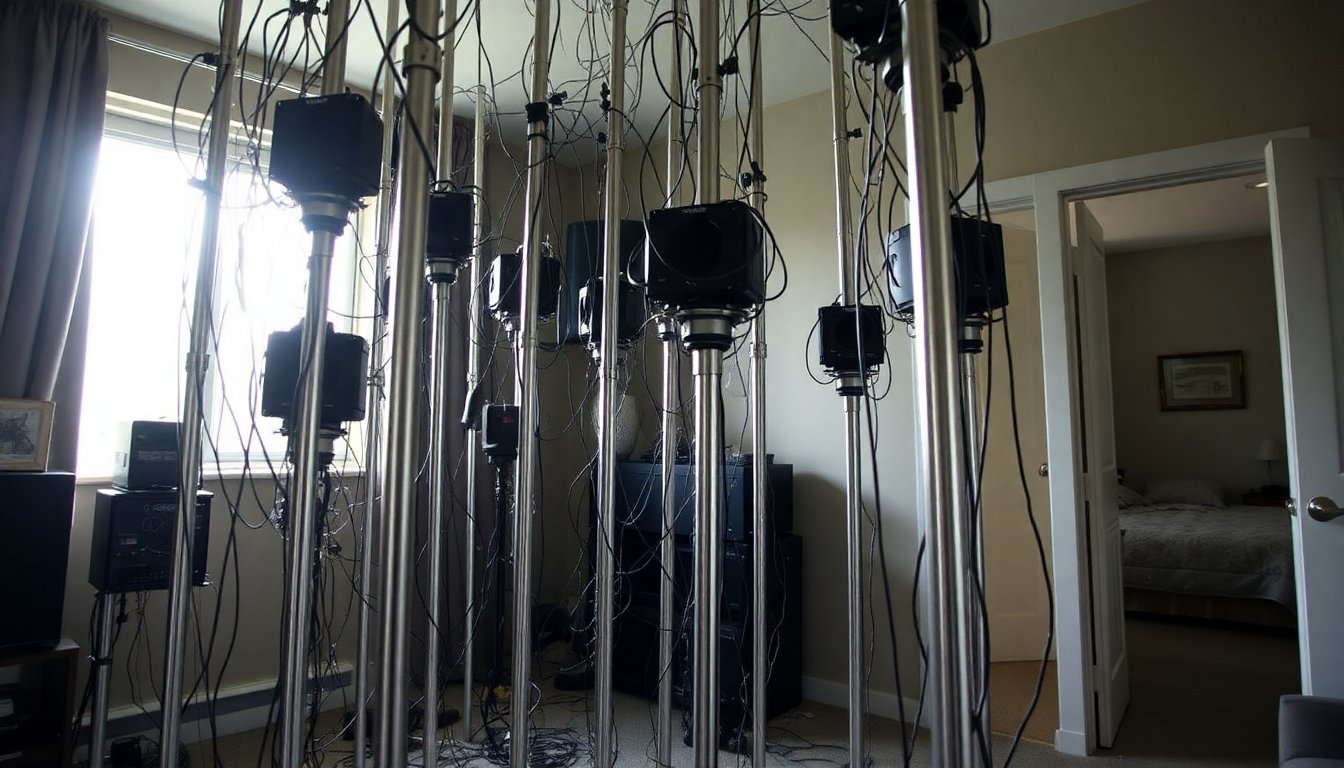
The contraptions in question featured metal poles stretching from floor to ceiling, each adorned with an electronic apparatus resembling a speaker. Authorities believed these devices were engineered with a singular intent: to transmit disturbing sounds into the unit above.
Investigation and legal actions unfold
Following the discovery on October 25, police returned on November 3 to confiscate these peculiar machines. The individual allegedly responsible for their operation was subsequently charged with mischief and is scheduled to appear in court on February 24. Court documents referred to these devices as “thumpers,” illustrating their function as noise disruptors.
A striking detail in the warrant application was the inclusion of a photograph depicting one of these devices alongside a printout from Amazon, which offered a similar item described as a “noise deadener” or “sound eliminator.” However, the police officer expressed skepticism about the accuracy of this description, asserting that the true purpose of the device was to transmit noise and vibrations into neighboring units.
Understanding the implications of noise devices
Interestingly, such devices are also marketed on Chinese e-commerce platforms, where they are referred to as “zhenlouqi,” translating to “floor shaker”. The rise of these products has been noted since around 2017, sparking a growing interest among consumers.
Legal perspectives on noise disputes
According to Vancouver lawyer Alex Chang, who specializes in property law, he had never encountered such devices before. Chang acknowledged that disputes over neighborly noise are commonplace, but the notion of an individual deliberately installing a machine to infringe upon another’s right to quiet enjoyment is peculiar. He noted that while people occasionally play loud music with the intention to annoy, this situation represents an escalation of such behavior.
“Typically, if someone is playing music loudly, they can claim plausible deniability regarding their intent to disturb,” Chang explained. “However, constructing a device explicitly designed to generate noise for the purpose of troubling a neighbor is a different matter entirely.”
Escalating tensions and community impact
The warrant documentation detailed that the suspect was in the shower when the officers entered, remaining uncommunicative during their inquiry. Following the initial police visit, additional complaints surfaced, with neighbors reporting rhythmic thumping and a looping audio of barking dogs, which severely impacted the complainant’s living situation, prompting his partner to seek refuge with family.
Adding to the complexity of this case, the same individual residing in the unit below had previously been admitted to a hospital for mental health reasons, citing feelings of rage directed towards his upstairs neighbor. This alarming context raises questions about the underlying dynamics of the conflict, which reportedly emerged suddenly after years of peaceful coexistence.
The community’s response and legal proceedings
As the situation unfolds, the community remains on edge, grappling with the implications of such noise disturbances and their potential to escalate further. Legal experts suggest that most noise disputes are typically resolved through civil means, involving landlords, strata councils, or the Residential Tenancy Branch. However, cases like this one, which involve intentional acts of disruption, may necessitate more serious legal intervention.
As this case advances through the court system, the RCMP have refrained from making comments, indicating that further developments will be revealed in due time. The outcome of this case could potentially set a precedent for how similar disputes are addressed in the future, especially in tightly packed residential areas.