
Table of Contents
The Bushehr nuclear power plant in southern Iran was struck on the grounds by an unidentified projectile late on Tuesday, according to statements relayed to the United Nations’ nuclear watchdog. The International Atomic Energy Agency (IAEA) said it had been informed by Iranian authorities that the impact occurred on the plant premises and that, at the time of the advisory, there were no injuries and no reported damage to the facility. Observers and officials tied the incident to wider concerns about the safety of nuclear sites amid regional military exchanges, emphasizing the need for restraint to avoid a radiological emergency.
Rosatom, the Russian state nuclear corporation involved in operating Bushehr, also reported that the strike landed near the site’s metrology area and reiterated that radiation levels remained normal. Rosatom’s public comments noted that Russian personnel at the plant were unhurt and that measures were being taken to protect staff, including preparations for potential evacuations. The account from Rosatom adds a layer of international operational responsibility to an incident that has been described in sparse, cautious language by multiple agencies and highlights the complexity of managing a dual civilian-military environment.
What happened at Bushehr
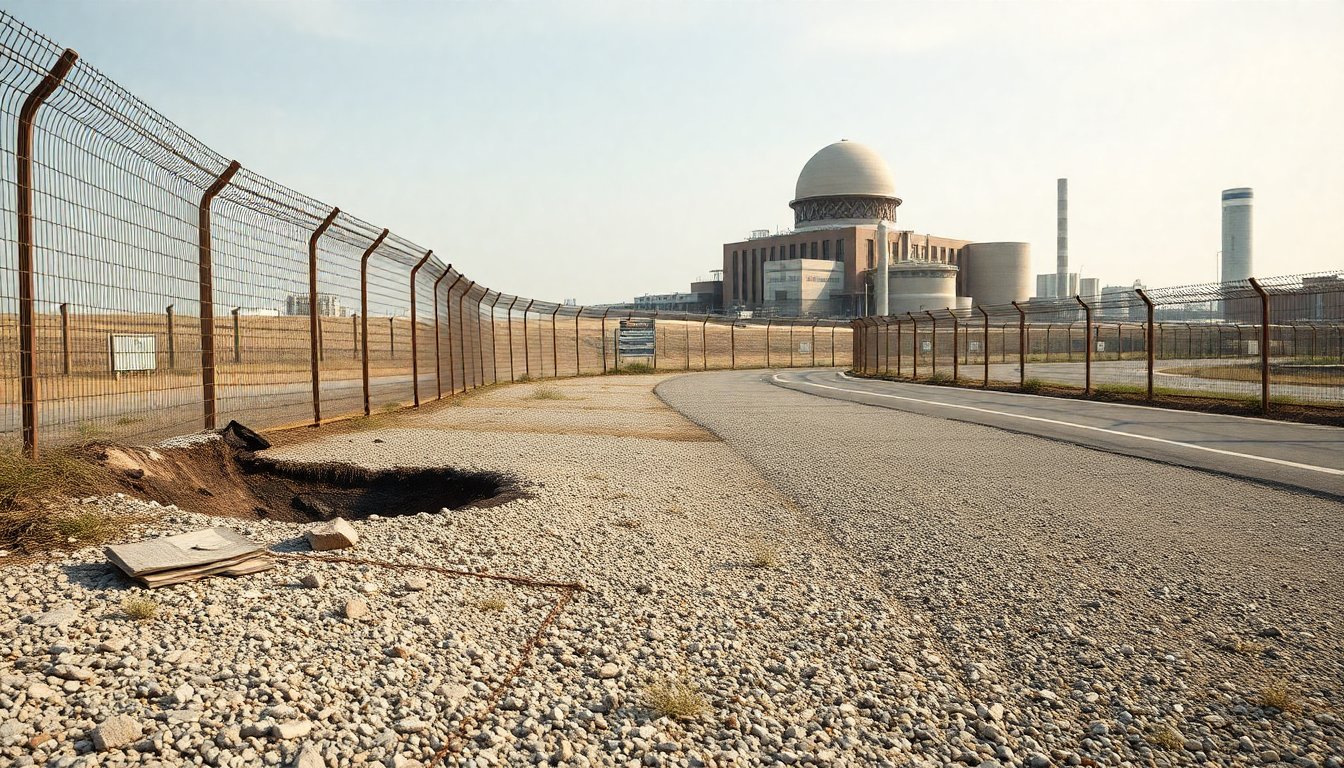
Information about the impact has been limited and carefully framed by official sources. The IAEA said only that it was informed of a projectile striking the Bushehr premises on Tuesday evening, while Rosatom specified the area near the metrology service building as the point of impact. Metrology refers to the science of measurement, and in a nuclear context the metrology service typically handles sensitive instrumentation and calibration. No independent verification of physical damage has been published, and neither Iran nor Russia released conclusive imagery of the site. Uncertainties remain about whether the object was a direct strike, shrapnel from intercepted munitions, or another form of debris falling into the plant perimeter.
Official reactions and immediate steps
Officials from the IAEA urged maximum restraint to prevent any escalation that could endanger nuclear safety, while Rosatom said it saw no change in onsite radiation readings and no casualties among its staff. Iranian authorities likewise reported no technical, financial, or human damage in initial communications. Because the event occurred during active exchanges in the region, analysts noted that debris from intercepted missiles or air-defense counterfire has caused unintended impacts elsewhere, creating an environment where even non-targeted fragments can threaten critical infrastructure. Authorities at Bushehr have reportedly taken precautionary measures to secure sensitive equipment and to monitor systems closely.
Why Bushehr matters
The Bushehr facility is Iran’s only operating commercial nuclear power plant, sited on the Persian Gulf coast and connected to the national grid. Its single operating reactor is a pressurized-water design completed with Russian assistance; it came online in 2011 and is capable of generating roughly 1,000 megawatts, though it contributes a relatively small share of the country’s electricity. The reactor uses low-enriched uranium supplied and managed under Russian arrangements, commonly enriched to levels suitable for power generation rather than weapons use. Nonetheless, any incident at a functioning reactor raises the specter of radiological contamination, particularly given the plant’s coastal location and the reliance of Gulf states on desalinated water.
Technical background and expansion plans
Bushehr’s history stretches back to the 1970s, with construction initially started by a German firm before work stalled after the 1979 revolution. Russia later completed Unit 1 and continues to provide technical support and fuel services. Iran has signaled ambitions to expand the site with additional reactors; construction activity for follow-on units has been visible in satellite imagery. The current reactor operates with uranium enriched to low percentages appropriate for civilian power, reducing the immediate proliferation risk, but the vulnerability of any nuclear installation to external military action remains a major concern for regional and international stakeholders.
Broader risks and regional context
Experts warn that armed conflict near nuclear facilities multiplies the risk of a radiological event even if a reactor spine remains intact. Hits to peripheral buildings, air defense debris, or fires could cause cascading operational disruptions. The Persian Gulf’s environmental sensitivity makes any potential release of contamination a shared hazard among neighboring states. International agencies have repeatedly called for protection of nuclear sites and for de-escalation in conflict zones; the Bushehr incident underscores that threat in concrete terms. Continued monitoring by the IAEA and transparent reporting by operators like Rosatom will be essential to assess ongoing safety and reassure the public and regional governments.