
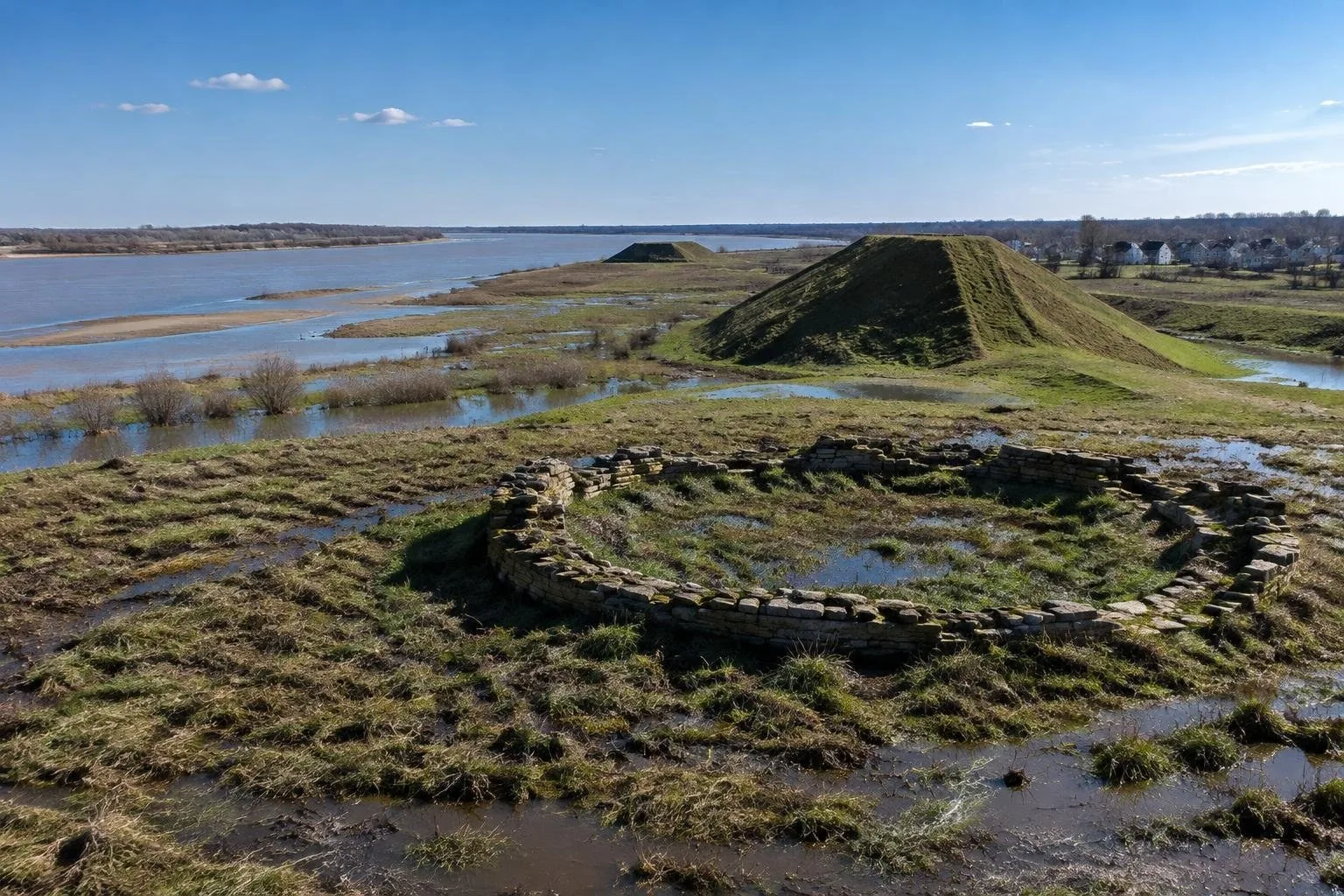
More than 800 years ago, the Mississippian city of Cahokia, located near present-day St. Louis, began to lose its population. At its peak around 1100 CE, this massive settlement housed up to 20,000 people. Today, just south of those ancient ruins, a new archaeological site is forming in real time in Centreville, Illinois. As modern residents flee persistent flooding and infrastructure failures, researchers are drawing parallels between these two distinct eras of climate-driven displacement.
The Parallel Decline of Two Floodplain Communities
Anthropologists Sissel Schroeder and White have studied both sites to understand how human societies react when environmental conditions deteriorate. In Centreville, the transformation from a vibrant community to a landscape of abandoned homes mirrors the slow depopulation of Cahokia. The town became majority-Black during the economic downturns of the 1960s and 1970s, a period marked by white flight and mismanaged drainage systems. Residents report that daily life was manageable until the floods intensified.
Data indicates that average annual rainfall in the St. Louis region has surged by 10 inches (25 centimeters) since the 1960s, reaching 44 inches (112 cm). This increase has overwhelmed stormwater and sewage systems built decades earlier. Raw sewage now backs up into kitchen sinks and seeps through lawns and streets. Those with financial means have left, leaving behind an older population and vacant structures, effectively turning the neighborhood into a modern ruin.
Ancient Cahokia’s Gradual Exodus
Nine hundred years ago, Cahokia occupied the same floodplain as Centreville does today. Its core featured Monks Mound, the largest prehistoric earthwork in the Americas, rising 100 feet above the valley floor. Surrounding it were plazas for feasts and games like chunkey, along with timber monuments for astronomical observations. However, by the end of the 12th century, the city entered a 200-year decline.
Research suggests this depopulation coincided with the Medieval Climatic Anomaly, a warming period characterized by severe Mississippi River floods and prolonged droughts. Unlike the catastrophic scenarios depicted in films such as “The Day After Tomorrow,” there is no evidence of widespread destruction or death at Cahokia. Instead, people left gradually throughout the 13th and 14th centuries. Archaeological records show a shift away from communal activities: mound building ceased, public granaries saw reduced contributions, and agricultural surplus moved to private spaces. Larger houses and status symbols appeared, indicating growing inequality between the rich and poor.
Inequality Drives Abandonment
The study highlights that climate change is experienced unequally in both historical and modern contexts. In Centreville, while the entire region faces increased rainfall, residents suffer the worst consequences due to their location in a floodplain with outdated infrastructure. Similarly, at Cahokia, those with farms in the lower floodplain faced greater crop losses than those with upland plots. During droughts, well-drained soils retained less moisture, disadvantaging certain farmers.
This disparity likely fractured social cohesion. Individuals who lost crops may have struggled to contribute to communal feasts, potentially becoming indebted to neighbors whose resources remained intact. Some chose to leave, altering the societal structure. Resident William McNeal, who stayed in Centreville despite the conditions, told a local news outlet, “I’m not going to abandon my house. It’s all I got.” His sentiment reflects the complex attachment many hold to home, even as environmental pressures mount.
Climate models predict future weather patterns but cannot forecast human response. The history of Cahokia and the current reality of Centreville demonstrate that societal changes often unfold quietly over long periods rather than through sudden collapse. The eventual stillness of an archaeological site is not always the result of a single disaster, but of accumulated stresses that reshape community bonds and force migration.