
Table of Contents
New museum in Egypt fuels debate over Nefertiti bust
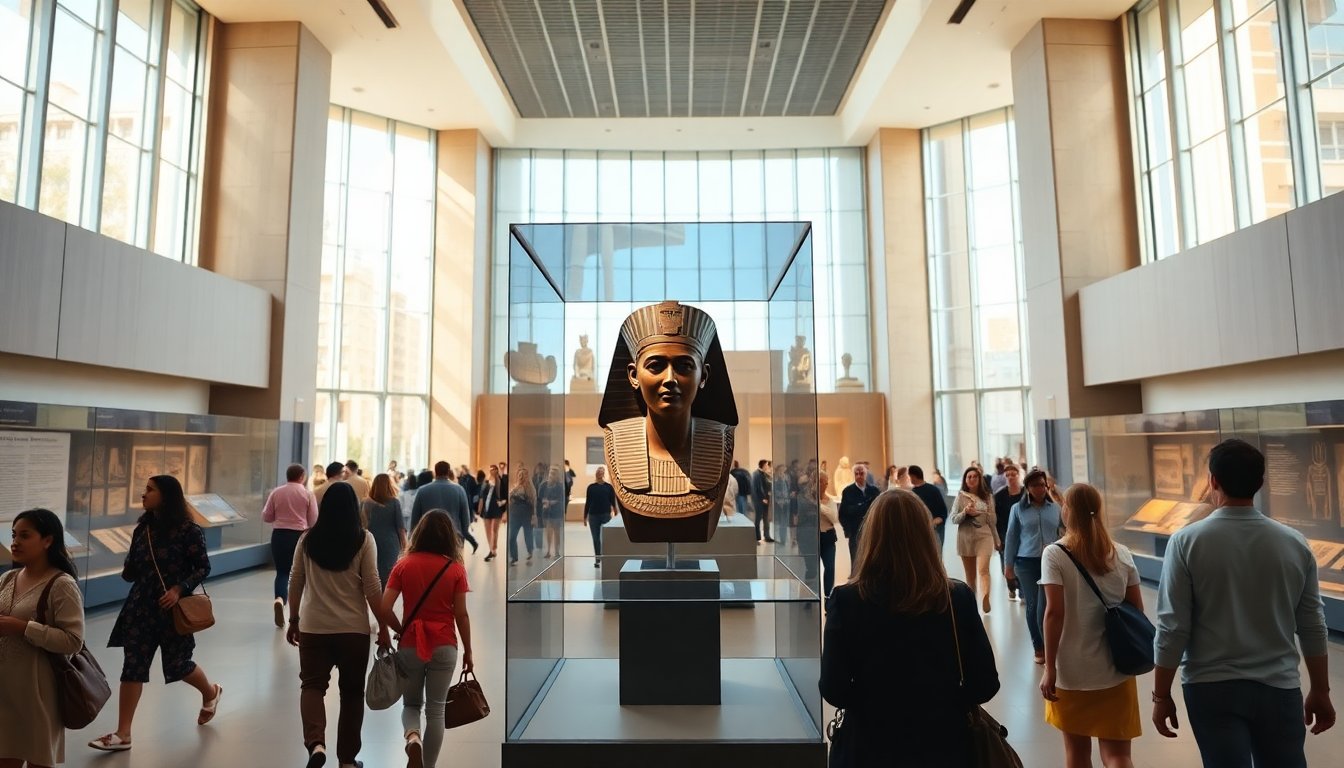
The inauguration of a state-of-the-art museum<\/strong> in Egypt has reignited discussions about the bust of Nefertiti<\/strong>, one of the country’s most treasured artifacts. Known for its stunning beauty, the bust has been displayed in Berlin for decades, sparking ongoing disputes between Egypt and Germany regarding its return. The new museum not only highlights Egypt’s rich history but also amplifies calls for the repatriation of this iconic sculpture.
A cultural icon in exile
The bust of Nefertiti, estimated to be over 3,300 years old, was unearthed in 1912 during an archaeological dig in Amarna, Egypt. This artifact has since become a symbol of ancient Egyptian artistry and beauty. However, its placement at the Neues Museum in Berlin has sparked ongoing debates about ownership and cultural heritage. Many Egyptians express a profound connection to this masterpiece, considering it an essential part of their national identity.
The significance of Nefertiti’s bust
The bust of Nefertiti is more than just an exquisite artwork; it symbolizes a critical turning point in Egyptian history. Nefertiti, spouse of Pharaoh Akhenaten, significantly influenced a major religious shift towards monotheism. Therefore, the bust serves not only as an artistic marvel but also as a vital historical artifact that encapsulates the intricacies of ancient Egyptian culture.
The push for repatriation
The recent opening of a new museum has sparked renewed debates regarding the restitution of cultural artifacts. Egypt has consistently claimed that the bust was acquired under questionable circumstances and deserves to be returned to its original location. With the inauguration of this museum, officials are leveraging the moment to strengthen their calls for repatriation, highlighting the value of cultural heritage and the pursuit of historical justice.
Egyptian officials, including prominent archaeologists and government representatives, have reiterated their stance that artifacts like the bust of Nefertiti should be displayed in their countries of origin. This sentiment is echoed by various cultural advocates who argue that returning such artifacts is essential for preserving national identity and history.
International implications
The debate surrounding the bust also has broader implications within the realm of international relations and cultural diplomacy. As nations confront the legacies of colonialism, the return of artifacts has emerged as a critical issue. The case of Nefertiti’s bust exemplifies the ongoing struggle for cultural restitution, underscoring the necessity for dialogue and collaboration between countries.
The role of museums in cultural heritage
Museums are essential in shaping our understanding of history and culture. The new Egyptian museum aims to present the nation’s rich heritage in an engaging and informative manner. By showcasing artifacts like the bust of Nefertiti, the museum not only educates visitors about ancient Egypt but also fosters a sense of pride and connection to the past.
As the museum opens its doors to the public, it transforms into a space for exploration and discovery. Visitors can immerse themselves in Egypt’s history while learning about ongoing efforts to reclaim cultural treasures. This approach enhances the museum’s educational value and positions it as a pivotal player in discussions surrounding cultural ownership.
Looking ahead
Discussions regarding the return of Nefertiti’s bust are gaining traction as the new museum showcases Egypt’s dedication to preserving its cultural heritage. Calls for the artifact’s return are likely to intensify, particularly as public engagement with the museum’s exhibits grows. While the future of Nefertiti’s bust remains uncertain, a renewed emphasis on its significance may lead to a resolution that acknowledges its historical and cultural value.
The new Egyptian museum serves as a crucial platform for advocating the return of Nefertiti’s bust. As Egypt strengthens its demands for this significant artifact, global attention is drawn to the complexities of cultural heritage and the responsibilities of museums in the modern era.