
Table of Contents
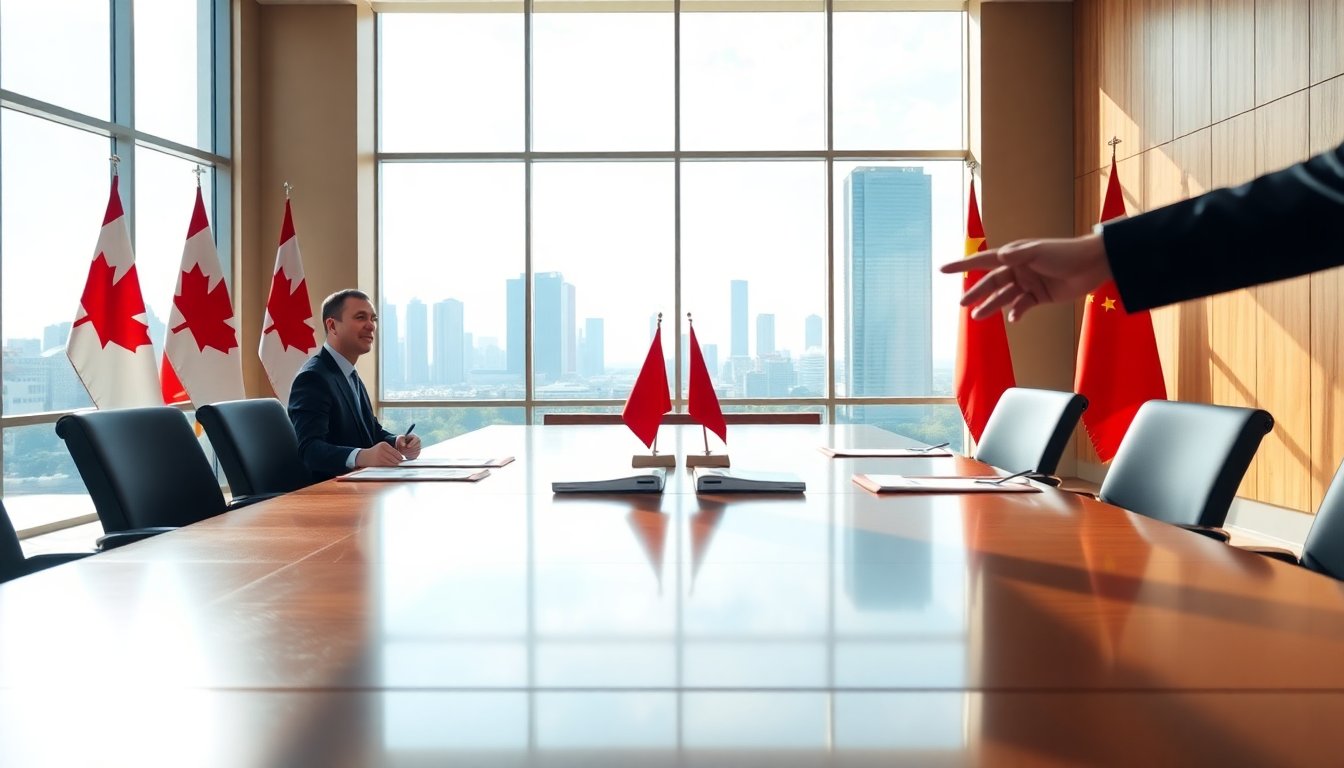
In a significant diplomatic move, Canada‘s Prime Minister Mark Carney has initiated a crucial visit to China, marking the first official trip by a Canadian leader in eight years. This visit aims to mend ties that have fluctuated dramatically over recent years due to various political tensions, including trade disputes and diplomatic rifts. During this pivotal meeting, Carney expressed optimism about entering a new era of cooperation between the two countries.
The relationship between Canada and China had been strained following a series of contentious events, including the arrest of a senior Chinese executive in Canada in. Carney’s visit represents an opportunity to not only repair these ties but also to expand economic partnerships in light of shifting global trade dynamics.
Progress in trade relations
During his discussions in Beijing, Prime Minister Carney met with Chinese Premier Li Qiang, who welcomed the renewed dialogue and emphasized the importance of economic cooperation. The two leaders acknowledged past challenges and expressed a mutual desire to move forward with a strategic partnership that benefits both nations. According to a statement from Carney’s office, both sides are committed to enhancing bilateral engagements across various sectors, including energy, finance, and security.
Key areas of collaboration
Carney’s agenda included meetings with influential Chinese corporations, such as the e-commerce giant Alibaba and the state-owned China National Petroleum Corp.. These discussions aim to foster investment opportunities and facilitate trade that supports both nations’ economic growth. The Canadian government has set ambitious targets to diversify export markets, reducing its dependency on the United States, which currently accounts for over 75% of Canadian exports.
The Prime Minister’s strategy to boost trade ties with China responds to increasing tariffs imposed by the American administration. Previous tariffs on Canadian goods, particularly on electric vehicles and steel, have compelled Canada to seek alternative markets. Carney’s vision includes doubling Canadian exports to non-U.S. countries over the next decade, underscoring the critical need for a robust partnership with China.
Diplomatic reconciliation
This visit is not solely focused on economic aspects; it also aims to restore diplomatic relations that have been fraught with tension. The Canadian government’s decision to uphold the One China Policy indicates a willingness to engage with China based on mutual respect and understanding. Carney’s approach seeks to foster an environment where both nations can collaborate on significant global issues, including climate change and economic stability.
Building trust and cooperation
During his discussions with Premier Li, Carney emphasized the importance of mutual respect and cooperation in addressing international challenges. Both leaders agree that a divided world cannot effectively tackle the pressing issues humanity faces today. They expressed a commitment to maintaining open lines of communication and cooperation within international frameworks such as the United Nations and the G20.
As China seeks to strengthen its ties with Canada, it hopes this partnership can serve as a counterbalance to the pressures exerted by U.S. policies. The Chinese leadership has repeatedly criticized the U.S. for its attempts to isolate China diplomatically and economically, viewing collaboration with Canada as an essential step toward a more balanced global order.
Prime Minister Carney’s visit to China signifies a renewed commitment to building a strategic partnership that could reshape the future of Canada-China relations. With both countries eager to explore new avenues for cooperation, this diplomatic engagement could herald a new chapter in their bilateral history. The path ahead will be closely watched as both nations navigate the complexities of international relations in an ever-changing geopolitical landscape.