
Table of Contents
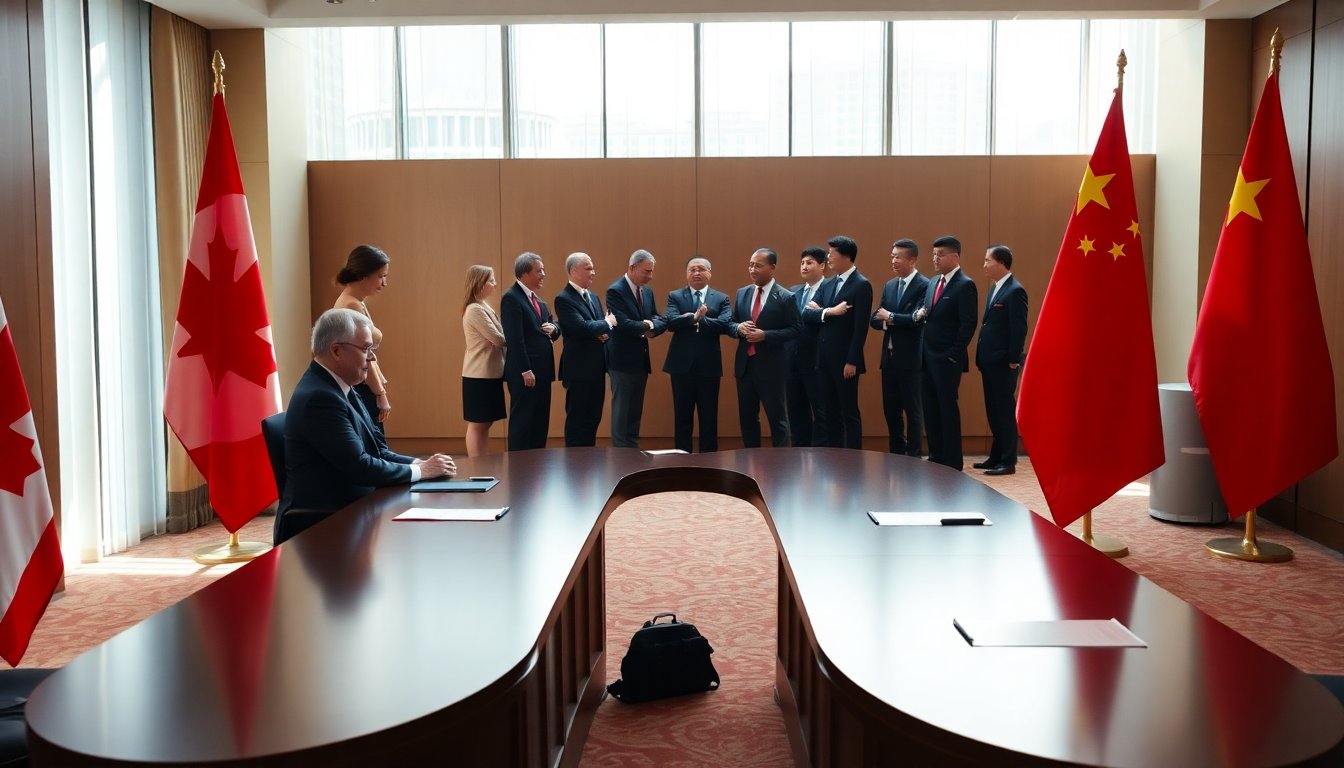
In a significant diplomatic moment, Canadian Prime Minister Mark Carney met with Chinese President Xi Jinping during the Asia-Pacific Economic Cooperation (APEC) summit. This encounter marks the first direct communication between the leaders of the two nations since 2017, highlighting an essential juncture in their long-standing relationship.
The backdrop of this meeting is crucial; it follows a period of heightened tension largely stemming from the contentious arrest of Huawei executive Meng Wanzhou in 2018, which led to China’s retaliatory detention of Canadian citizens. Carney’s approach aims to foster a pragmatic dialogue that could pave the way for renewed cooperation.
Rebuilding trust: A long-overdue conversation
During their 39-minute discussion, Carney and Xi acknowledged the estrangement that has characterized their nations’ relationship in recent years. Xi emphasized the historical ties that connect Canada and China, stating, “China is willing to work together with Canada to push relations back onto a healthy, stable, and sustainable track.” This sentiment, conveyed in Mandarin and later translated, reflects a willingness to overcome past grievances.
As Carney noted, “Distance is not the way to serve our people,” highlighting the need for constructive engagement. The Prime Minister expressed optimism about the meeting’s outcomes, stating it was “long overdue” and could mark a pivotal moment for Canadian families and businesses alike.
Navigating trade complexities
Trade discussions emerged as a core focus during the meeting. Carney and Xi directed their officials to expedite efforts to resolve ongoing trade disputes and irritants. The dialogue covered sensitive topics such as agriculture, including key Canadian exports like canola, seafood, and electric vehicles. These sectors have experienced significant disruptions due to various tariffs and trade barriers imposed by both nations.
China’s history of using trade as leverage has raised concerns among Canadian leaders, particularly regarding the imposition of tariffs on Canadian exports in retaliation for Canada’s own trade restrictions, such as the hefty tariffs on Chinese electric vehicles. The discussions at APEC could signal a new chapter, potentially leading to resolutions that benefit both economies.
Historical context and future implications
The deterioration of Canada-China relations traces back to the arrest of Meng Wanzhou, which ignited a series of retaliatory measures that strained diplomatic ties. The detention of Canadians Michael Kovrig and Michael Spavor in China heightened public sentiment against Beijing, further complicating diplomatic engagements. In 2017, when former Prime Minister Justin Trudeau last met with Xi, the aspirations for a free-trade agreement were ultimately thwarted.
Recent years have seen a gradual shift in public perception and policy towards China, particularly in light of allegations of foreign interference in Canadian democratic processes. Carney has characterized China as a significant global player, acknowledging the need for a well-rounded approach that encompasses various aspects of bilateral relations, including security and economic cooperation.
Looking ahead: Potential for collaboration
Looking forward, Carney’s discussions with Xi are expected to extend beyond trade and address broader global issues, potentially revitalizing the relationship through shared interests such as climate change and energy cooperation. Canada’s commitment to addressing climate-related challenges aligns with Xi’s emphasis on technological advancements and environmental stewardship.
As both leaders expressed a desire to uphold a rules-based international order, the success of this renewed dialogue will hinge on their ability to bridge the existing gaps and foster a spirit of cooperation. Carney’s willingness to visit China for a future APEC summit underscores a commitment to continued engagement and dialogue.
The backdrop of this meeting is crucial; it follows a period of heightened tension largely stemming from the contentious arrest of Huawei executive Meng Wanzhou in 2018, which led to China’s retaliatory detention of Canadian citizens. Carney’s approach aims to foster a pragmatic dialogue that could pave the way for renewed cooperation.0