
Table of Contents
Canada faced a tense moment in its quarterfinal against Czechia at the Milano‑Cortina Olympic Games when captain Sidney Crosby left the ice with an apparent right‑leg injury. The incident occurred six minutes into the second period, with Canada trailing 2-1.
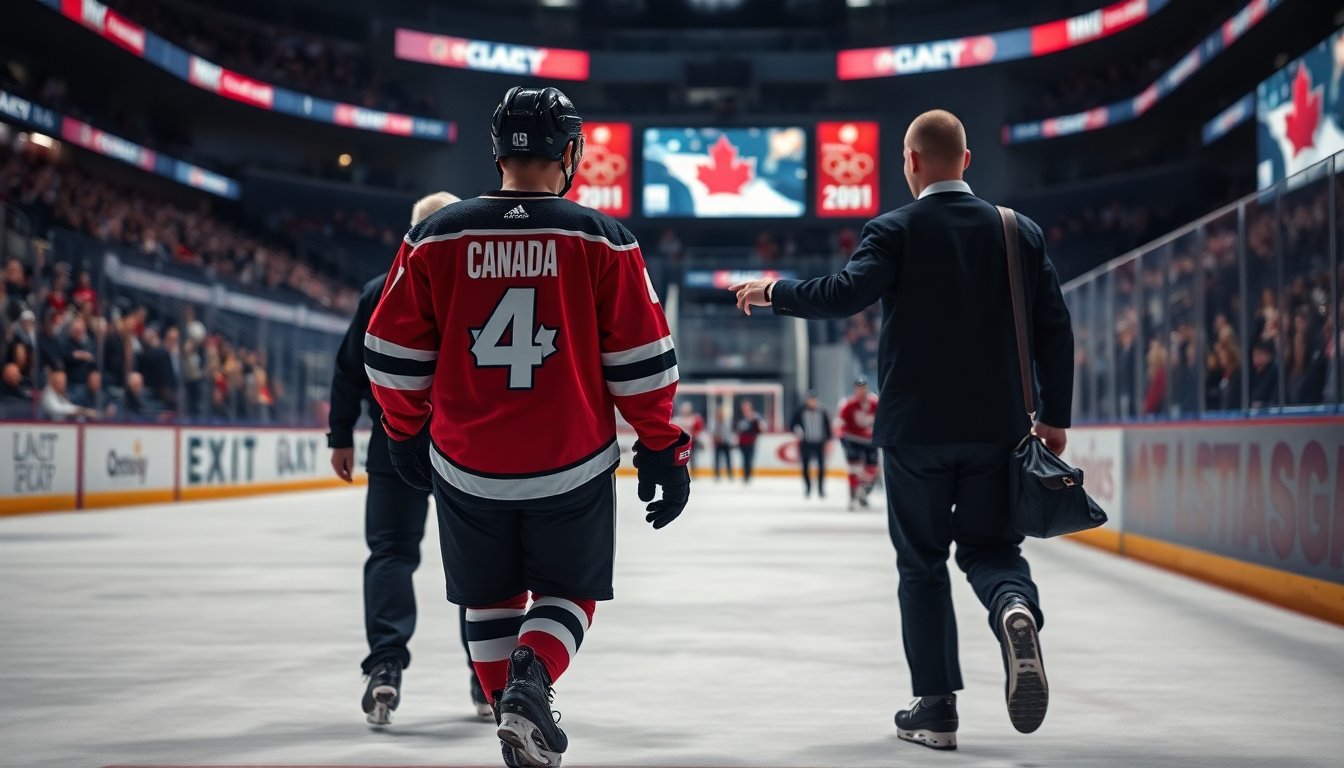
Crosby, a veteran forward and two‑time Olympic gold medalist, remained on the ice briefly after his leg appeared to buckle while he prepared for a neutral‑zone contact from Radko Gudas. He then absorbed another collision along the boards. Broadcast footage showed him walking off under his own power before returning to the bench in visible discomfort and leaving with team trainers for further evaluation.
What happened on the ice
The sequence began when Crosby braced for contact and his right leg gave way. Moments later he and Gudas were involved in additional physical play along the boards. A subsequent collision included a hit from Martin Necas. Crosby attempted to continue but left the ice in visible pain and exited for the dressing room. Spectators and teammates showed immediate concern as the team prepared to regroup without their captain for the remainder of the period.
Immediate aftermath and context
Team staff escorted Crosby to the locker room for assessment. Broadcast images indicated he left under his own power rather than on a stretcher. The timing heightened concern because the injury interrupted a tournament in which he had been a leading offensive contributor in Milan, recording two goals and four assists in the opening rounds and reaching a Canadian milestone with his 16th Olympic point during a 10-2 victory over France. Medical staff began a protocol of evaluation and monitoring, and the team adjusted lines as trainers evaluated his condition.
Crosby’s Olympic pedigree and Milan performance
Medical staff began a protocol of evaluation and monitoring, and the team adjusted lines as trainers evaluated his condition. At 38, Crosby is competing in his third Olympics and remains a central figure for Canada. He was a member of Canadian gold-medal teams in 2010 and 2014, the last two editions that included NHL players. His leadership and offensive production in Milan were central to Canada’s hopes. The captain’s mid-game exit therefore became a focal point for coaches, teammates and supporters.
Player profile and tournament history
Crosby’s career is defined by high-pressure performances on international stages and in the NHL. In Milan, his role extended beyond scoring. He helped drive possession and on-ice structure for a Canadian unit that included stars such as Connor McDavid and Nathan MacKinnon. Hockey’s physical nature means even elite players can be sidelined by contact sustained during routine plays, and Crosby’s removal highlighted that reality for the team.
Team implications and tournament backdrop
Canada’s quarterfinal with Czechia followed a contrasting group-stage meeting in Milan. On Feb 12, Canada defeated Czechia 5-0 in a game highlighted by goaltender Jordan Binnington. Binnington made 26 saves in the shutout. Rising forward Macklin Celebrini and veterans Mark Stone and Bo Horvat also scored.
The Feb 12 result underscored Canada’s depth and goaltending. The quarterfinal on Feb 18, however, prompted immediate questions about roster adjustments and leadership rotation. With Sidney Crosby unavailable for at least the short term, coach Jon Cooper and his staff faced decisions on line matchups, power-play configuration and emotional leadership in high-leverage moments.
Short-term outlook and recovery considerations
Medical staff have begun an ongoing protocol of evaluation and monitoring following Crosby’s removal. That protocol will determine timelines for return to play and the need for further treatment.
Coaching decisions will prioritize matchups and special teams while maintaining defensive structure. Depth on forward lines and the reliability of goaltending remain central to Canada’s immediate strategy.
Leadership duties are likely to be shared among experienced players until medical clearance is issued. Staff will assess fatigue and recovery across the roster to avoid compounding injuries during a condensed tournament schedule.
The team has scheduled updates from medical and coaching staff before its next game. Those briefings will clarify roster availability and any tactical changes.
Those briefings will clarify roster availability and any tactical changes. At the time Sidney Crosby left the arena, no official long-term prognosis had been released. The team’s medical staff typically completes clinical evaluations, imaging and monitored rest before confirming the extent of a lower-body injury. The organization stressed methodical treatment over speculative timelines.
Crosby’s exit from the quarterfinal introduced immediate uncertainty into Canada’s Olympic campaign. His production in Milan and established leadership increase the consequence of his availability for the coming games. Coaches may adjust lines and allocate additional ice time to veteran forwards if he is unavailable. Fans and analysts awaited further medical updates as Canada prepared for the remainder of the tournament.