
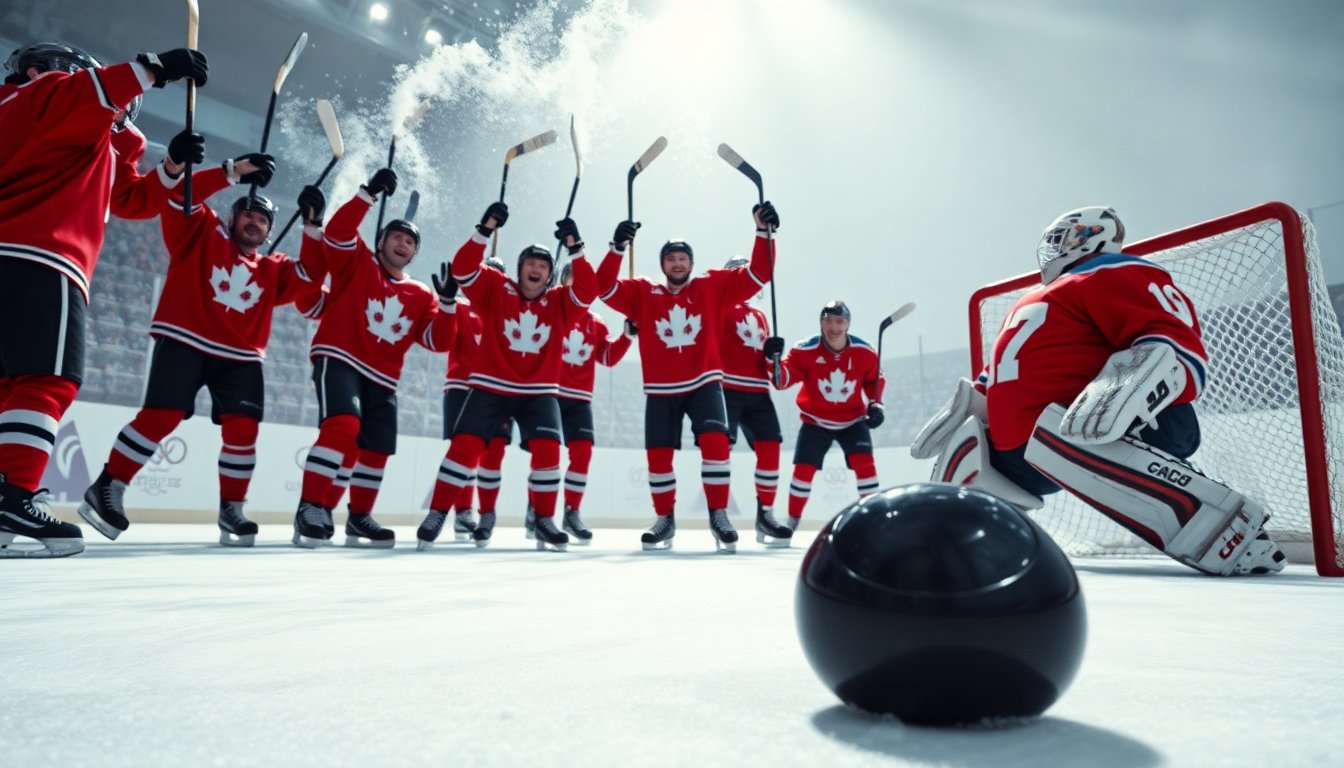
Canada finished pool play at the Milano‑Cortina Olympics with a statement: a 10-2 dismantling of France that kept the Canadians perfect through the preliminary round. Sidney Crosby chipped in a goal and two assists, rising stars and veterans alike piled up points, and the result left Canada with a plus‑17 goal differential and top seed heading into the knockout rounds. A late third‑period skirmish produced two ejections under IIHF rules, briefly punctuating an otherwise one‑sided affair.
A balanced, relentless attack
From puck drop Canada set the tone, turning a back‑and‑forth opening into sustained pressure. Tom Wilson opened the scoring on a rebound, and after France answered through Floran Douay, Canada took over. Macklin Celebrini enjoyed a breakout outing — two goals and an assist, including a composed penalty‑shot conversion where he beat the goalie with a slick forehand‑backhand finish. Connor McDavid matched Crosby’s line of a goal and two assists, while Mark Stone, Cale Makar and others supplied secondary scoring. The result was a roster firing on all cylinders, not a one‑man show.
Goaltending and defensive flow
Jordan Binnington had little to do, stopping 11 shots as Canada dominated shot totals and generated repeated high‑danger chances. France rotated goalies — Julian Junca started and gave way to Antoine Keller after two periods — but the tide of Canadian chances overwhelmed the visitors. France’s defense showed structure at times, yet rebound control and pressure on the puck carrier were recurring issues that led to quick transitions and quality Canadian chances.
Special teams and supporting cast
Special teams swung momentum at key moments. Canada’s power play struck when needed and the penalty kill didn’t just shut France down — Mark Stone even scored on a shorthanded breakaway in the first period. Depth players such as Devon Toews, Bo Horvat and Brandon Hagel provided timely contributions, while Cooper’s bench consistently rolled four lines to maintain pace and physicality. The result reflected deliberate team structure and disciplined rotations more than reliance on any single star.
The raw numbers and milestones
Beyond the scoreboard, there were personal landmarks. Crosby’s goal and two assists pushed his total to 16 career points in Olympics that included NHL players, moving him past Jarome Iginla’s Canadian mark. McDavid’s three points raised his tournament total to nine, eclipsing Jonathan Toews’ benchmark in that era. Those stats accentuate how established stars and youthful talent are combining to fuel Canada’s tournament run.
The confrontation and consequences
Late in the third period a hard hit by Pierre Crinon on Nathan MacKinnon drew an immediate response from Tom Wilson, and both players were ejected. Coach Jon Cooper framed the exchange as team chemistry — a showing that the roster will protect its own — while league observers cautioned about the risks of disciplinary actions in a tournament with single‑elimination stakes. Ejections can swing momentum or lead to suspensions, so teams now must juggle physicality with rule compliance.
What this means for the knockout rounds
Finishing pool play unbeaten and earning a quarterfinal bye puts Canada in a favorable position, but the real tests lie ahead. Knockout hockey is a different animal: matchups tighten, refereeing calls loom larger, and small errors are magnified. Expect coaches to manage ice time carefully, protect key players, and lean on video scouting to sharpen matchups. Special teams and goaltending form will be decisive — as will whether young players like Celebrini can keep delivering at this pace.
France’s takeaways
For France, the experience had value despite the scoreline. Players, including captain Pierre‑Edouard Bellemare, highlighted the lessons of facing one of the tournament’s deepest teams. The coaching staff will look to tighten gap control, improve rebound coverage and reassess netminding rotations to stay competitive in the remaining games. Maintaining discipline, keeping special teams sharp and preserving player health will determine whether this dominant group‑stage form turns into a genuine gold‑medal run.