
Table of Contents
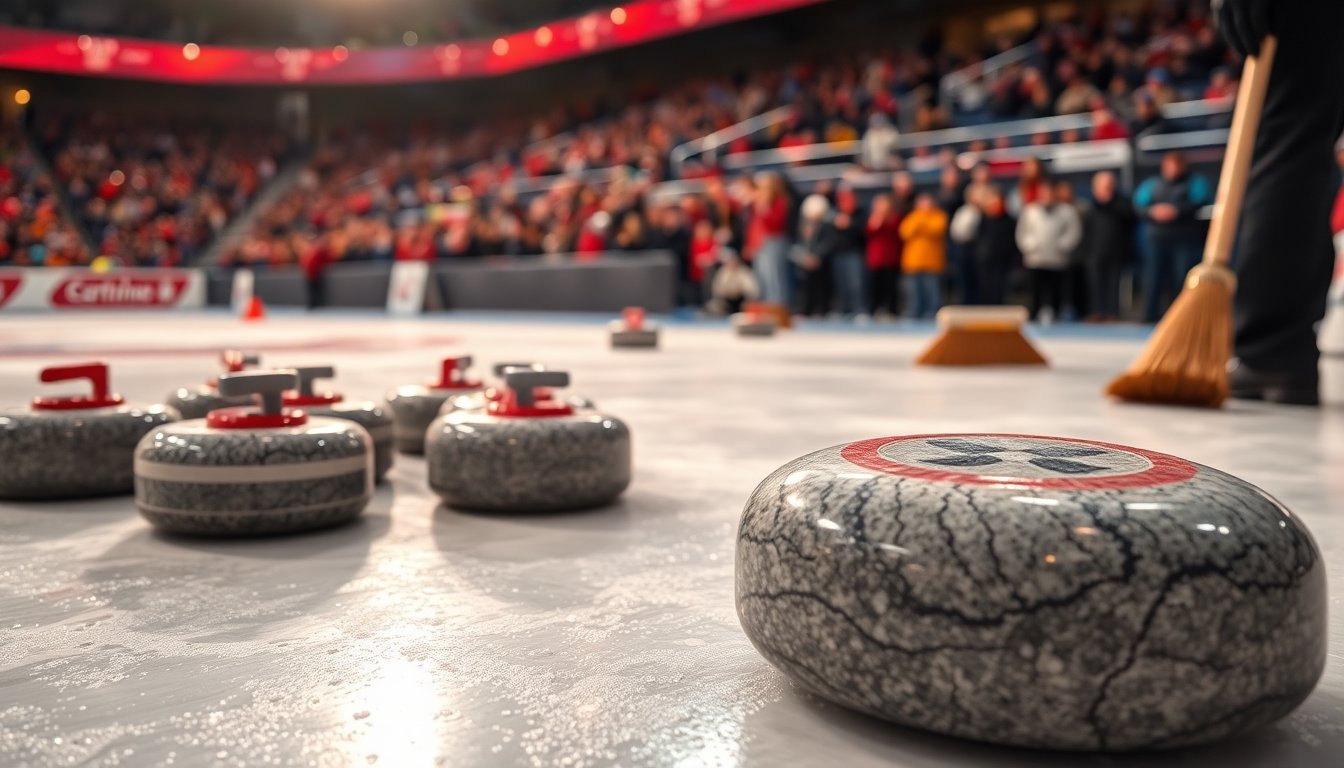
The BKT Women’s World Curling Championship began its run in Calgary on March 14, 2026 at the WinSport Event Centre, and the opening draw delivered drama and atmosphere as Team Canada beat Sweden 7-5. After the quieter, controlled setting of 2026, the arena welcomed real fans — an important change that the Canadian skip noticed immediately. Those spectators, counted at 2,701 for the game, brought noise and momentum that the home side fed off, reminding players and followers alike of how much a live crowd can shape an event.
On the ice, Kerri Einarson skipped a lineup that included vice Val Sweeting, second Shannon Birchard and lead Karlee Burgess. Burgess, 27, was experiencing her first women’s world championship, and the team’s composed performance produced the victory. Across the sheet, Sweden’s skip Isabella Wrana carried momentum from a recent Olympic mixed doubles gold-medal game, where she shot 97 percent, but she hit bumps in Calgary and finished this match around 64 percent — a contrast that helped tilt the result.
Match narrative
The contest opened with Sweden taking a two-point deuce in the first end, while Canada answered with a single in the second. The third end saw Canada execute a successful steal to even the score, and singles were exchanged in the fourth and fifth to leave the scoreboard level at three after five ends. Then, in the sixth end, a pivotal moment arrived: Wrana managed to remove one Canadian stone but could not eliminate the others in the house, which resulted in a Canadian steal of two. That swing produced a lead Canada protected through the remaining ends and turned out to be the defining sequence of the game.
Key ends and turning points
The sixth end proved decisive because it combined precise stone placement and effective teamwork on the brushes. Canada’s sweepers and tacticians created angles that forced Sweden into a difficult final look. Wrana’s earlier consistency at the Milano Cortina 2026 Games suggested she could handle pressure shots, yet in Calgary she encountered a different rhythm. The match illustrated how small misses at critical moments can be magnified: a single removed stone, followed by two resident reads left in the house, produced the difference between a tied contest and a lead that Canada would not surrender.
Team Canada, family and atmosphere
Beyond the scoreboard, the event felt personal for Einarson. She recently coached her 12-year-old twin daughters, Khloe and Karmyn, at the Manitoba Games and described the experience as part of what keeps her connected to the sport’s grassroots. The twins, who lost in a bronze-medal game at those provincial-level Games, were among the fans cheering in Calgary. That family presence, combined with full stands rather than the cardboard cut-outs used during pandemic-era events, created a vivid backdrop for the opening victory and highlighted how the championship feels different now that live audiences have returned.
Burgess’s first world championship
For Karlee Burgess, the trip to Calgary marked a milestone after a calendar shift that followed the Olympic Games: she and the rest of the Scotties champions waited more than a month for worlds to begin. Arriving several days before competition to practise, Burgess said the team worked on patience and consistency, trusting that good opportunities would present themselves. The result was a composed performance in front of the home crowd and a memorable debut at the women’s world championship level.
Event format and what’s next
The championship runs from March 14–22, 2026, featuring a field of 13 teams that qualified via three routes: hosts Canada, the Pan Continental qualifiers (China, United States, Korea, Japan, Australia) and the European qualifiers (Sweden, Scotland, Switzerland, Norway, Denmark, Turkiye, Italy). The opening round-robin sessions lead into a playoff structure where the top two teams advance directly to the semi-finals while the next four teams contest qualification games. Those qualifiers are scheduled for March 21 at 10:00, with semi-finals at 16:00 the same day, the bronze-medal game on March 22 at 09:00 and the gold-medal final at 15:00.
As the tournament progresses, teams will jockey for positioning and ice familiarity will become a factor. Canada’s next opponents over the opening weekend include the United States squad skipped by Delaney Strouse and China’s team skipped by Wang Rui. Fans can expect tight tactical play, shifting momentum and the kind of sweep-and-slide drama that defines top-level curling.