
Table of Contents
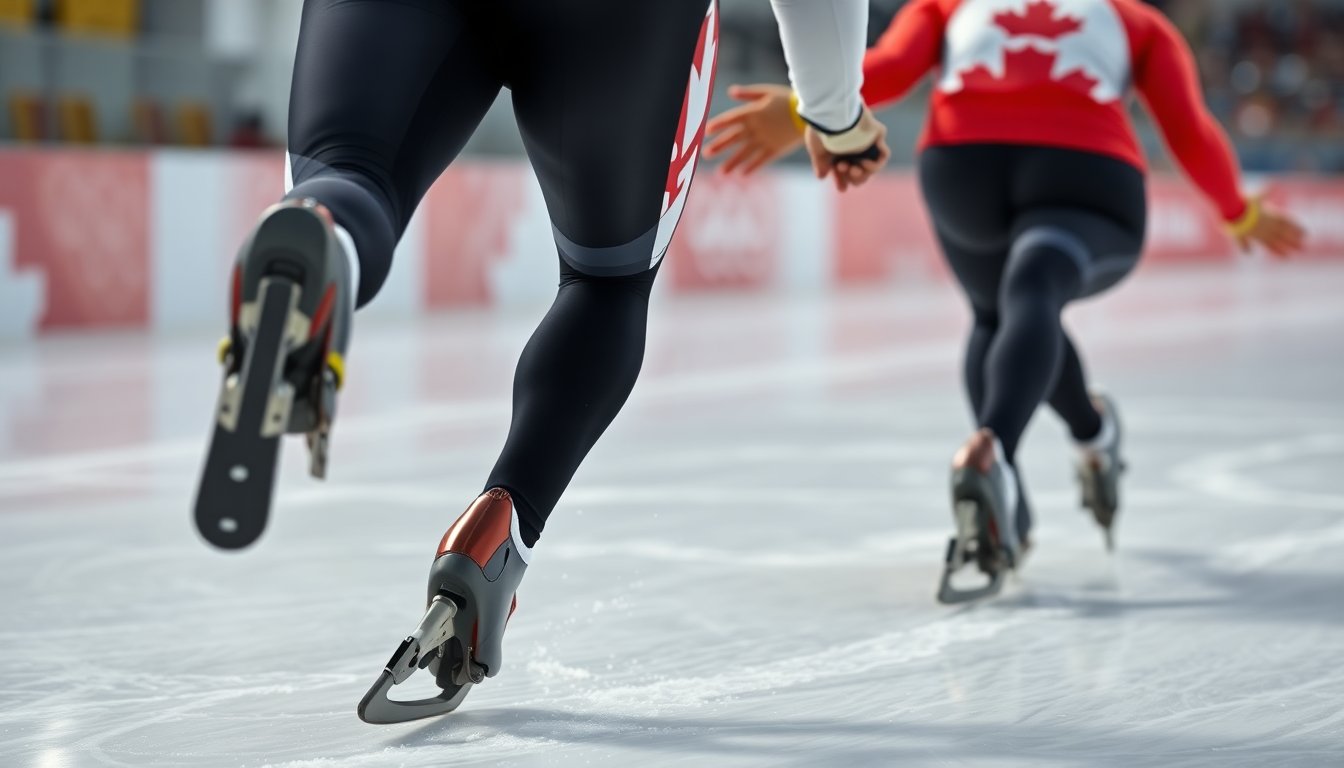
The Canadian trio of Isabelle Weidemann, Valérie Maltais and Ivanie Blondin repeated as Olympic champions in the women’s team pursuit at Milano Cortina 2026. Skating together for years, they used a revised tactical plan to defeat the Netherlands in the final, crossing the line in 2:55.80 while the Dutch recorded 2:56.77. The victory marks a rare consecutive-title feat in the discipline and capped another strong day for Canada at the Games.
Their journey to gold combined experience, teamwork and careful pacing. After an Olympic-record performance in Beijing four years earlier and a season of solid World Cup results, the trio entered the final with clear roles and the confidence to execute them under pressure.
How the race unfolded
The final was contested over six laps on the 400-metre oval at Milano Speed Skating Stadium. The Dutch squad started faster and led by 0.75 seconds after two laps, but Canada methodically narrowed the gap. By the middle of the race the deficit was reduced to 0.43 seconds; with two laps remaining Canada had moved ahead by 0.10 seconds and extended the margin to 0.46 with one lap to go. A sprint to the finish saw the Canadians hold off the Netherlands to claim the title.
Tactics and team roles
Facing increased parity among top nations, the Canadians adjusted their on-ice plan before the Games. The team deployed the six-foot-two Isabelle Weidemann into the lead for extended sections while Maltais and Blondin followed closely, using draft advantage to conserve energy. This deliberate rotation and the trio’s timing—developed over eight years together—helped them execute a measured comeback against the Dutch. Team pursuit rules require all three skaters to finish together, so synchronization and mutual pacing were crucial.
Context and significance
This gold makes Weidemann, Maltais and Blondin the first women to retain Olympic team pursuit gold since Germany’s consecutive wins in 2006 and 2010. Canada’s repeat triumph follows their Games-record performance in Beijing (2:53.44), and it reinforces the group’s standing as one of the country’s most successful long-track combinations. In Milan, the trio joined fellow Canadian champions Mikaël Kingsbury and Megan Oldham among gold medalists for the 207-member delegation.
Season form and recent results
Leading into the Olympics, the three Canadians arrived with momentum from the World Cup circuit. Collectively they claimed eight individual World Cup medals this season—one gold, four silver and three bronze—and reached the podium three times in team pursuit competition, including one victory and two silver finishes. Notably, they won the final team pursuit of 2026 in Hamar, Norway, posting 2:57.20 to edge the United States (2:57.29) and Japan (2:58.62), and they had earlier World Cup success in Salt Lake City and Calgary.
Other podiums and reactions
Japan claimed the bronze medal in Milan with a 2:58.50 performance, defeating the United States, which finished in 3:02.00. Japan’s Miho Takagi described the medal as the result of resilience and commitment after a demanding day that included multiple races. For Canada, the gold final came just two hours after a semifinal in which Canada posted 2:55.92 against the U.S. (3:00.14), while the Dutch semifinal time was 2:55.84 against Japan (2:55.95).
Observers and commentators praised Canada’s race intelligence and adaptability. CBC Sports analyst Anastasia Bucsis highlighted the trio’s tactical shift and race-savvy execution, calling them the best team on the ice in the final and one of Canada’s greatest team pursuit groups of all time.
Legacy and what comes next
The successful title defense cements the trio’s legacy in Canadian long-track history. Beyond the Olympic medals, their season-long consistency and World Cup pedigree signal continued competitiveness on the international stage. For fans and the national team, the victory in Milan represents both a reward for years of collaboration and a blueprint for how disciplined tactics and close teamwork can prevail in an increasingly competitive field.
As they celebrate with teammates and supporters, Weidemann, Maltais and Blondin also underline a broader message: in team pursuit, long-term chemistry and a willingness to evolve strategy can be as decisive as raw speed.