
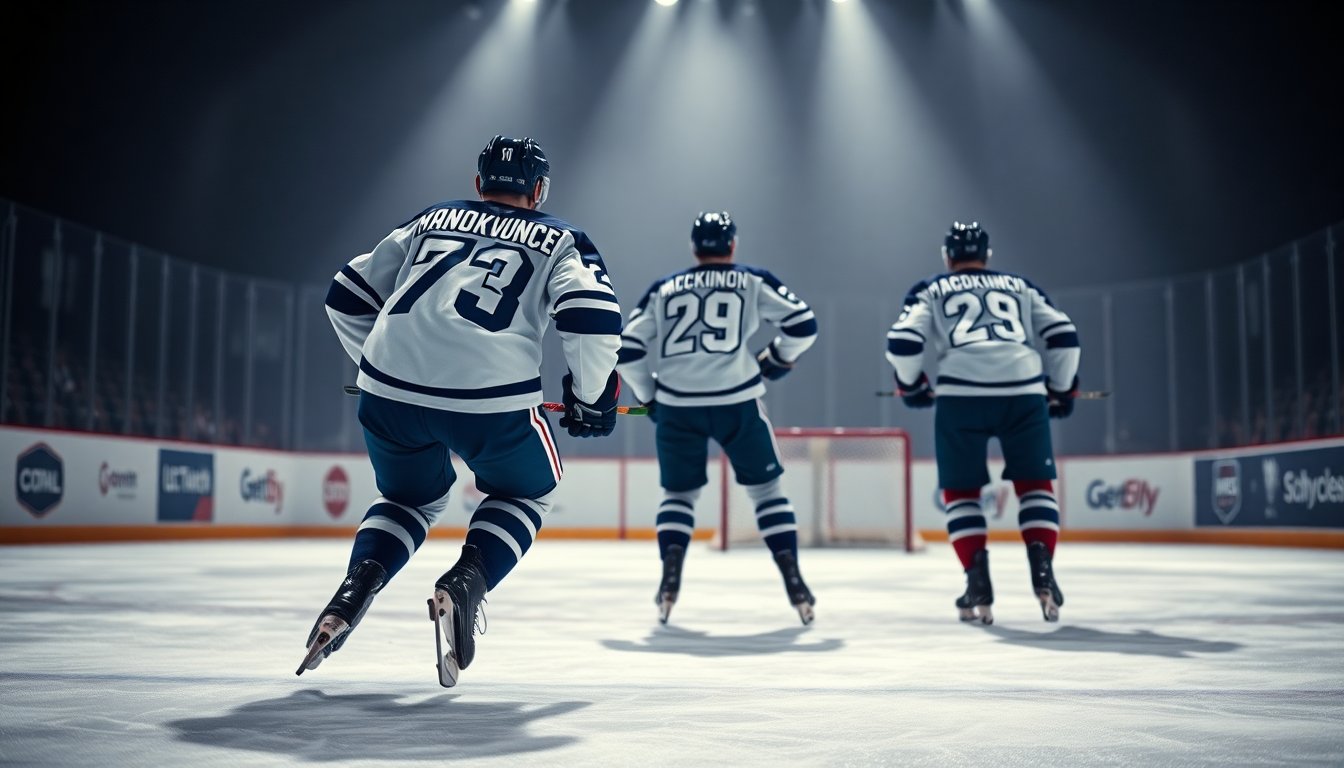
February 18 brought a scare for Team Canada when captain Sidney Crosby left the ice after taking a heavy hit. With his status uncertain, coach Jon Cooper reshuffled the forward lines, moving Nathan MacKinnon up to skate with Connor McDavid and rookie Macklin Celebrini. That trio quickly became Canada’s most dangerous attacking unit as the tournament shifted from round-robin to single-elimination hockey.
Why the change matters
Single-elimination games force coaches to choose between spreading talent across the roster or concentrating it where it can do the most damage. By stacking McDavid, MacKinnon and Celebrini, Canada sacrificed some balance in exchange for a relentless, high-skill top line capable of sustained pressure. That choice reshapes matchups, special-teams deployment and how the bench is used over 60 punishing minutes.
Lineup flexibility and injury watch
Medical staff have kept Crosby’s condition under wraps, and officials said they’ll reassess him before the quarterfinal. In the meantime, Cooper has leaned on veteran depth and adaptable personnel to preserve both offence and defensive coverage. The idea: maximize scoring punch at even strength while protecting the penalty-kill and keeping fresh legs for late-game scenarios.
Tactical ripple effects
Moving a playmaker like MacKinnon onto the first line changes more than who gets shots. It alters defensive assignments, zone starts and how opponents match up. Opposing coaches are forced to decide whether to shadow the trio with their best defenders or risk openings elsewhere. That pressure can create space for secondary lines, but it also demands more from Canada’s penalty-killers and forwards in transition.
Quarterfinal snapshot: momentum and special teams
Canada’s quarterfinal against Czechia swung on turnovers and special teams. Celebrini opened the scoring after a textbook feed from McDavid. Later, MacKinnon cashed in on a power play set-up from Celebrini, underscoring how a single man-advantage can decide a knockout match. Penalties were pivotal: Celebrini took an interference minor that led to David Pastrňák tying the game for Czechia. In sudden-death formats, discipline—and the ability to kill penalties—becomes a premium.
Balancing reward and risk
Stacking top-end talent tests depth and conditioning. Coaches must decide where to spend special-teams reps and when to shelter the top trio from matchup fatigue. Matching that line against an opponent’s best defensive pair is a gamble: it can overwhelm rivals or open the door for counterattacks if secondary units aren’t solid.
What’s working across the tournament
Experienced returnees have steadied Canada, helping in late-zone exits, special teams and shut-down minutes. Young players have provided bursts of tempo and created high-danger chances that shift expected-goal models in short windows. Other teams, meanwhile, lean heavily on stars—players like David Pastrňák and Martin Nečas driving primary offence while depth lines balance checking and support scoring.
Tactical takeaways and what to watch
Coaches are increasingly treating line changes and special-teams calls as testable moves. Watch three things closely:
– Player availability: even minor injuries can force big strategic shifts.
– Line deployments: who gets sheltered minutes, who draws the toughest matchups.
– Special teams: power-play conversion and penalty-kill efficiency often decide tight contests.
Practical metrics worth tracking (in plain terms)
– High-danger chances per 60 minutes (how often a team creates really dangerous scoring opportunities)
– Power-play and penalty-kill percentages
– Turnover differential and top-line ice time
Teams that convert these observations into simple, repeatable decisions—shorter shifts for high-usage players, matchup-based deployments, and clear roles on special teams—tend to handle elimination pressure better. Small, measurable advantages compound quickly: a successful power play, a cleaned-up transition, or a defensive stop can swing the game. Canada’s decision to concentrate elite talent up front is designed to seize momentum and force opponents into uncomfortable choices. If the team can marry that firepower with discipline and smart rotation, it will be well-placed to survive the next round. If not, single mistakes—turnovers or undisciplined penalties—could end the run as fast as it began.