
March 7, 2026 — Cortina d’Ampezzo
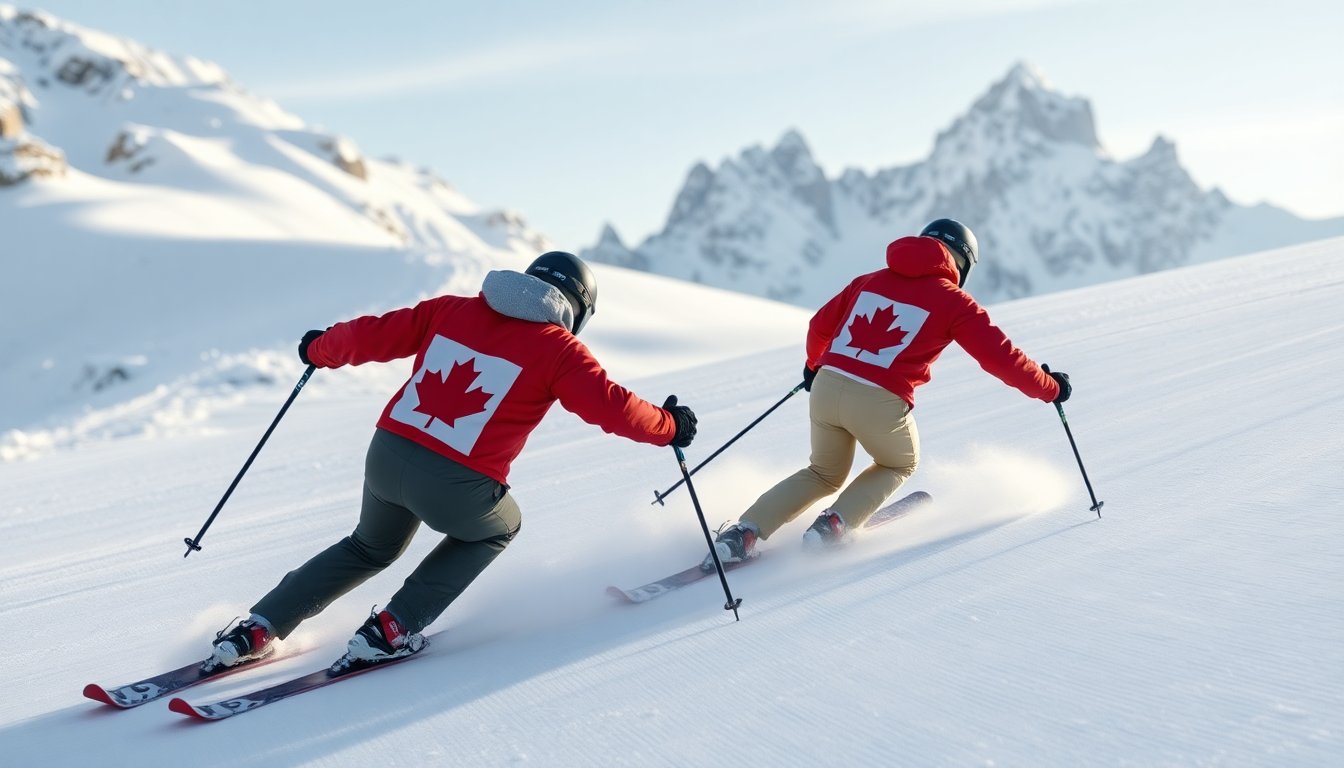
A newly paired Canadian tandem announced themselves on the Paralympic stage. In the men’s visually impaired downhill at the Tofane Alpine Skiing Centre, Kalle Eriksson and guide Sierra Smith raced to silver in their Paralympic debut, stopping the clock at 1:18.33. The run mixed opening-speed bravado on the upper pitches with careful, precise line choice through the trickier middle sections — and crisp, split‑second communication over their two‑way headset that kept them in sync all the way to the finish.
How they did it
Eriksson and Smith opened aggressively but smartly, tucking for speed on the steep sections, widening their line through the technical mid-course, then powering into the final straight. Split times and race footage show a consistent rhythm: Smith’s voice cues matched Eriksson’s movements almost instantaneously, and the pair emerged without any penalties. Their silver is an early, dramatic podium for Canada and the payoff for a partnership that has climbed quickly through the World Cup ranks.
Podium picture
Gold went to Austria’s Johannes Aigner with guide Nico Haberl, who finished 2.25 seconds ahead. Italy’s Giacomo Bertagnolli and guide Andrea Ravelli took bronze in 1:18.64.
More medals for Canada on the slopes
Canada added another alpine medal the same day. Sit‑skier Kurt Oatway of Calgary earned bronze in the sitting downhill (1:19.42). Norway’s Jesper Pedersen won that race in 1:18.14, with the Netherlands’ Niels de Langen taking silver in 1:19.24 — results that underline Canada’s depth across para‑alpine disciplines.
Athlete context
Eriksson and Smith arrive in Cortina with momentum. Over three World Cup seasons the pairing has amassed 22 World Cup medals and picked up silver in slalom and giant slalom at last year’s world championships. Their Cortina performance is the latest evidence that steady technical work — targeted training blocks, guide‑specific drills and relentless video analysis — can convert World Cup form into Paralympic hardware.
Setbacks and concerns for Canada
Not all of Canada’s downhill stories were celebratory. Alexis Guimond recorded a DNF after losing balance and skiing off course early in his run; he left the hill unassisted and required no on‑site evacuation. Defending women’s downhill champion Mollie Jepsen finished fourth but reported a re‑aggravation of a lower‑body injury sustained about a month earlier. Team medical staff are assessing her condition and further participation is uncertain — a reminder of how quickly fortunes can turn in downhill racing.
Para Nordic: Wilkie shines
On the Nordic side, Natalie Wilkie of Salmon Arm won silver in the women’s standing sprint biathlon, covering the 7.5‑km loop in 18:46.4 with clean shooting across both bouts. Ukraine’s Oleksandra Kononova took gold, 4.9 seconds ahead, while teammate Liudmyla Liashenko grabbed bronze in 19:13.9. Canadians Brittany Hudak and Mark Arendz finished sixth and fifth respectively.
A shifting podium dynamic
The Games also saw a notable development off the snow: Russian para‑alpine athletes returned to the podium under their national flag for the first time since 2014. Varvara Voronchikhina and Aleksei Bugaev each won bronze in their standing downhill races — a moment that carries sporting significance and broader geopolitical overtones. Event organisers, team officials and federations are continuing to sort through the administrative and procedural details tied to that return.
What’s next
Teams will spend the coming days combing through headset logs, split data and race footage to refine equipment choices and tactics. Canada’s coaches and medical staff are monitoring injured athletes and will decide entries for upcoming events based on further assessments. Across the field, federations are likely to double down on guide training, communication systems and the small technical edges that decide single‑run sports like downhill.
Big picture
Between Eriksson and Smith’s breakthrough, Wilkie’s podium, Oatway’s bronze, and the tense moments for Guimond and Jepsen, the first alpine and Nordic days in Cortina have already reshaped some expectations — both on and off the snow. Expect more tactical tweaks, medical updates and fine margins to dominate the headlines as the Paralympics continue.