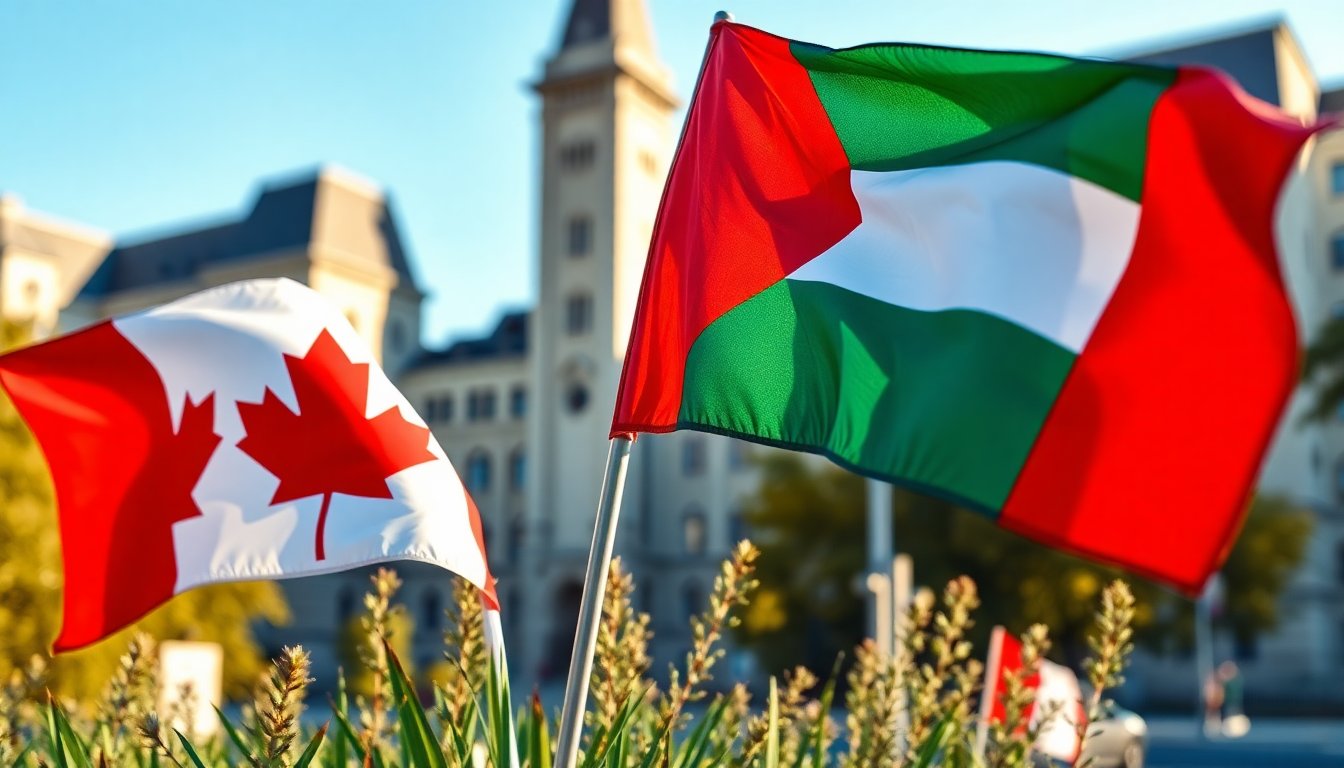
In a significant diplomatic move, Canada has officially acknowledged the state of Palestine, as announced by Prime Minister Mark Carney’s office. This recognition aligns Canada with international allies and aims to uphold the vision of a two-state solution amid growing tensions in the region.
The Prime Minister’s Office (PMO) emphasized that Canada’s commitment to a two-state solution is rooted in the hope for a negotiated settlement, despite serious challenges in recent years. The PMO cited key events, such as the October 7, 2023, attack by Hamas on Israel and legislative actions by the Israeli parliament supporting West Bank annexation, as critical factors eroding this possibility.
Understanding the Context of Recognition
The PMO’s statement highlighted the dual impact of Hamas’s actions on both Israeli and Palestinian communities. It described Hamas as an entity that oppresses the people of Gaza while inciting fear in Israel. The PMO stated, “Hamas has stolen from the Palestinian people, cheated them of their life and liberty and can in no way dictate their future.” This condemnation positions Canada’s recognition as a step towards re-establishing a dialogue focused on peace.
The Israeli Government’s Role
Canada’s recognition occurs against the backdrop of an Israeli administration that remains opposed to a Palestinian state. The PMO expressed concern regarding systematic efforts by the Israeli government to undermine the establishment of a Palestinian state. The statement clarified that this administration has openly declared its intention to prevent such a state from materializing.
In light of these developments, Canada has committed to collaborating with both the State of Palestine and Israel to foster a future of peace. This initiative is particularly timely as Carney prepares to engage with global leaders at the United Nations General Assembly, where discussions surrounding the Israeli-Palestinian conflict will likely be a focal point.
Global Reactions and Implications
As Canada moves forward with its recognition, it is joined by countries such as Australia, the United Kingdom, and Portugal, signaling a potential shift in international attitudes towards Palestine. British Prime Minister Keir Starmer stressed the importance of maintaining the possibility of a two-state solution, emphasizing the need for a secure Israel alongside a viable Palestinian state.
French President Emmanuel Macron has indicated that France will follow suit, underscoring a growing momentum in recognizing Palestinian statehood. However, Canada’s recognition was introduced with specific conditions aimed at the Palestinian Authority, which governs portions of the West Bank. These conditions include a commitment to governance reforms, scheduled elections in 2026 excluding Hamas, and the demilitarization of the future Palestinian state.
Domestic Reactions in Canada
Domestically, the response to Canada’s recognition has been mixed. Conservative Leader Pierre Poilievre criticized the move, framing it as a distraction from domestic issues such as rising crime and economic challenges. He reiterated the Conservative Party’s unwavering support for Israel’s right to exist and defend itself, advocating for a future where a demilitarized and peaceful Palestinian state could coexist with Israel.
Meanwhile, Hamas welcomed the recognition, viewing it as a vital step towards affirming the Palestinian people’s rights to their land and sovereignty. They urged immediate actions to halt violence against Palestinians in Gaza and to oppose Israeli annexation plans in the West Bank.
The Path Forward
Canada’s ambassador to the UN, Bob Rae, articulated that the decision to recognize Palestine was not impulsive but rather a necessary step towards fostering peace. He emphasized that recognizing the sustainability of a two-state solution serves the best interests of both Israel and Palestine. Rae addressed the criticism surrounding the recognition, asserting that it neither legitimizes terrorism nor rewards violent actions.
The Prime Minister’s Office (PMO) emphasized that Canada’s commitment to a two-state solution is rooted in the hope for a negotiated settlement, despite serious challenges in recent years. The PMO cited key events, such as the October 7, 2023, attack by Hamas on Israel and legislative actions by the Israeli parliament supporting West Bank annexation, as critical factors eroding this possibility.0
The Prime Minister’s Office (PMO) emphasized that Canada’s commitment to a two-state solution is rooted in the hope for a negotiated settlement, despite serious challenges in recent years. The PMO cited key events, such as the October 7, 2023, attack by Hamas on Israel and legislative actions by the Israeli parliament supporting West Bank annexation, as critical factors eroding this possibility.1