
Table of Contents
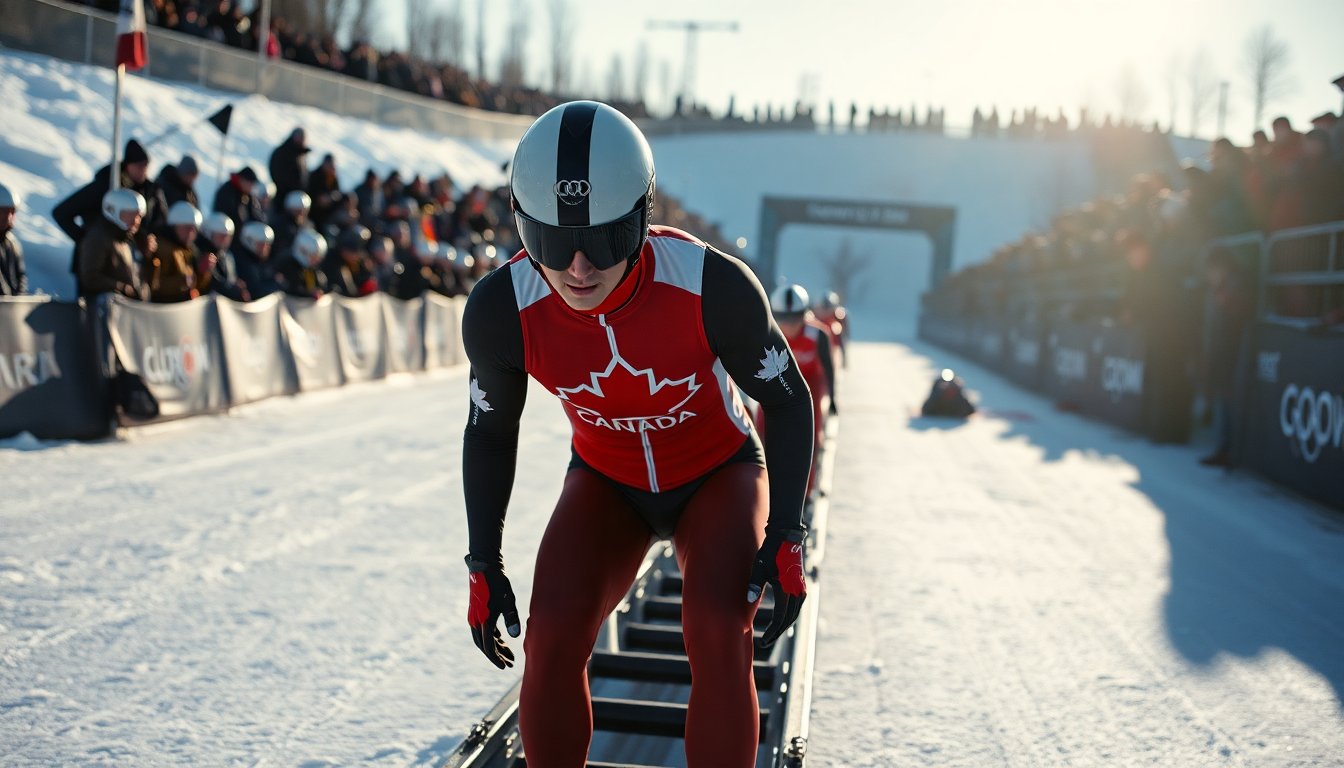
As the countdown to the upcoming winter Olympics continues, a significant controversy has emerged involving athletes from Canada and the United States. Katie Uhlaender, a seasoned competitor and two-time world champion from the U.S., has leveled serious allegations against Canadian skeleton coach Joe Cecchini. She suggests that actions taken by the Canadian team may have undermined her chances for Olympic qualification. This conflict arose during a recent North American Cup event held in Lake Placid, New York, where unexpected withdrawals dramatically affected the competition dynamics.
With the qualification window for the Milan-Cortina Games closing soon, many athletes, including Uhlaender, have been striving to secure their spots based on performance rankings. The situation took a significant turn when Canada opted to withdraw four of its six female athletes from the competition. This decision altered the field size and reduced the available qualification points.
Allegations of sabotage and the context of withdrawals
At the heart of the controversy is Uhlaender’s assertion that Cecchini was responsible for decisions that ultimately harmed her Olympic aspirations. Despite her long-standing recognition in the sport, including a commendable fourth-place finish at the 2014 Games, Uhlaender finds herself in a precarious position. The Lake Placid race was an opportunity for her to garner vital points, yet the Canadian team’s decision to withdraw affected her potential to qualify.
Uhlaender, currently ranked third among U.S. women and 20th globally, expressed her frustration vocally, reportedly using strong language during a phone call with Cecchini prior to the race. Reports indicate that Cecchini justified the withdrawal by citing the need to protect the rankings of the Canadian athletes, but this rationale did little to quell Uhlaender’s outrage and that of her supporters.
Canada’s official response
In response to the accusations, Bobsleigh Canada Skeleton (BCS) released a statement asserting that the decision to withdraw was made with the welfare of younger athletes in mind. According to BCS, the Lake Placid event featured an unusual format with three races in one week. After subpar performances, the coaching team collectively decided that continuing in the competition was not beneficial for the athletes involved. This decision was framed as a protective measure aimed at ensuring the long-term development of the athletes rather than a tactical move to influence Olympic qualification.
The organization emphasized that the development circuit is primarily intended for fostering talent and should not be viewed as a direct route to Olympic qualification. They reiterated their commitment to transparency and athlete welfare, maintaining that their actions were justifiable within the context of the competition.
Investigation by the International Bobsleigh and Skeleton Federation
Compounding the situation, the International Bobsleigh and Skeleton Federation (IBSF) has announced an investigation into the ramifications of the Canadian withdrawals on the overall qualification points landscape. BCS acknowledged that the choice to withdraw had unintended consequences, notably reducing the number of available development points for the event. However, they stressed that the points awarded in developmental competitions are fluid and not fixed, and thus should not be construed as a hindrance to Olympic eligibility.
As the IBSF conducts its investigation, the Canadian team remains steadfast in its belief that their decision was made in good faith, prioritizing athlete safety and performance over competitive advantage. Meanwhile, U.S. coach Andrew Blaser has been vocal in his concerns, having joined other national coaches in bringing the issue to the attention of the International Olympic Committee’s athletes’ commission.
Broader implications for international relations in sport
The controversy has sparked broader discussions about the integrity of competition and cooperation among nations in the world of sports. The U.S. federation has reiterated its dedication to fair play, highlighting the importance of maintaining positive relationships within the international skeleton community. Various nations, including Denmark, Israel, and Malta, have also raised concerns regarding the event’s integrity. The ramifications of this dispute extend beyond individual athletes, potentially affecting future international competitions.
As the Olympic Games draw closer, the fallout from the Lake Placid race could have lasting implications for both Uhlaender and the Canadian skeleton team. The ongoing investigation by the IBSF will be critical in determining the next steps for all parties involved, as the world watches closely to see how this dispute unfolds.