
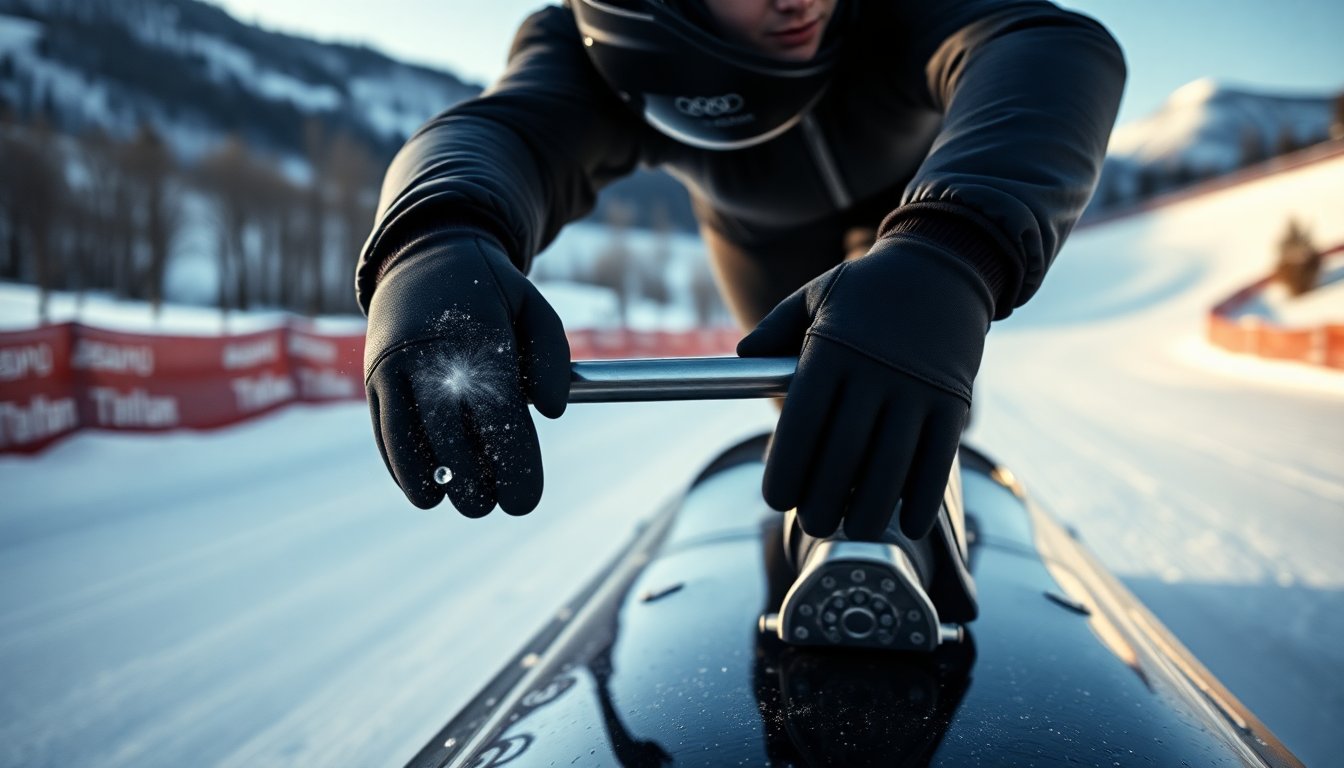
Hallie Clarke arrives at Milano Cortina 2026 carrying a rare and fast-moving story: a teenager who tried skeleton on a whim and, within a handful of seasons, has become one of the sport’s most watched names.
A flyer at WinSport got her into a “learn to push” session. She moved from Brighton, Ontario, to Calgary at 14 to chase the sport, shrugged off an early crash and went back down the track twice more that same day. Persistence turned to results. At 19 she stood on the top step of the senior world championships in Winterberg and, within a year, added the junior world title—becoming the first athlete to hold both crowns at once. Those back-to-back wins catapulted her from promising prospect to bona fide national contender.
How she rose so quickly
– Fast transition: Clarke moved from developmental races to regular World Cup podiums in a compressed period. That leap is visible in her start speeds, more consistent lap times and shrinking run-to-run variance.
– Brief program moves: She spent a short spell racing under a U.S. setup before returning to Canada. The reunion with her long-term coach helped restore continuity—an often-underrated ingredient for sustained performance.
– Mentorship and environment: Veteran teammates, notably Jane Channell, have played a hands-on role in her technical and mental development. Access to Calgary’s high-performance facilities at WinSport also accelerated her learning curve.
Beyond the medals: the human side of preparation
Clarke’s rise is as much about small, steady habits as it is about headlines. In Cortina’s pre-Olympic test race she finished sixth—an encouraging sign that she understands the venue’s lines and has the repeatable execution needed at this level. Coaches point to two nontechnical strengths that stand out: routine and support.
– Rituals: A simple pre-race routine—right down to the same socks she’s worn since before her first World Cup—helps reduce cognitive load and keeps her focused on the task, not the spectacle.
– Family: Her family is a visible presence and a practical safety net. Their steadying influence (her father’s sport experience, her mother’s coaching instincts) gives Clarke a sense of normality amid the chaos of major events.
– Mental skills: She has worked regularly with sport psychologists. Data from her team show declines in self-reported anxiety and fewer lapses in high-pressure runs after structured mental-performance training. That work has converted occasional spikes of nervousness into manageable pre-race energy.
What it means for Canada’s program
Clarke’s achievements have ripple effects. Her dual world titles raised the program’s performance baseline and changed selection conversations—federation officials now weigh immediate podium potential more heavily alongside long-term development. Coaches report that her presence has improved teammates’ averages: when one athlete lifts the standard, others often follow.
Practical changes are already visible: more emphasis on start-speed programs, wider access to integrated mental-health services, and renewed focus on coach-athlete continuity. For sport scientists and talent scouts, Clarke’s path is a case study in how low-cost stabilizers—strong routines, accessible mentorship, and timely psychological support—can multiply technical gains.
Outlook for Milano Cortina
Technically and mentally, Clarke looks ready to compete. Her metrics show steady incremental improvements in reaction time, cornering velocity and run consistency. The competitive field remains deep and experienced, so the margin for error is small, but Clarke’s blend of rapid learning, coaching continuity and psychological preparation widens her podium window.
Put simply: she’s not just a feel-good story. She’s a measurable medal threat whose next runs in Milan and Cortina will tell us whether early dual world titles are the start of a long elite career—or a brilliant, brief burst. Either way, Canada’s skeleton program has a fresh success story to build around.