
Table of Contents
A tragic accident occurred on a railway line leading to the renowned Inca citadel of Machu Picchu in Peru, where two trains collided head-on. This incident, which took place on a busy travel day, resulted in numerous injuries among tourists, including seven Canadian citizens, as confirmed by Global Affairs Canada.
The collision involved trains operated by Inca Rail S.A. and PeruRail S.A., essential transportation links for visitors to the UNESCO World Heritage Site. The crash resulted in one train conductor’s death and approximately 40 injuries, with around 20 individuals reported to be in serious condition, according to health officials.
The facts
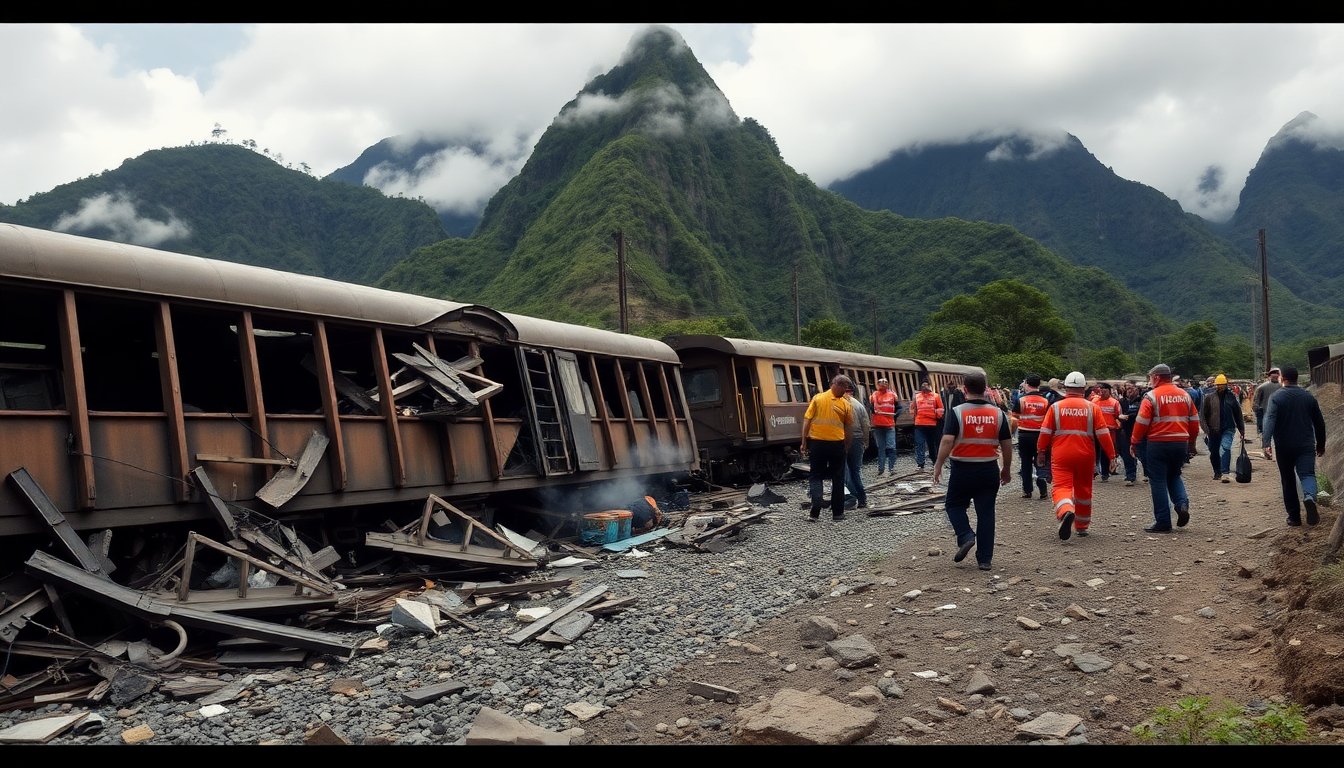
Images circulated on social media show the two damaged locomotives, their fronts crumpled in a shocking display of destruction. Broken glass littered the ground, and emergency responders tended to injured passengers along the tracks. Eyewitnesses described scenes of chaos as people rushed to evacuate the trains, some visibly distressed and requiring medical attention.
Emergency response efforts
Local authorities swiftly deployed ambulances and medical teams to the crash site, where rugged terrain complicated rescue efforts. Reports indicated that emergency services faced challenges accessing the area due to its remote location within the Andean mountains. Nevertheless, police officers assisted in carrying injured passengers to triage points set up near the tracks.
Canadian officials expressed their condolences and are providing consular assistance to affected citizens. Global Affairs Canada acknowledged the situation and reiterated their commitment to supporting those impacted. Foreign Affairs Minister Anita Anand conveyed her sadness regarding the crash, assuring that Canadian representatives are in close communication with local authorities.
Impact on tourism and safety concerns
Machu Picchu, a remarkable testament to Incan engineering, attracts over one million visitors annually, making it vital to Peru’s tourism economy. The site, known for its stunning vistas and rich history, has become increasingly popular, raising concerns about the safety and reliability of transportation systems that facilitate access.
Challenges following the accident
The tragic collision has raised questions about the safety protocols of railway services. Investigations are underway, with both Inca Rail and PeruRail expressing their condolences and pledging full cooperation with authorities to determine the cause of the accident. Current disruptions in rail services have left many travelers stranded, complicating logistics for upcoming tourism plans.
Travelers often rely on the train journey from Ollantaytambo to Aguas Calientes, a scenic route through the mountains that typically takes about 90 minutes. The collision has disrupted this vital transportation link and cast a shadow over the safety of future travel to such a significant destination.
Next steps for transportation safety in Peru
This incident underscores the need for a thorough examination of transport safety protocols, particularly in regions where tourism plays a pivotal role in the local economy. The Peruvian government faces the challenge of ensuring rail services are safe while balancing tourism demands with the preservation of cultural heritage. The tragic loss of life and injuries sustained in this collision can serve as a wake-up call for necessary reforms and heightened safety measures moving forward.
As the investigation unfolds, the focus remains on supporting the injured and their families while honoring the memory of those affected by this tragedy. The tourism industry must confront the reality of increasing visitor numbers and the imperative to maintain safety standards that protect both tourists and local communities alike.