
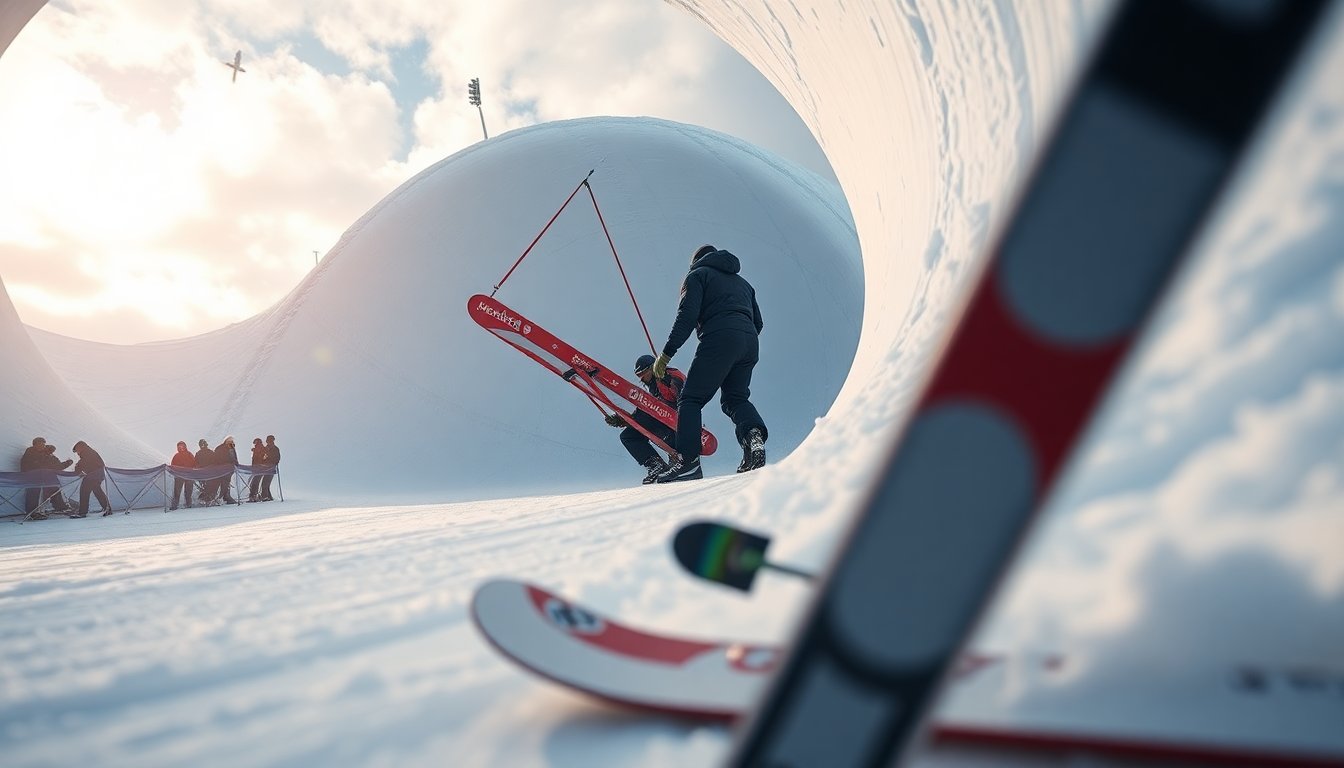
Who: Canadian freeski halfpipe star Cassie Sharpe. What: a heavy crash during a qualifying run that stopped her heat and required on-site medical evacuation. When: Feb. 19, 2026. Where: the Olympic halfpipe qualifying course. During her second run in the women’s freeski halfpipe, Sharpe suffered a hard fall that left medical teams rushing to the pipe. Spectators and teammates watched as she received treatment at the top of the course and was later carried off on a sled; witnesses say she acknowledged the crowd with a wave while being moved to the medical unit. Organizers confirm she was evacuated for further evaluation, but have not released detailed medical findings yet. The exact cause of the fall is still under review.
Sharpe’s presence at this event carried extra weight: she returned to elite competition after becoming a mother, reshaping how she approaches training and success. Instead of long, daily grind sessions, her routine has centered on shorter, high-intensity blocks, tighter recovery protocols, and careful load management so she can balance parenthood and peak performance. Coaches and family — including her husband, himself a former Olympian — have been credited with coordinating childcare, travel and logistics to make the comeback possible.
The crash has two immediate effects. First, it highlights the physical risks inherent to high-level freeskiing: hard landings and big airs come with consequences, even for the most experienced athletes. Second, it renews conversation about athlete welfare — from how teams manage return-to-sport after injury to what support systems look like for competitors who are also parents. Team officials emphasize that medical supervision and gradual rehabilitation will guide any decision about Sharpe’s next steps.
Beyond the practical questions of rehab and timelines, there’s an emotional layer. Sharpe has spoken in the past about how parenthood changed what winning means to her — small family moments now sit alongside podium results as measures of success. That reframing doesn’t dull her competitiveness, but it does shift priorities around recovery and long-term health.
What happens next is straightforward: Sharpe’s medical team, her coaches and her personal team will assess her condition and map a phased recovery plan. Officials say they will share verified updates when available; until then the focus is on stabilizing her health and supporting a careful return to training if and when that’s advised.
We’ll follow official statements from event medical staff and Sharpe’s team and report confirmed developments. For now, the priority is her recovery and the careful planning that follows any serious on-course incident.