
Table of Contents
Canada prepares for delivery of first F-35 fighter jet
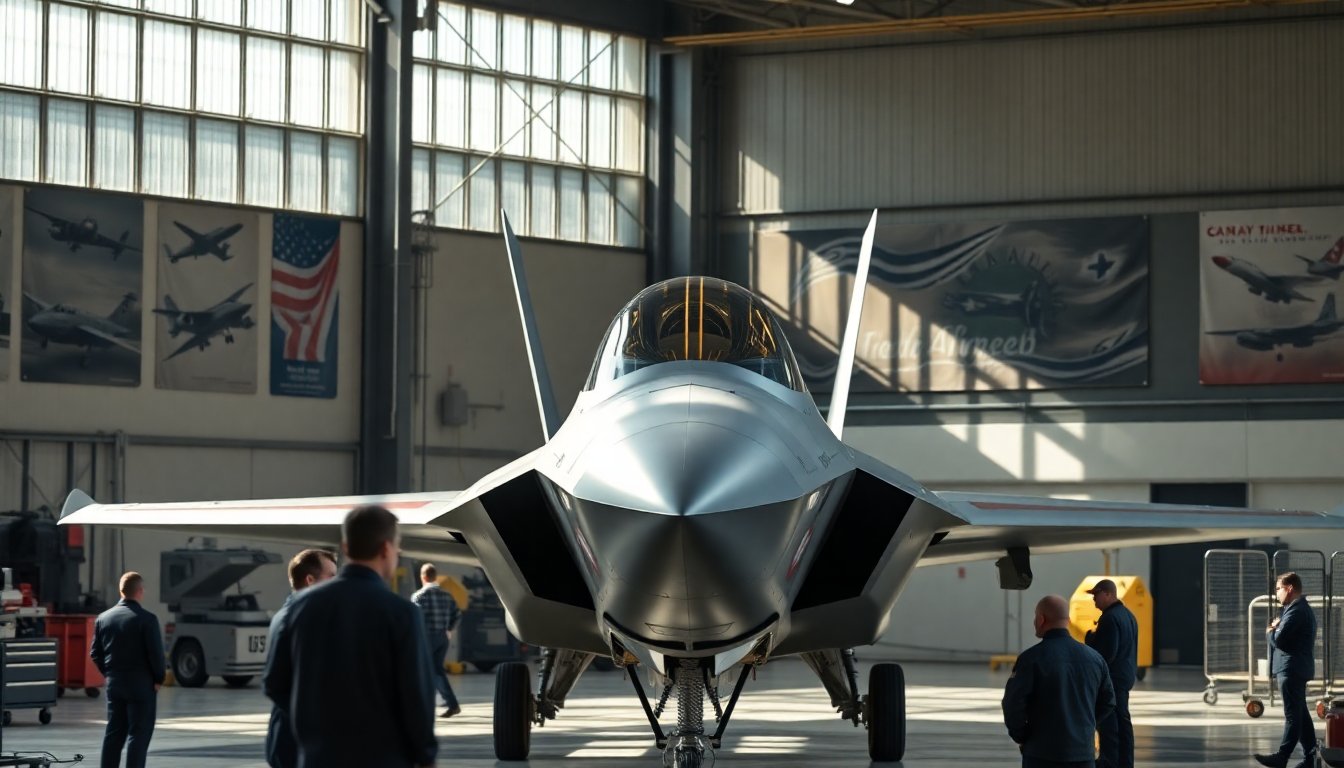
The Canadian Armed Forces are on the brink of a significant development with the imminent delivery of their first F-35 fighter jet from Lockheed Martin’s production facility in Fort Worth, Texas. This milestone arrives amid persistent political tensions and trade disputes between Canada and the United States, prompting discussions about the future direction of Canada’s military aviation strategy.
The F-35 program represents a crucial component of Canada’s initiative to modernize its aging CF-18 jets. However, uncertainty clouds this endeavor, as the government has yet to disclose the total number of aircraft it plans to acquire. This ambiguity is particularly troubling against the backdrop of recent threats from U.S. President Donald Trump concerning potential tariffs and import restrictions, which could significantly influence Canada’s defense procurement decisions.
Upcoming F-35 delivery and its implications
On Monday, a ceremonial event will signify the completion of assembly for Canada’s first F-35 fighter jet. Lieutenant General Jamie Speiser-Blanchet, the commander of the Royal Canadian Air Force (RCAF), is set to sign the fuselage bulkhead. This ceremony marks a significant production milestone and underscores the challenges associated with the ongoing CF-18 replacement program. Although Canada has contracted for 16 F-35s, the government has not provided updates regarding the status of an additional 72 aircraft.
The review of the procurement strategy was initially scheduled for completion last year. However, Prime Minister Mark Carney has yet to reveal any definitive plans. Defense analysts, including Philippe Lagassé from Carleton University, emphasize the importance of these decisions, especially following Carney’s recent speech in Switzerland, which suggested a potential shift in Canada’s defense policy.
Political pressures and defense procurement
The evolving political landscape in the United States has introduced additional challenges to Canada’s fighter jet procurement process. U.S. Secretary of State for Defense Procurement, Stephen Fuhr, indicated that a review of the F-35 program began following President Trump’s inauguration. This review reflects a significantly altered global environment. With escalating tensions surrounding trade and national security, several Canadian leaders are calling for a comprehensive evaluation of all available options before committing to the F-35s.
Critics of the F-35 program argue it deepens Canada’s dependence on American military technology. Bloc Québécois Leader Yves-François Blanchet emphasized the need for Canada to carefully consider its defense options, particularly given President Trump’s unpredictable policies, which pose risks to Canadian economic and security interests.
Alternatives to the F-35: The Gripen option
In the ongoing discussions regarding the F-35 program, the Swedish aerospace firm Saab is advocating for its Gripen fighter as a potential alternative. Proponents of the Gripen contend that it can meet Canada’s operational demands while potentially decreasing reliance on U.S. defense systems. This debate over whether to uphold the F-35 order or explore alternatives like the Gripen highlights the evolving landscape of military procurement in Canada.
U.S. Ambassador to Canada, Pete Hoekstra, has urged Canadian officials to remain committed to the F-35, pointing to its advanced capabilities compared to the Gripen. He stresses that Canada’s involvement in the F-35 program is crucial for ensuring interoperability with U.S. defense systems, which is vital for national security and defense collaboration.
The path forward for Canada’s military aviation
The Canadian Armed Forces are preparing to integrate the F-35 into their fleet, with pilot training and infrastructure development already underway. However, the long-term implications of these procurement decisions remain uncertain. The choice to acquire all 88 F-35s or explore alternative aircraft will significantly impact Canada’s military capabilities and its relationship with the United States.
As Canada approaches the delivery of its first F-35, the interplay between political decisions and military needs will shape the country’s defense landscape. The challenges presented by the current geopolitical climate necessitate a careful examination of Canada’s future military procurement strategies. This ensures alignment with national interests and security objectives, ultimately influencing the effectiveness of Canada’s defense capabilities.