
Table of Contents
Climate activist seeks dismissal of charges
In a significant legal development, climate change activist Olivier Huard has filed a motion requesting the court to dismiss the charges against him. Huard, one of two individuals charged following a protest on the iconic Jacques Cartier Bridge in Montreal last October, argues that the legal actions taken against him are fundamentally flawed. He stated, “We want it cancelled because all this legal procedure is a complete mistake from the beginning.”
The protest details
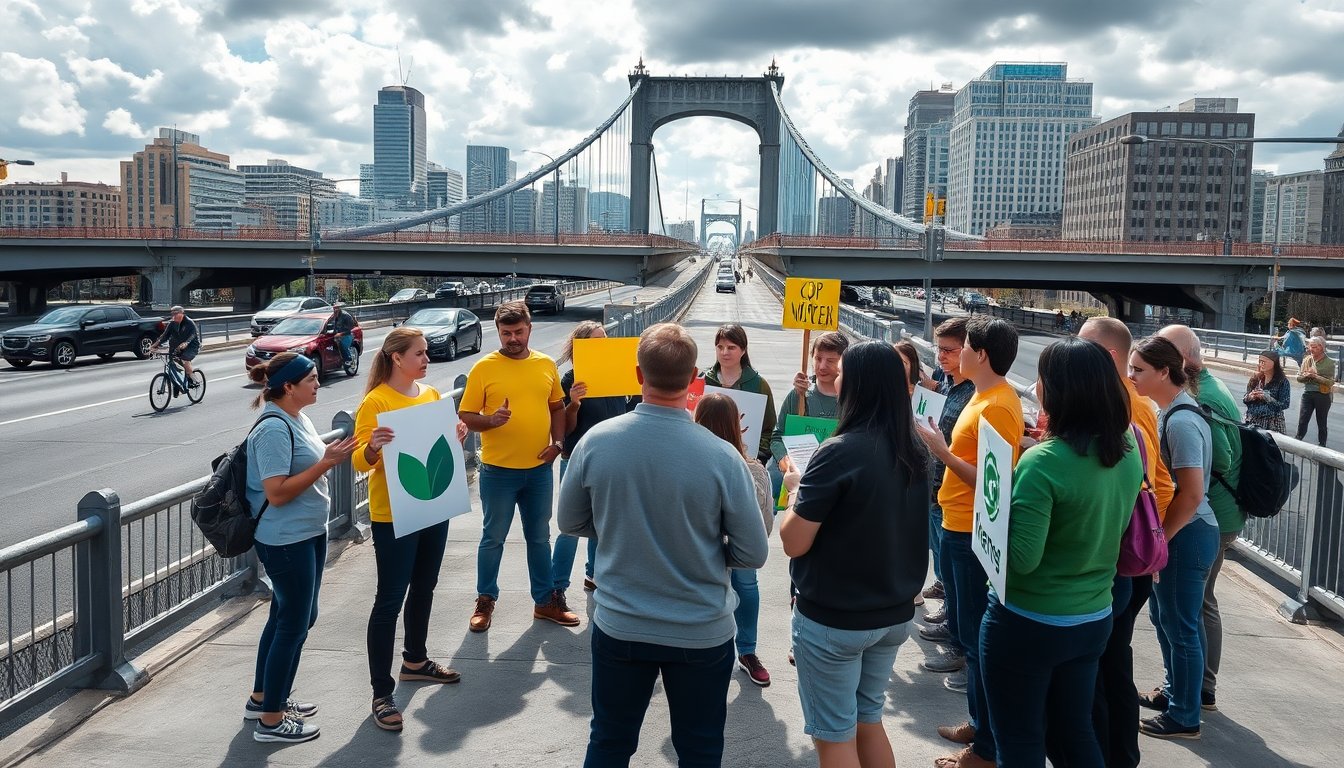
The protest involved Huard and other activists scaling the bridge to draw attention to the Enbridge Line 9B pipeline. This pipeline, which transports crude oil from Ontario to Montreal, has faced criticism due to its age and safety concerns. “We want it shut down because it’s an old pipeline. It’s 50 years old. It’s leaking every year,” Huard emphasized, highlighting the urgent need for change in energy infrastructure.
Legal challenges faced by Huard and his co-accused
Huard, alongside fellow activist Jacob Pirro, encountered significant legal consequences following their actions. After their arrests, both individuals were held in custody for over a week—Huard for ten days and Pirro for eight. Pirro reflected on their ordeal, stating, “Olivier and I had to spend respectively 10 and eight days in jail before being told it was okay for us to come back to society.” They are charged with mischief and obstructing a police officer, which could result in several months of house arrest if convicted.
Arguments for dismissal and the legal team’s stance
The legal representation for Huard and Pirro argues that the prosecution’s actions are disproportionate and unjust. Barbara Bedont, their attorney, claims that their treatment has been harsher than that of others involved in similar protests. “Their rights have been violated. They’ve been treated more severely than other people who’ve done similar things,” she stated, asserting that the prosecution aims to set an example out of the two activists.
In response, the Crown’s prosecutors have denied these allegations, insisting that the legal process is justified. Crown prosecutor François Parent explained, “We disagree with this but unfortunately we have to keep our arguments for the court, which we will present and defend.” The ongoing court hearings are expected to continue throughout the week, with a decision anticipated shortly thereafter.
Broader implications for climate activism
The case against Huard and Pirro raises critical questions regarding the treatment of environmental activists in Canada. As climate change emerges as a significant issue, the legal system’s handling of those advocating for urgent reforms is under scrutiny. Observers express concern that severe legal consequences could deter individuals from engaging in peaceful protests aimed at addressing pressing environmental challenges.
Public response and the role of advocacy
The public’s reaction to Huard’s case has been largely sympathetic. Many view the activists’ actions as a necessary challenge to the fossil fuel industry. The protest on the Jacques Cartier Bridge transcended the pipeline issue; it represented a broader struggle against climate inaction. Activists assert that the world is facing a climate emergency, necessitating more drastic measures to hold corporations and governments accountable.
Legal proceedings are currently underway, prompting significant support from the activist community for Olivier Huard and Pirro. Advocates are emphasizing the necessity of championing environmental justice. The outcome of this case may establish a precedent for handling similar protests in the future, potentially reshaping the activism landscape in Canada.
The court’s ruling on whether to dismiss the charges against Huard will have extensive implications for those involved and the broader climate movement. As society confronts the challenges posed by climate change, the tension between legal accountability and the right to protest is under scrutiny.