
Table of Contents
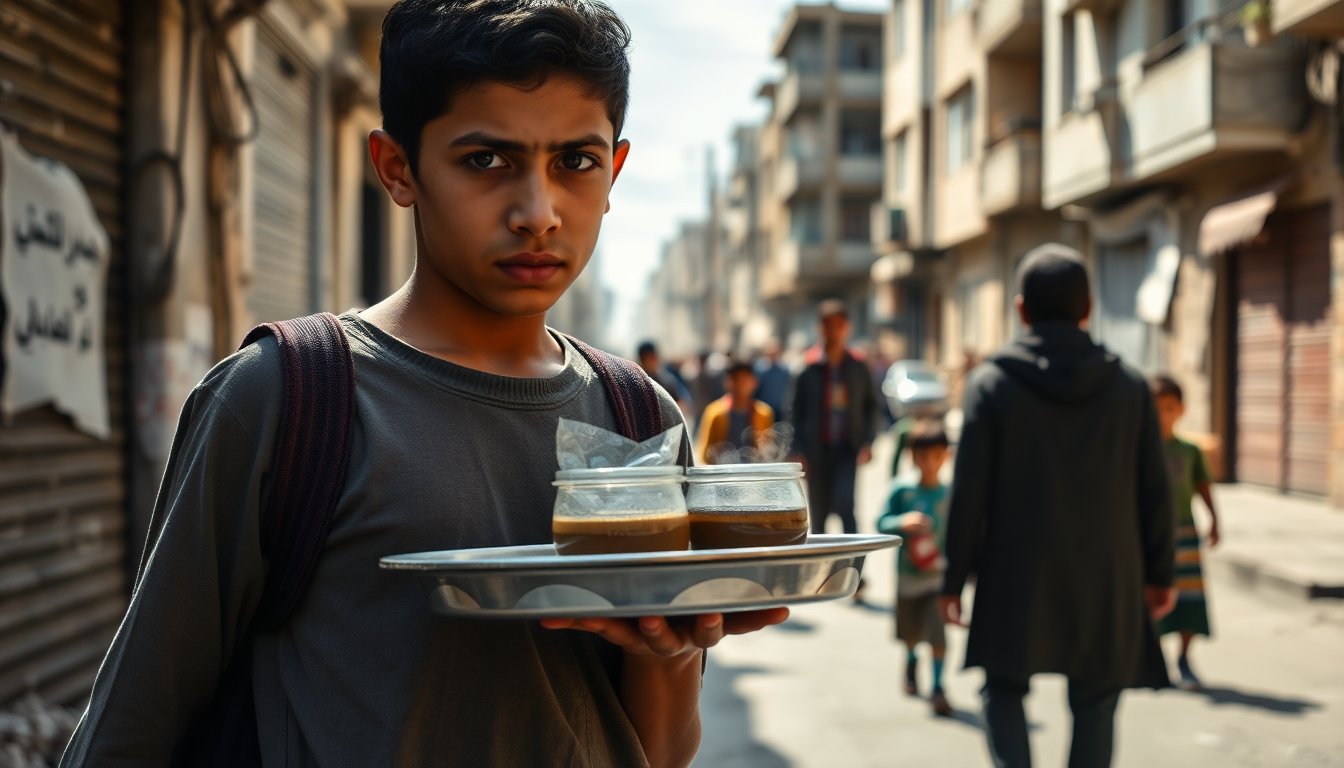
The ongoing conflict in Gaza is profoundly affecting its youngest residents, compelling many children to take on responsibilities beyond their years. As families struggle for survival, children as young as eight are entering the workforce, sacrificing their education and childhood for basic sustenance. This harsh reality is exemplified by the case of Mohammed Ashour, a 15-year-old boy navigating the crowded streets of Gaza City, where he sells coffee to support his family following the death of his father.
Mohammed’s situation reflects a broader crisis. With countless parents lost to the conflict, many children are forced to assume adult roles. Reports indicate that over 39,000 children have lost one or both parents due to the ongoing war, resulting in increased labor participation to help their families survive.
The harsh realities of child labor in Gaza
The rising necessity for child labor
The ongoing economic crisis has significantly increased the number of children required to contribute to family income. Atad Ashour, mother of twelve-year-old Mohammed, reflects on their dire situation. “After my husband’s death, we had no income. There was no choice but for Mohammed to help support us,” she states. This situation reveals the emotional and financial strain families endure as they navigate loss and the immediate need for survival.
Children like Mohammed are often compelled to undertake demanding jobs, ranging from selling coffee to scavenging for recyclable materials. According to UNICEF spokesperson Tess Ingram, “We are witnessing an increase in children engaging in hazardous work, including searching through waste for items they can sell.” This troubling trend highlights the desperate measures families resort to in the face of an escalating humanitarian crisis.
The impact on education and childhood
Education is a fundamental right for every child, yet for many in Gaza, it is increasingly out of reach. Reports reveal that nearly 660,000 children are currently out of school, denied the chance to learn and grow in a safe environment. According to Save the Children, the ongoing conflict has not only disrupted education but has also caused a significant rise in malnutrition among children. An estimated 132,000 children are at risk of acute malnutrition, further compounding the challenges they face.
As Mohammed walks home after a long day selling coffee, he passes by schools where he once dreamed of learning. “If my father were alive, I would be in school, not working,” he reflects, highlighting the life that conflict has taken from him. This sentiment resonates with many children in Gaza, who long for the innocence of childhood, now overshadowed by the realities of war.
Humanitarian efforts and challenges
Organizations such as UNICEF and Save the Children are making significant efforts to support families in Gaza. They are offering cash assistance, educational resources, and initiatives aimed at reducing child labor. Despite these efforts, the scale of the crisis continues to exceed the available resources. Rachel Cummings, humanitarian director for Save the Children in Gaza, highlights the urgent need for comprehensive support. “The family structure has been severely disrupted, and children are bearing the weight of adult responsibilities at an alarming rate,” she states.
The challenges in Gaza are intensifying as winter approaches, exacerbating an already critical humanitarian crisis. Many families find themselves without adequate shelter and essential supplies. Reports from UNICEF indicate that thousands are living in makeshift accommodations, struggling against the harsh weather conditions. The combination of cold temperatures, illness, and inadequate nutrition significantly increases the risk of severe health issues, particularly for children.
Calls for action and support
As the situation continues to worsen, the international community faces increased pressure to respond. Catherine Russell, director of UNICEF, emphasizes that “every minute counts in protecting these vulnerable children.” She advocates for the safe and prompt delivery of humanitarian aid, ensuring that vital supplies reach those who need them most.
The ongoing war in Gaza has significantly impacted the lives of many children, forcing them into adult roles at an early age. The experiences of these young individuals, such as Mohammed, underscore the critical need for global awareness and action. Support for children affected by conflict is essential as they face numerous challenges in their daily lives.