
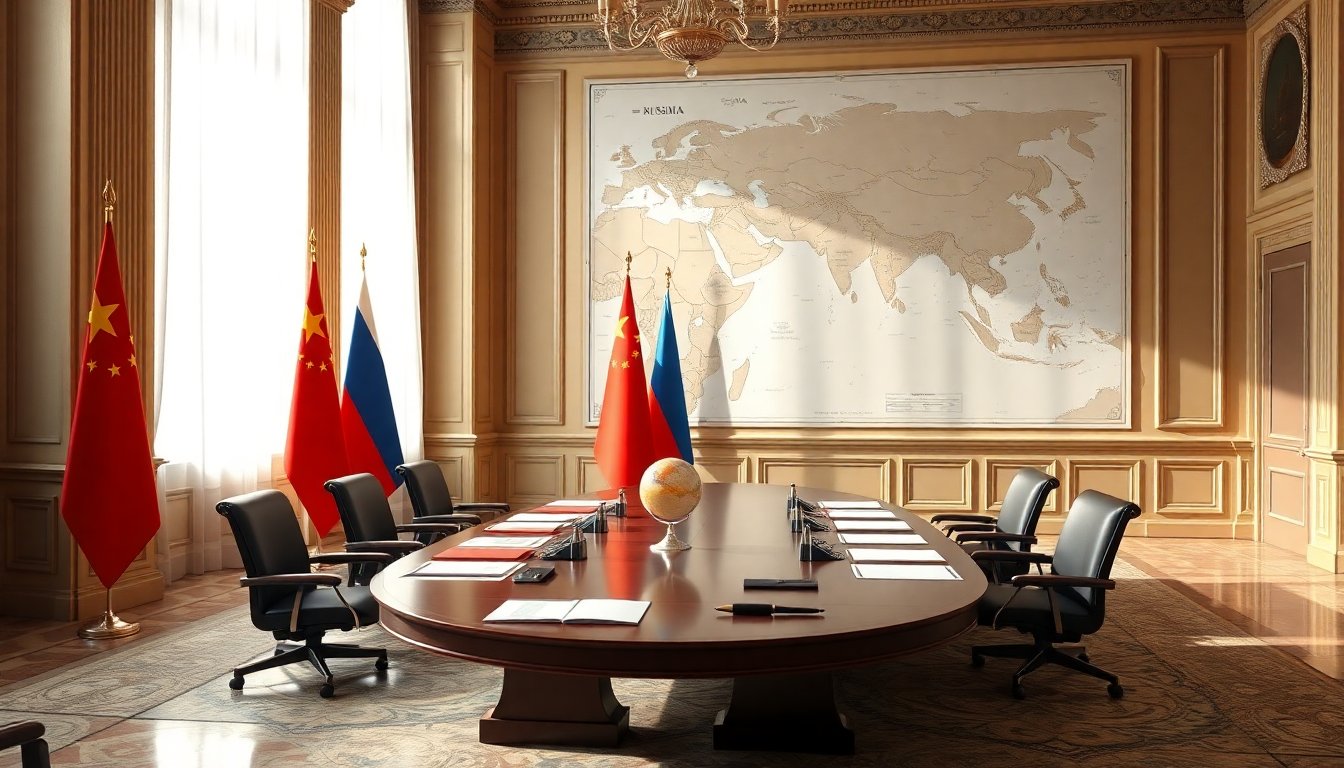
In a notable diplomatic move, China and Russia have united to voice their concerns about the resurgence of Japanese militarism. This partnership was prominently featured during a recent meeting between Chinese Foreign Minister Wang Yi and Russian security chief Sergei Shoigu in Moscow. Their discussions highlighted a shared commitment to counter any efforts by Japan to regain military capabilities reminiscent of its historical past.
Background of the tensions
The historical context of these tensions is significant. Since World War II, Japan has maintained a constitution that renounces war and military aggression. However, remarks from Japan’s new Prime Minister, Sanae Takaichi, have sparked concern in both Beijing and Moscow. Takaichi’s claim that a crisis over Taiwan could threaten Japan’s survival may indicate a change in Japan’s long-standing defensive stance, which has remained non-aggressive for decades.
Official responses from China
In reaction to Takaichi’s remarks, the Chinese ambassador to the United Nations, Fu Cong, labeled her comments as dangerously erroneous and a challenge to the post-war international order. He noted that Japan’s militaristic rhetoric contradicts commitments made following World War II and poses a risk to global peace. Fu’s statement underscores China’s significant concerns regarding Japan’s military ambitions and their potential impact on regional stability.
Military posturing and diplomatic communications
This rising rhetoric has coincided with noticeable military activities. Japan has recently positioned missile batteries on Yonaguni Island, which is strategically located just 110 kilometers from Taiwan. Although Tokyo frames this deployment as a defensive measure, it has drawn the attention of China, which views such military actions as provocative.
China issues warnings to Japan
The Chinese government has issued strong warnings to Japan, urging it to halt what it characterizes as provocative actions that undermine regional peace. Beijing cautioned that any military involvement by Japan concerning Taiwan would be interpreted as an act of aggression, prompting a defensive reaction to protect China’s territorial integrity.
Maritime confrontations in disputed waters
The tensions have intensified with recent maritime confrontations near the Senkaku Islands, referred to as the Diaoyu Islands in China. Both countries have deployed coast guard vessels to assert their claims over these strategically significant islands. The situation escalated when a Japanese fishing vessel reportedly entered waters claimed by China, leading to a swift intervention by the Chinese coast guard.
This incident underscores the escalating tensions between China and Japan, as both countries strive to reinforce their territorial claims while steering clear of direct military conflict. With Japan’s renewed assertiveness under the leadership of Takaichi, the balance of power in East Asia is increasingly at risk.
The role of international organizations
The United Nations has voiced concern regarding the rising tensions, urging dialogue as a vital means to de-escalate the situation. UN officials recognize the complexities of the current diplomatic landscape, which has been further complicated by Japan’s more assertive posture towards Taiwan and China. As developments unfold, the UN continues to advocate for calm and constructive communication among the involved parties.
The changing dynamics of East Asia
The alliance between China and Russia in response to Japan’s militaristic stance marks a notable transformation in the geopolitical landscape of East Asia. Both nations are now focused on addressing perceived threats, which raises the likelihood of conflict in the region. As Japan reassesses its role within this evolving context, the international community remains vigilant, with hopes for a peaceful resolution to these escalating tensions.


