
Table of Contents
China condemns US seizure of Russian oil tanker
In a recent escalation of tensions over maritime law and sanctions, China has expressed strong disapproval regarding the United States‘s seizure of a Russian-flagged oil tanker. Beijing has labeled this action as a significant breach of international law, raising concerns about its implications for global maritime practices.
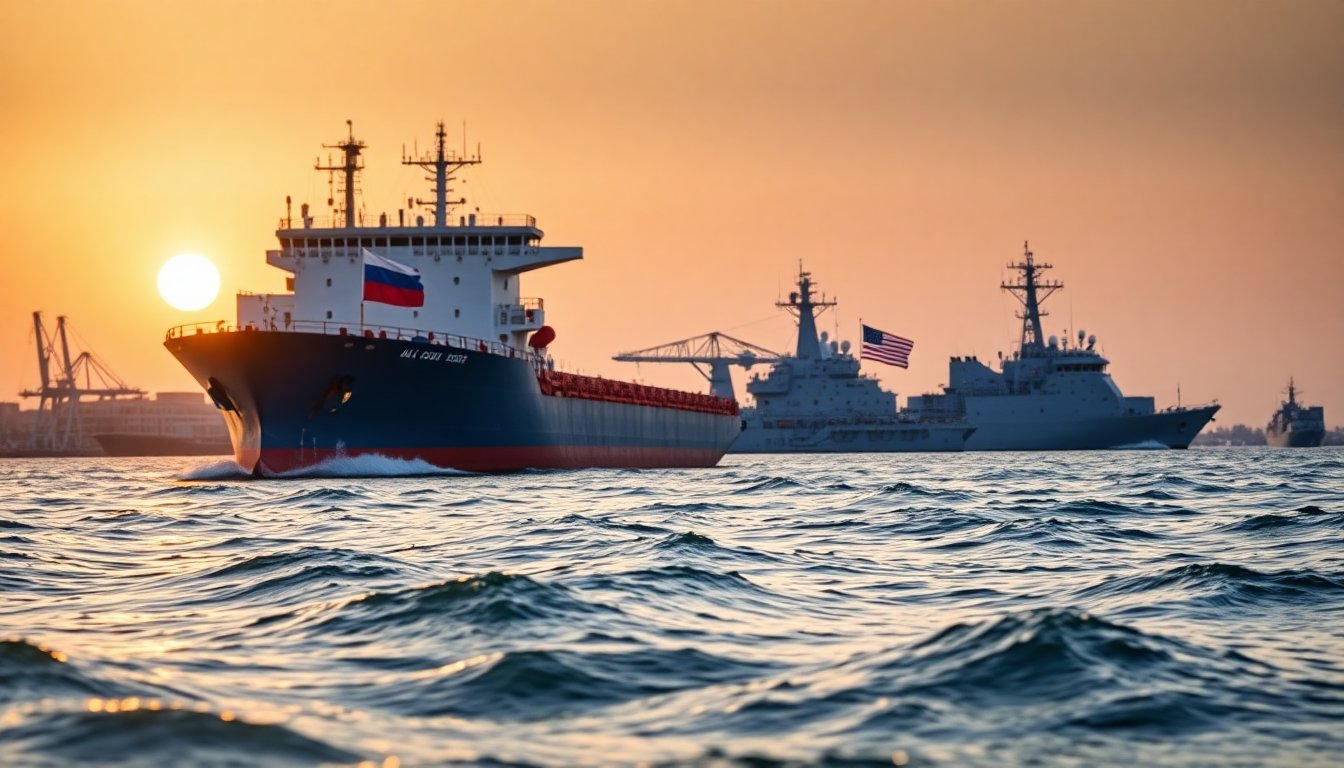
The controversy began when the US European Command announced on social media that it had captured the tanker in the North Atlantic. The operation was justified by the US as a response to the tanker’s alleged violations of US sanctions imposed on Venezuela. Following this seizure, authorities also detained a second vessel in the Caribbean, further complicating the situation.
Details of the seizure
The vessel, previously known as the Bella 1, was monitored closely by US forces for two weeks before its capture. It reportedly attempted to navigate away from US jurisdiction, avoiding detection during its journey across the Atlantic. The US military described this maneuver as a clear indication of the ship’s intent to evade compliance with established sanctions.
Reports indicate that the US has become increasingly proactive in enforcing its sanctions, particularly regarding Venezuela, which has faced strict economic restrictions for several years. These sanctions aim to limit the Venezuelan government’s access to global oil markets, significantly impacting its economy. The seizure of the Bella 1 is viewed as part of a broader strategy to consistently enforce these economic penalties.
China’s reaction
In response to actions taken by the United States, China condemned the seizure, stating that it represents a serious violation of international maritime law. The Chinese government has consistently advocated for free navigation on the high seas, arguing that unilateral actions by any country to impose sanctions can create a dangerous precedent.
Additionally, Chinese officials have cautioned that such aggressive tactics by the US could heighten tensions not only between China and the US but may also lead to broader geopolitical conflicts. Beijing’s stance underscores its long-standing commitment to diplomacy and multilateralism over unilateral sanctions and military interventions.
International implications
The seizure of assets by the United States has broader implications that extend beyond the diplomatic tensions with China. This incident may reshape international norms concerning maritime law and the enforcement of sanctions. Critics assert that the unilateral actions taken by the US weaken the authority of international governing bodies that oversee maritime conduct.
As countries assess the fallout from this event, discussions are intensifying around the need for clearer guidelines to navigate conflicts stemming from sanctions enforcement. Striking a balance between upholding sanctions and adhering to international laws is a complex issue. The recent US actions could catalyze calls for reform in the global handling of such matters.
US seizure of Russian-flagged oil tanker highlights international tensions
The recent seizure of a Russian-flagged oil tanker by the United States underscores rising tensions between major global powers. This incident raises critical questions regarding the future of international law and maritime operations. China has publicly condemned the actions of the United States, indicating that this issue will continue to provoke significant international discourse. As the global community observes, there is hope that diplomatic resolutions can take precedence over confrontational approaches in maritime affairs.